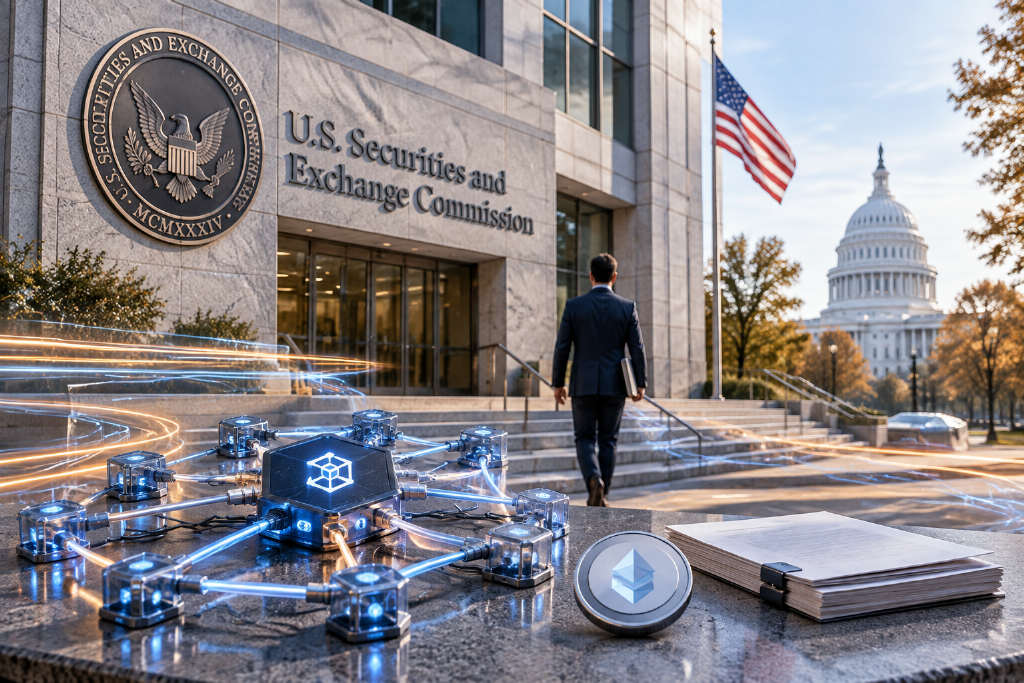
The U.S. Securities and Exchange Commission’s Division of Corporation Finance said in a crypto asset FAQ released on Sept. 25 that once a crypto system is functional, services tied to security maintenance, upgrades, feature improvements, or efforts to foster network effects generally do not amount to the “essential managerial efforts” referenced in the Howey test. The staff said the same treatment would usually apply to commitments involving funding or sponsoring development projects, meaning those promises on their own typically would not satisfy that part of the test. The FAQ also addressed staking receipt tokens, saying they may qualify as a “digital instrument” if they only evidence ownership of an underlying digital commodity and do not alter the holder’s rights, obligations, or returns. If issued by a protocol-based liquid staking provider, such a token may also be treated as a “digital commodity.” On buybacks, the staff said repurchase programs for non-security crypto assets on a functional network generally would not be viewed as key managerial efforts, though that could change if the network is not yet functional and the buyback is promoted as a way to generate returns. The SEC said the FAQ reflects staff views only and carries no legal force, and that the Commission has neither approved nor disapproved it.
A crypto asset FAQ released on Sept. 25 by the U.S. Securities and Exchange Commission’s Division of Corporation Finance says that once a crypto system is “functional,” services related to security maintenance, improvements, feature enhancements, or efforts to foster network effects generally do not count as the “essential managerial efforts” referenced in the Howey test. The staff said that would also usually cover commitments to fund or sponsor development projects, and those promises by themselves generally would not satisfy the relevant prong of Howey.
Staking receipt tokens and buyback programs
The FAQ says a staking receipt token may be viewed as a “digital instrument” if it only evidences the holder’s ownership of an underlying digital commodity and does not change the associated rights, obligations, or returns. When such a token is issued by a protocol-based liquid staking provider, it may also be treated as a “digital commodity.”
On repurchase plans, the staff said buyback programs for non-security crypto assets on a functional network generally would not amount to key managerial efforts under Howey. It added that if the network is not yet functional and the buyback is promoted as creating returns for holders, that promotion could amount to a relevant commitment.
SEC notes the document’s status
The SEC said the FAQ reflects the views of Division of Corporation Finance staff only. It has no legal force, and the Commission has not approved or disapproved it.
This article was originally published by Bit.Fan. For more cryptocurrency news and market insights, visit www.bit.fan. Disclaimer:
The market information, project data, and third-party content displayed on this platform are for industry information sharing only and do not constitute any form of investment advice or return commitment.
Cryptocurrency trading carries high risks. Users should fully assess their risk tolerance and make independent decisions. All profits, losses, and legal responsibilities are borne by the users themselves.