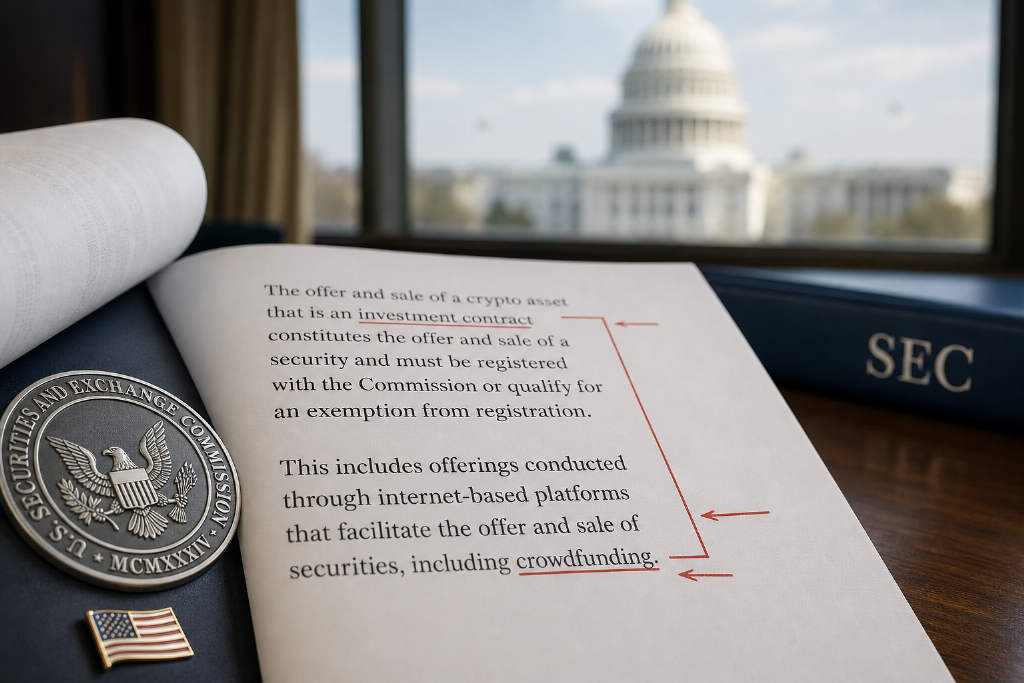
The U.S. Securities and Exchange Commission has released a proposed rule for crypto asset offerings that would create an issuance framework for investment contracts involving crypto assets. The proposal was published in the Federal Register on Aug. 21, with public comments due by Oct. 20. According to the filing, the SEC used Regulation A as a model to build a two-tier structure and offering caps, while also drawing on the disclosure approach used in Regulation Crowdfunding. The proposal references the Crowdfunding Professionals Association, or CfPA, 10 times. CfPA is now preparing a comment letter in response to the draft. The update was carried by FinanceWire and cited by Techub News.
The U.S. Securities and Exchange Commission has issued a proposed rule for crypto asset offerings that would set up an issuance framework for investment contracts involving crypto assets. The proposal cites the Crowdfunding Professionals Association, or CfPA, 10 times.
The filing was published in the Federal Register on Aug. 21, and the public comment period runs through Oct. 20.
Proposal draws from Regulation A and Regulation Crowdfunding
According to the summary, the SEC used Regulation A as the model for a two-tier structure and offering caps. It also borrowed from the disclosure approach used in Regulation Crowdfunding.
CfPA is preparing a comment letter on the proposal.
The report was attributed to FinanceWire.
This article was originally published by Bit.Fan. For more cryptocurrency news and market insights, visit www.bit.fan. Disclaimer:
The market information, project data, and third-party content displayed on this platform are for industry information sharing only and do not constitute any form of investment advice or return commitment.
Cryptocurrency trading carries high risks. Users should fully assess their risk tolerance and make independent decisions. All profits, losses, and legal responsibilities are borne by the users themselves.