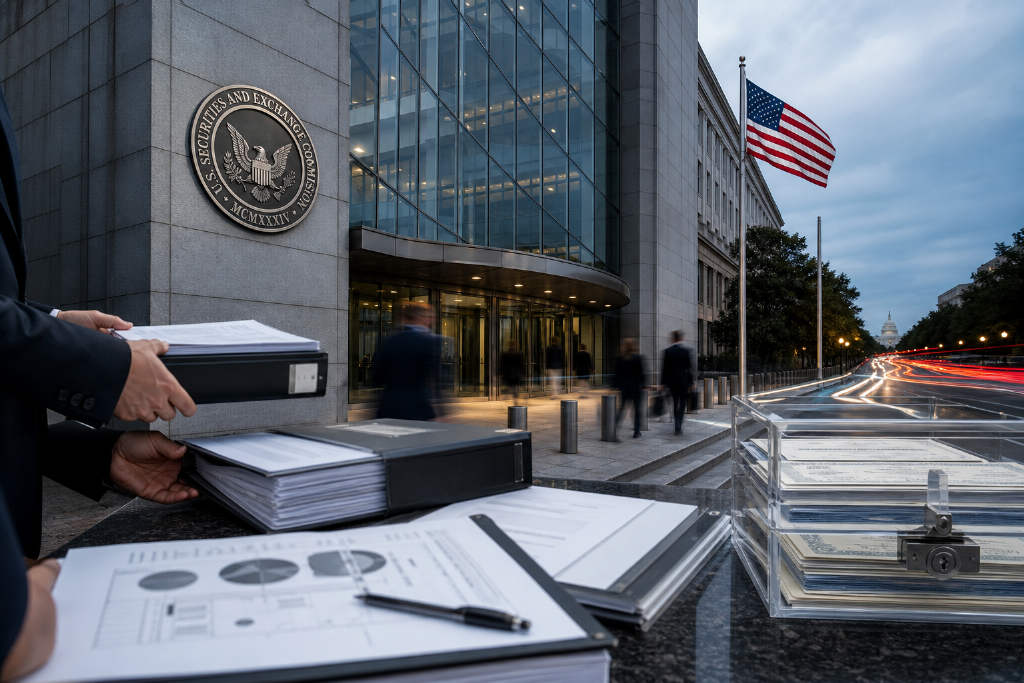
The U.S. Securities and Exchange Commission has tightened its review of companies behind special purpose vehicles, or SPVs, used for private-company investments, according to The Wall Street Journal. People familiar with the matter said SEC examiners have been asking registered investment advisers to provide proof that their SPVs actually own or hold the private-company shares they claim to have. The added scrutiny comes as some of these funds have ramped up marketing ahead of a closely watched potential SpaceX IPO and Anthropic’s planned listing, while investor complaints have also risen, according to some of the people. One person familiar with the matter said current SEC examinations typically include document requests, and some also involve in-person interviews. The review process can last anywhere from several weeks to as long as a year.
The U.S. Securities and Exchange Commission has increased scrutiny of companies behind so-called special purpose vehicles, or SPVs, according to The Wall Street Journal.
People familiar with the matter said SEC examiners have been asking registered investment advisers to provide evidence showing that their SPVs actually own or hold the private-company shares they claim to own.
Some of the people said the tougher review came as such funds stepped up marketing ahead of a closely watched SpaceX initial public offering and Anthropic’s planned listing, while investor complaints also increased.
According to one of the people, current SEC examinations usually include requests for documents, and some reviews also involve in-person interviews. The examination process can last from several weeks to as long as one year.
This article was originally published by Bit.Fan. For more cryptocurrency news and market insights, visit www.bit.fan. Disclaimer:
The market information, project data, and third-party content displayed on this platform are for industry information sharing only and do not constitute any form of investment advice or return commitment.
Cryptocurrency trading carries high risks. Users should fully assess their risk tolerance and make independent decisions. All profits, losses, and legal responsibilities are borne by the users themselves.