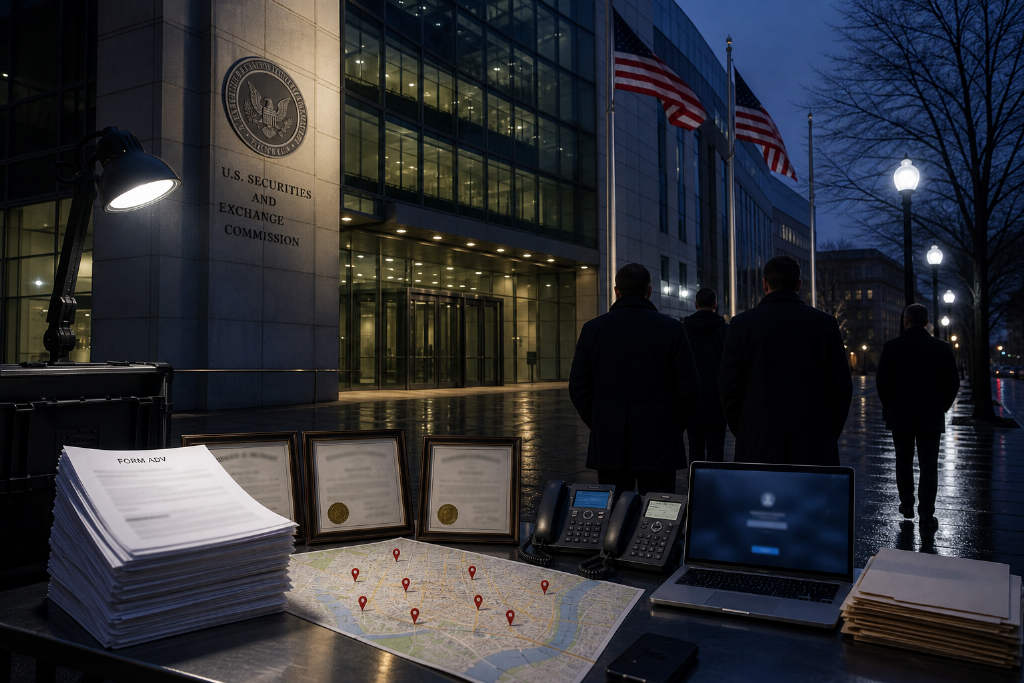
The U.S. Securities and Exchange Commission filed charges against 38 entities, accusing them of making materially false statements in Form ADV filings submitted between 2025 and 2026. The companies allegedly tried to pass themselves off as legitimate U.S. investment advisers in order to win retail investors' trust and steer them into investments. According to the SEC, the defendants used fabricated office addresses, supplied invalid phone numbers or numbers connected to unrelated businesses, and filed submissions with highly similar ownership structures and financial data. Some said their private funds had been audited by accounting firms, but those firms could not be located in federal or state public accounting registries. Others posted counterfeit SEC registration certificates on their websites to create an appearance of regulatory oversight. The SEC added that some entities accessed its filing system through overseas IP addresses and refused to provide records that would verify their submissions. The 38 entities' ERA filings have been removed from the SEC website. The regulator says the conduct violated the Investment Advisers Act of 1940 and is seeking permanent injunctions, an order barring the firms from using exempt reporting adviser status to file Form ADV, and civil penalties.
SEC targets 38 filers over misleading ADV documents
The U.S. Securities and Exchange Commission has sued 38 entities over Form ADV filings it says were packed with false statements. According to the agency, the filings were submitted between 2025 and 2026 and were designed to make the firms look like registered investment advisers, a status the group used to build trust with retail investors before funneling them into investments.
What the SEC found
The SEC described a pattern of fabricated details and cut-and-paste paperwork. Some filers made up office addresses, listed dead phone numbers or numbers that belonged to unrelated companies, and submitted ownership and financial data that looked nearly identical across firms. Others went further, claiming their private funds had been audited by accounting firms. Those audit firms, the SEC said, could not be found in federal or state public accountancy registries.
Websites were part of the setup too. Several entities displayed fake SEC registration certificates to create the impression that they were under regulatory supervision.
The Commission also flagged how some defendants submitted their paperwork: through IP addresses located outside the United States. When asked for records that could confirm the information in their filings, those entities refused.
Removal and penalties sought
The SEC has already removed the 38 entities' ERA filings from its website. The regulator alleges the conduct violated the Investment Advisers Act of 1940 and is asking a court for permanent injunctions, a bar on future Form ADV filings in exempt reporting adviser status, and civil penalties.
This article was originally published by Bit.Fan. For more cryptocurrency news and market insights, visit www.bit.fan. Disclaimer:
The market information, project data, and third-party content displayed on this platform are for industry information sharing only and do not constitute any form of investment advice or return commitment.
Cryptocurrency trading carries high risks. Users should fully assess their risk tolerance and make independent decisions. All profits, losses, and legal responsibilities are borne by the users themselves.