
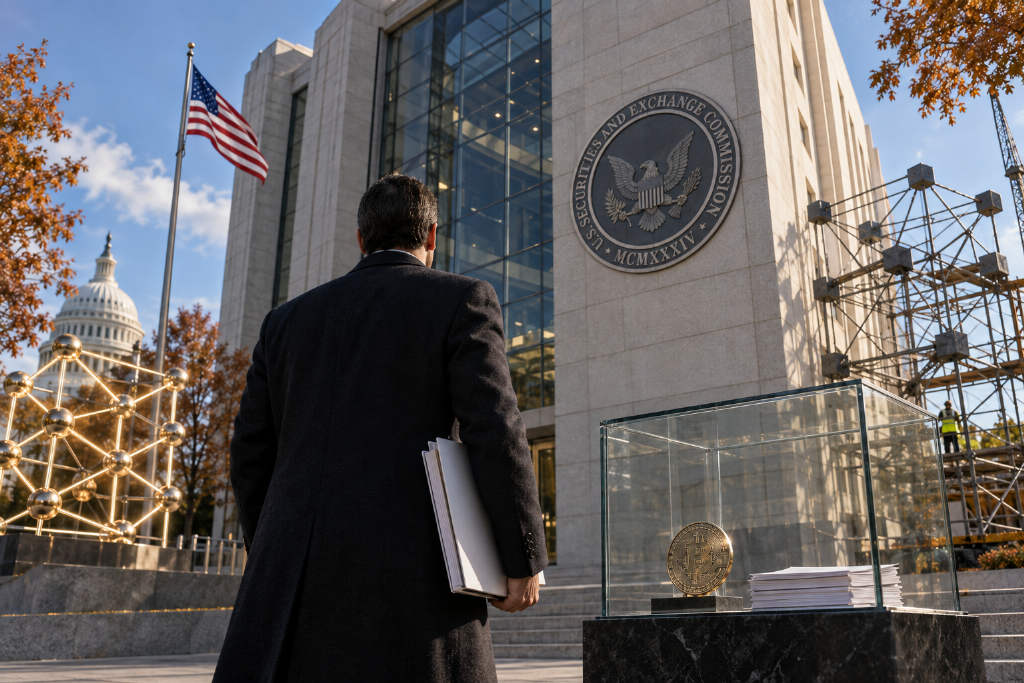
The U.S. Securities and Exchange Commission’s Division of Corporation Finance said Friday that an issuer’s announcement of a buyback program for a non-security crypto asset would not, on a functional network, be treated as a representation or promise to undertake essential managerial efforts.
That matters because those kinds of promises are part of what can turn a token sale into an investment contract under the Howey test. The guidance arrives as more crypto projects use revenue to buy back their own tokens in a way that resembles public-company share repurchases. Unchained noted that Ethena proposed a buyback program in late August, while teams considering similar moves had lacked a clear answer on whether announcing one could make a token appear more like a security.
Warning for networks that are not yet functional
The staff also drew a limit around that view.
If a network is not yet functional, the same kind of buyback announcement could cross the line if the issuer presents the program as creating yield or return for token holders, according to the FAQs. In other words, the network’s operational status and the way the buyback is framed both matter in the staff’s analysis.
FAQs build on the March 17 interpretation
The document builds on an interpretation the SEC issued on March 17, which the Commodity Futures Trading Commission, or CFTC, joined. That earlier framework sorted crypto assets into categories that included digital commodities and digital tools.
SEC Chair Paul Atkins said at the time that the interpretation acknowledged that most crypto assets are not themselves securities.
What the staff said about staking receipt tokens and network upgrades
The FAQs say staking receipt tokens received when users deposit assets with a liquid staking provider are digital tools when they function as receipts for a digital commodity that is not itself subject to an investment contract.
The staff added that such tokens may themselves qualify as digital commodities if they come from a protocol-based liquid staking provider.
For networks that are already functional, work done to secure, maintain, or improve the system, including funding development projects, is not the kind of managerial effort that makes a token a security, the staff said. The SEC had floated that position in its proposed Regulation Crypto Assets in August.
Where the line does not move
Not every answer in the FAQs points to a looser approach.
If another party takes over an issuer’s promises, the token remains subject to the original investment contract, the staff said. The FAQs also state that a trading platform counts as a token’s promoter only if it fits the definition of a promoter under Rule 405 of the Securities Act.
The Division of Corporation Finance said in the document that the FAQs reflect staff views, not a Commission rule, and carry no legal force or legal effect.