

Castle Labs’ latest on-chain market watch focused on four separate but related developments: a fresh SEC warning on crypto vault strategies, the rapid early expansion of Robinhood Chain, the breakout of TokenWorks’ Fake World Assets on Ethereum mainnet, and Mantle’s continued buildout around tokenized real-world assets.
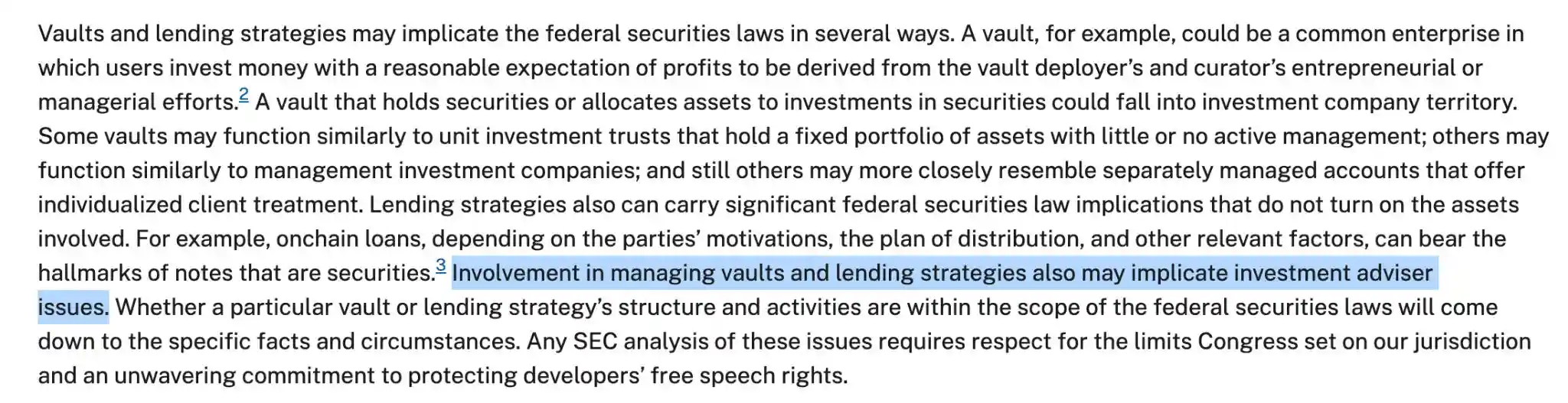
The regulatory angle stood out first. SEC Commissioner Hester Peirce warned that some crypto vault strategies could trigger issues usually associated with portfolio managers or investment advisers, depending on how yield opportunities are selected and how assets are reallocated. In Castle Labs’ reading, that puts a once loosely defined on-chain role squarely into a more formal compliance conversation.
SEC warning puts crypto vault managers under a brighter light
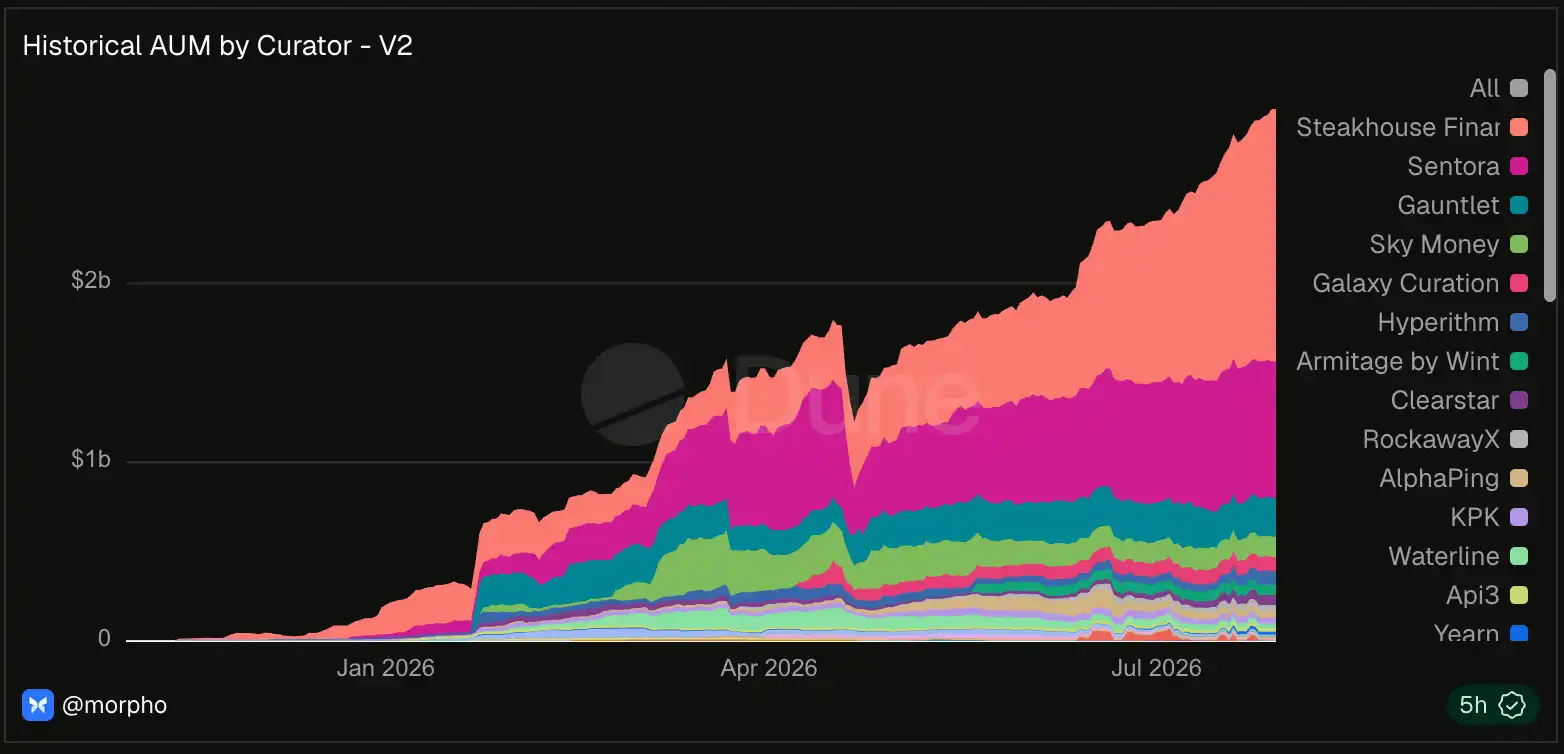
Vault manager assets under management have grown sharply over the past year. Castle Labs pointed to historical AUM trends across Morpho V2 vault managers as evidence that the segment has moved beyond a niche experiment and closer to an on-chain version of asset management.
That comparison is central to the argument. Castle Labs said vault management resembles the work of traditional fund managers in an important way, especially as institutions look more seriously at on-chain finance and at how tokenized real-world assets can be used. In that setting, vaults look like a practical wrapper.
Until now, though, vault managers have largely operated without a clear regulatory perimeter. Castle Labs described that as a familiar pattern in crypto, especially in asset management: a new structure appears, scales enough to attract regulatory attention, and then has to fit inside existing law.
Peirce’s warning fits that pattern. She said some crypto vault strategies may raise regulatory questions normally applied to portfolio managers or investment advisers, with the answer hinging on how yield activity is chosen and how capital is reallocated.
Views across the industry remain split.
- Former ACI member Togbe argued that some managers’ policies and reallocation bots are still too opaque, especially when users cannot easily tell who is making decisions and when those decisions are being made.
- Steakhouse’s adcv said vaults do not simply set yields unilaterally and that the mechanism is not as simple as a manager choosing yield while users follow along.
- KPK highlighted its own transparency on the issue, including publishing target weights for each market and detailing the underlying infrastructure, though not disclosing everything.
- Tesseract agreed with the SEC view and said vaults are not one thing. “At one end are fixed rules run by immutable code. At the other are humans choosing strategy, moving capital, and setting risk. The more discretion a manager exercises, the more a vault starts to look like portfolio management.”
- TokenLogic’s Matthew Graham made a similar point, saying that if managers choose allocations and manage risk on behalf of users, comparisons with investment management are hard to avoid.
Castle Labs argued that, regardless of which interpretation gains the most support, the arrival of regulation is a constructive step because it would make vault managers easier to integrate as alternatives to traditional investment products.
It also said regulation could improve transparency in an area where managers are often criticized for being too opaque. The note said managers can do a better job explaining and documenting several things:
- what their allocation policy is and who can change it,
- what happens under certain stress conditions,
- who is ultimately responsible for a vault’s allocations,
- what off-chain infrastructure is running underneath the strategy, and
- where off-chain dependencies and permissions sit.
That said, Castle Labs also warned that licensing hurdles may be too heavy for smaller managers, which could squeeze out grassroots vault management. The other side of that tradeoff is clearer: more regulated traditional finance managers may move on-chain to run compliant vault positions.
It is still too early to say what action the SEC will take. Castle Labs said the Morpho team and other representatives from the vault sector met with the SEC after the memo was published, and it expects more specific guidance in the coming months.
Robinhood Chain passes $800 million in on-chain assets
Castle Labs described Robinhood Chain as one of the most watched new chains this month. The network launched earlier this month with tokenized equities as its initial positioning, but over the past month its activity and attention have leaned increasingly toward memecoins.
The report said Robinhood-related posts have repeatedly centered on memecoins, launchpads are competing for attention, and one of the more unusual mechanics has been pairing memecoins with stock tokens inside AMMs. In practical terms, users who want to trade memes may start with ETH or USD, route through tokenized stocks, and end up in memecoin trades.
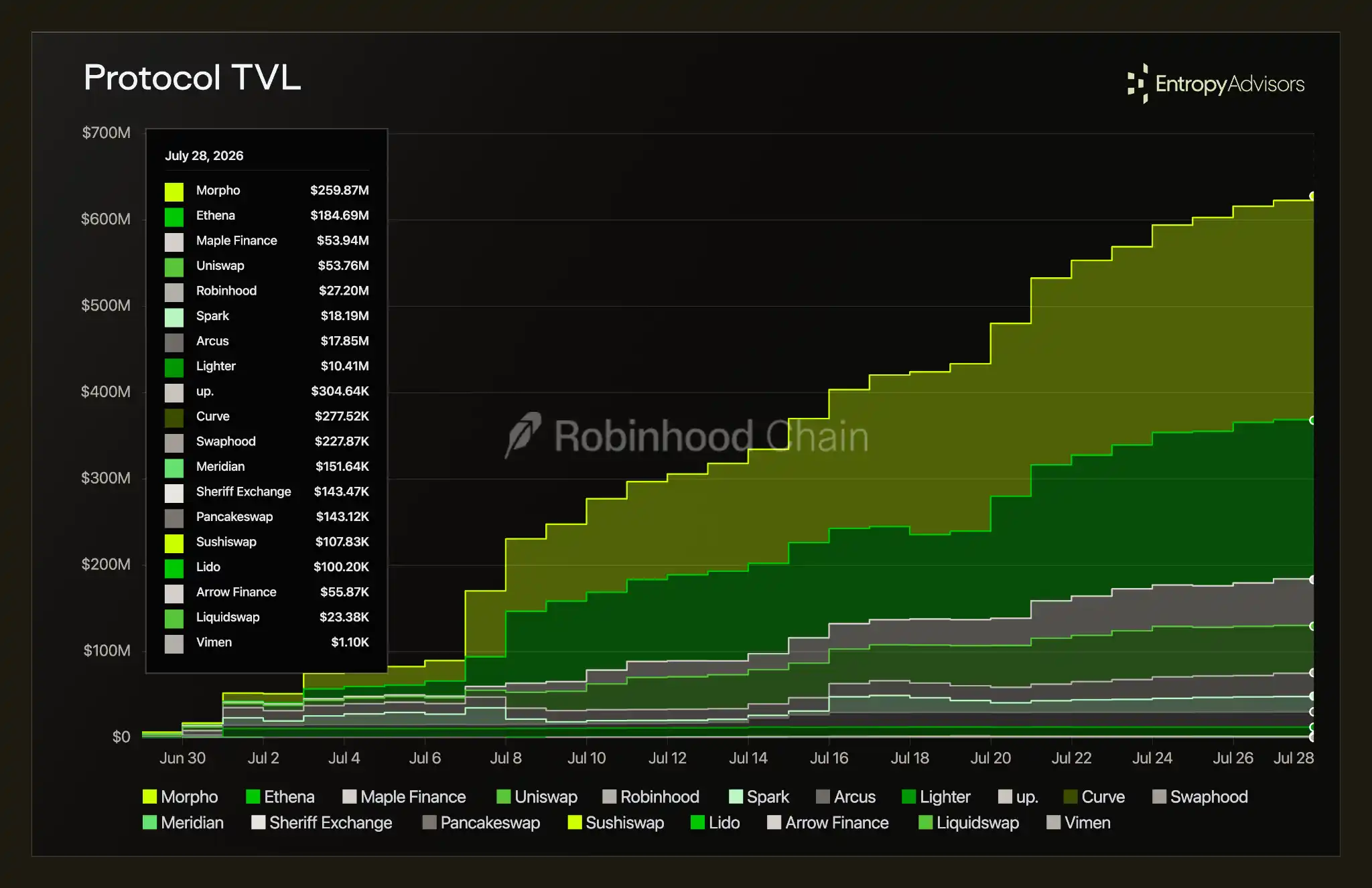
Early growth has been notable. Entropy data cited by Castle Labs showed more than $800 million in on-chain assets and nearly $500 million in stablecoin market cap on Robinhood Chain. By TVL, Morpho accounts for about $259.9 million and Ethena for another $184.7 million, followed by Maple, Uniswap and Spark.
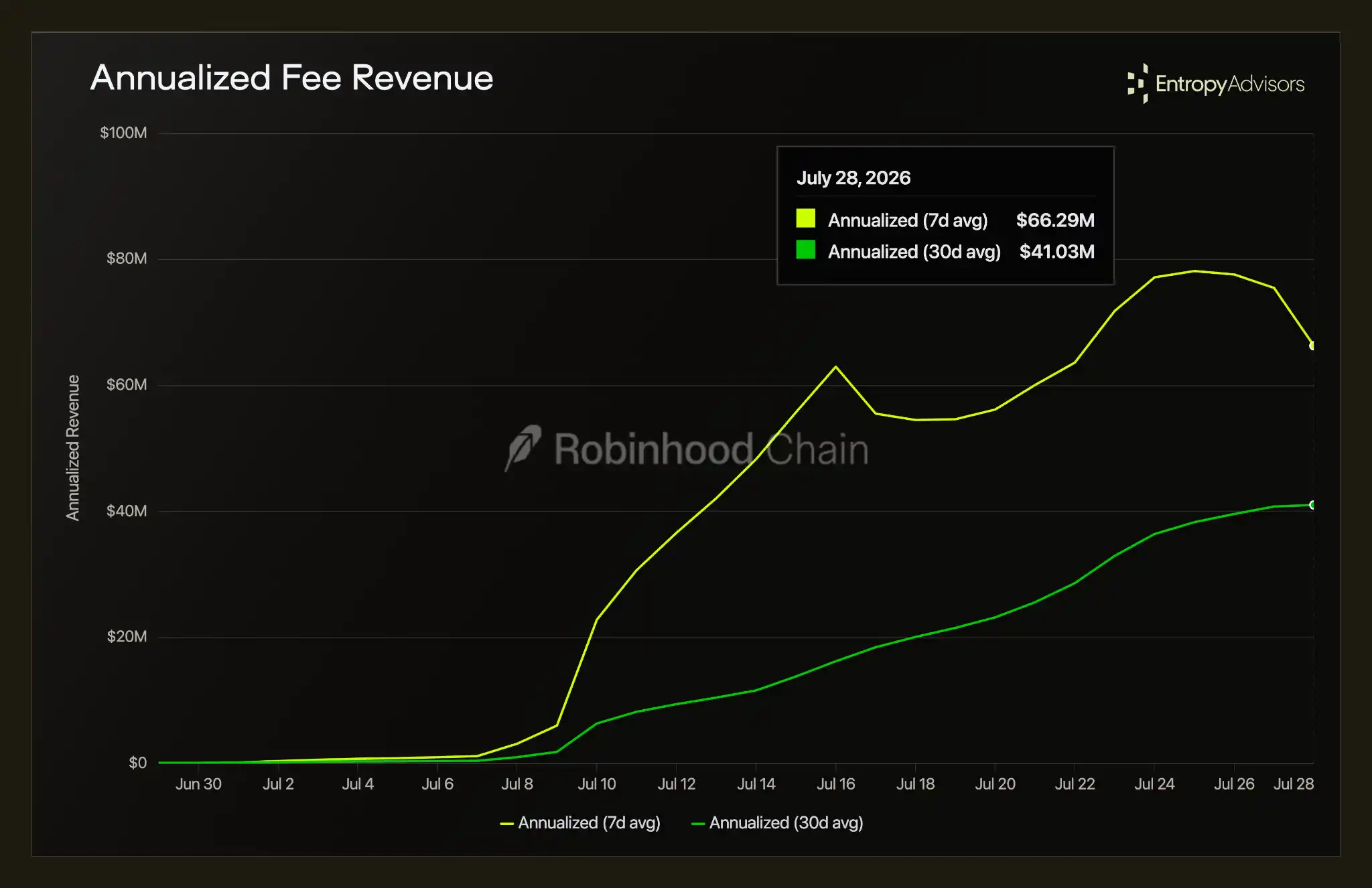
Revenue metrics were also strong. Daily fee revenue has been running at roughly $150,000 to $350,000, with gross margins around 88% to 89%. The 7-day annualized revenue line is close to $66 million, ahead of the roughly $41 million 30-day line, a sign that activity is still accelerating rather than cooling.
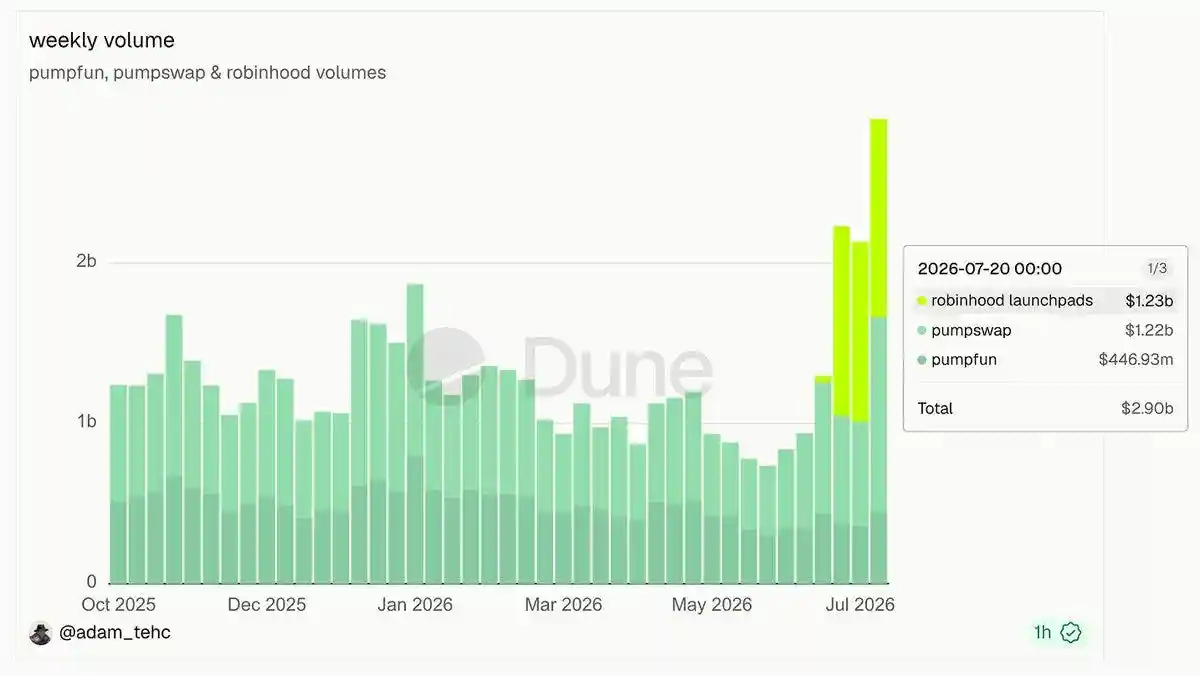
Memecoins now dominate day-to-day trading on the chain. Memecoin pairs make up 65.9% of spot DEX volume, ETH-USD accounts for 24.1%, and Robinhood stock tokens represent just 8.2%. Castle Labs said the shift happened so quickly that Robinhood launchpads have already overtaken pumpfun and pumpswap, the latter being pumpfun’s DEX, by trading volume.
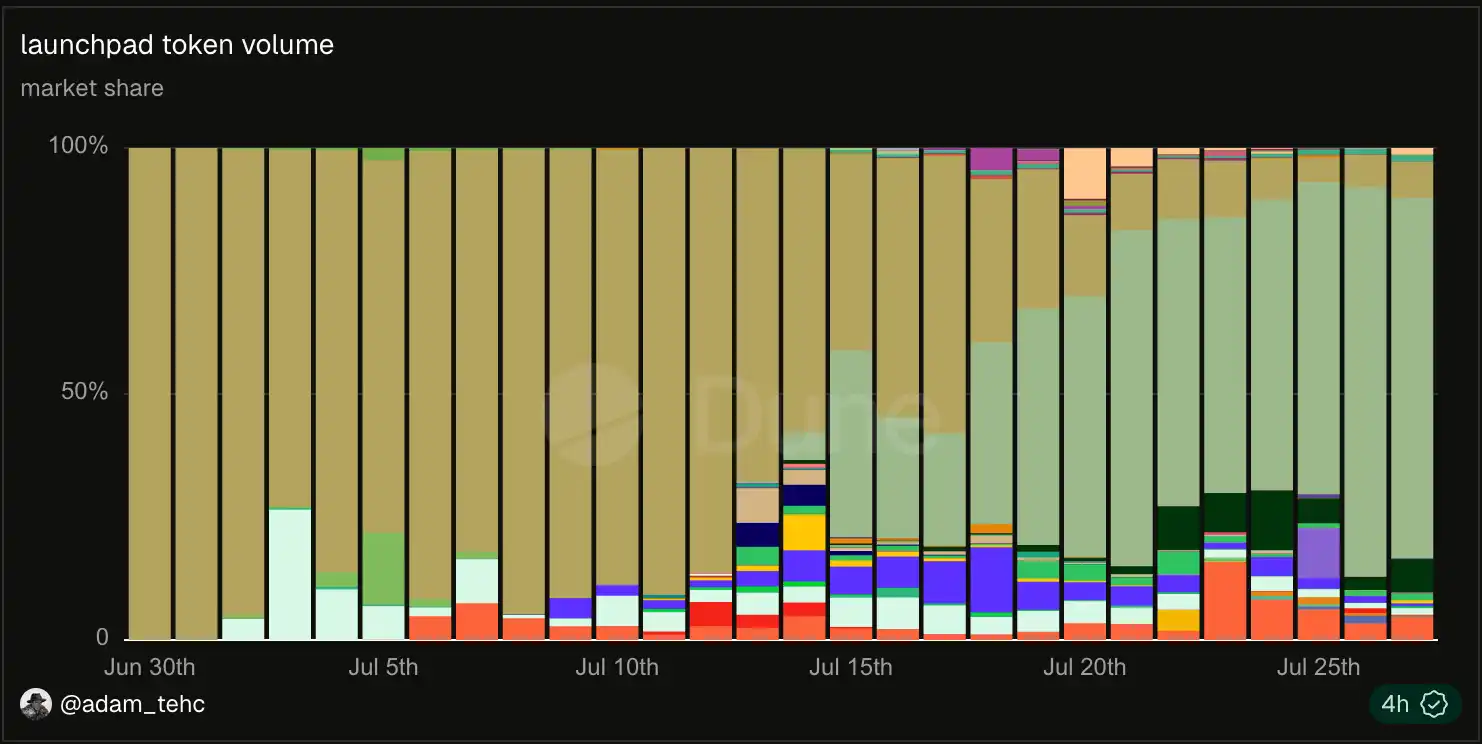
Among those Robinhood launchpads, pons now accounts for about 75% of total launchpad-token trading volume on the chain and has generated more than $2 million in total revenue so far.
Tokenized equities are still expanding. Castle Labs said total tokenized value crossed $25 million yesterday, while rwa.xyz reported nearly 330,000 RWA holders across 97 assets.
Its takeaway was that Robinhood Chain currently looks more like a consumer trading venue than a pure RWA project. Stock tokens and their underlying representation give the chain legitimacy, but memecoins and launchpads are supplying user velocity. By pairing memecoins with stock tokens inside AMMs, Robinhood Chain has found a way to give stock tokens a role inside one of crypto’s highest-volume trading categories.
Castle Labs left several open questions. Can the chain keep that memecoin and launchpad volume and win meaningful share from chains such as Solana? Can tokenized equities keep expanding beyond the first batch of tickers? And how deeply will Robinhood integrate the chain and its assets into its core mobile trading app?
Fake World Assets reaches about 10% of Ethereum mainnet gas in seven days
On the NFT side, Castle Labs turned to Fake World Assets, a new protocol launched by TokenWorks that is built around a gacha-style mechanic.
The model works in three parts:
- NFT owners deposit NFTs into a pool with corresponding ETH backing.
- Buyers pay a price specific to each NFT pool, and each try gives them a random chance to win the NFT.
- Users who win the NFT can choose how they want to receive payment.
Castle Labs said some outcome data shows a bias toward FWA token payments. It attributed part of that to the token being in an extreme and very early stage this week, which helps explain why users have chosen FWA-denominated payouts in most cases.
Within just seven days, the protocol accounted for 10% of Ethereum mainnet gas consumption. That is enough, in Castle Labs’ view, to make it one of the most visible new applications on mainnet over the past week.
Even so, the report stopped short of calling it a durable trend. It said it is still too early to know whether the move is a short-lived burst or something that can sustain itself.
Daily participant trends still look solid. Castle Labs said user growth has been less inflated than raw trading activity, suggesting fewer high-frequency power users spinning repeatedly and a larger share of casual users making fewer attempts.
The broader point, according to the report, is that while gambling-like mechanics are not the only path to new consumer crypto products, this case shows how a simple consumer-facing protocol can revive and attract interest through a gacha dynamic.
CEX closures add to the shift toward on-chain venues
Castle Labs also pointed to the closure this week of two long-standing centralized exchange names, BitMEX and BitMart. Its first conclusion was that the CEX business remains intensely competitive and is generally controlled by a small number of incumbents. Depending on the region, the market tends to look like a duopoly or near-monopoly.
It also argued that regulation, including Europe’s MiCa, together with competition from on-chain venues such as Hyperliquid, Lighter and Variational, is pushing users and volume away from traditional exchanges.
That shift is visible in the spot market share data. The DEX-to-CEX spot trading volume ratio reached 24.3% in July, a record high, up from 17.9% in June and above the 18% to 21% range that prevailed for most of 2026. Castle Labs cited The Block for those figures.
Its view is that exchange power is concentrating further at the top, while the next layer of growth and innovation is moving on-chain. The note added that DEXs may eventually consolidate in a similar way, with spot dominated by Robinhood and Uniswap, perpetuals led by Hyperliquid, and traffic increasingly shaped by a small number of application-layer distributors and front ends.
One detail in the recent closures stood out to the firm: both wind-downs were orderly and did not affect user funds. Castle Labs said that suggests the broader industry is maturing and may be repairing itself.
Mantle leans harder into tokenized RWA rails after its third anniversary
Mantle marked its third anniversary last week. Looking back at the second quarter, Castle Labs said the network started as a DAO designed to support the growth of open finance and a decentralized tokenized economy, but its more recent focus has shifted toward DeFi, yield products and institution-facing RWA infrastructure.
Nansen recently described Mantle’s second-quarter theme as a full-stack distribution layer for tokenized real-world assets. By the end of the quarter, Mantle had 155 tokenized stocks, more than $1 billion in DeFi TVL and $955 million in stablecoin market cap.
Real-time data from rwa.xyz now shows about $120 million in tokenized active strategies on Mantle. Castle Labs stressed the phrase active strategies because, in its view, they provide a clearer picture of capital that is actually being deployed through managers, products and platforms than passive tokenized exposure sitting on-chain.
The application layer is moving in the same direction, especially around RWA trading infrastructure:
- Fluxion is Mantle-native spot liquidity for RWA-linked assets, using AMM pools and concentrated liquidity and built around xStock/USDC markets and other asset-backed pairs.
- xChange is an atomic RFQ router for xStocks that offers onboarded participants issuer-direct quotes for minting and redeeming xStocks, with both sides settling, or not settling, in a single on-chain transaction.
Castle Labs’ conclusion was that Mantle is not only trying to host tokenized assets on its chain. It is also building the liquidity and execution stack needed around those assets, matching Nansen’s framing of Mantle as a full-stack distribution layer for tokenized real-world assets.