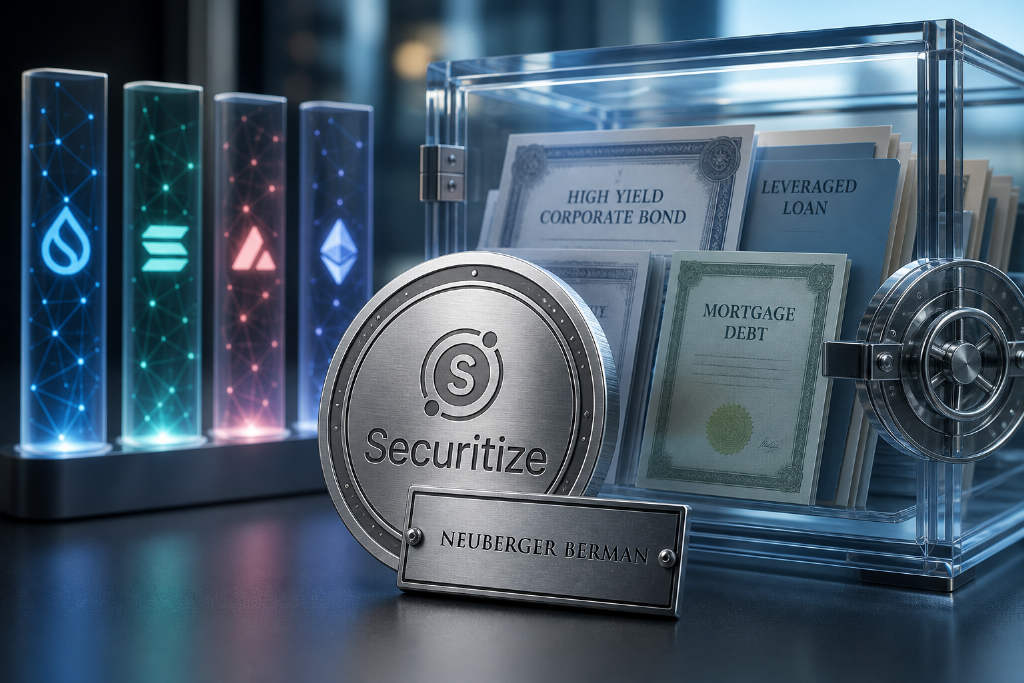
Securitize and Neuberger Berman have launched the Neuberger Securitize High Income Tokenized Fund, or HINC, a private tokenized fund aimed at qualified investors. The product is live across four blockchain networks: Sui, Solana, Avalanche, and Ethereum.
According to the source, the fund offers tokenized exposure to high-yield bonds, leveraged loans, and mortgage debt. Securitize is handling administration and compliance infrastructure, while Neuberger Berman serves as investment adviser.
The report also draws a distinction between HINC and stablecoins, describing HINC as an actively managed private tokenized fund. Its multi-chain rollout points to a pattern among tokenization issuers: using cross-chain availability to meet varying compliance and operational needs across investor groups, rather than relying on a single blockchain ecosystem.
Securitize and Neuberger Berman have launched the Neuberger Securitize High Income Tokenized Fund, or HINC, according to Techub News. The fund is deployed on Sui, Solana, Avalanche, and Ethereum, and offers qualified investors tokenized exposure to assets including high-yield bonds, leveraged loans, and mortgage debt.
Securitize is responsible for administration and compliance infrastructure, while Neuberger Berman acts as the investment adviser. Citing Bitcoinist, the report said HINC is different from a stablecoin because it is an actively managed private tokenized fund. Its multi-chain deployment reflects a preference among tokenization issuers to use cross-chain availability to meet different investors’ compliance and operational requirements, rather than depending on a single blockchain ecosystem.
This article was originally published by Bit.Fan. For more cryptocurrency news and market insights, visit www.bit.fan. Disclaimer:
The market information, project data, and third-party content displayed on this platform are for industry information sharing only and do not constitute any form of investment advice or return commitment.
Cryptocurrency trading carries high risks. Users should fully assess their risk tolerance and make independent decisions. All profits, losses, and legal responsibilities are borne by the users themselves.