
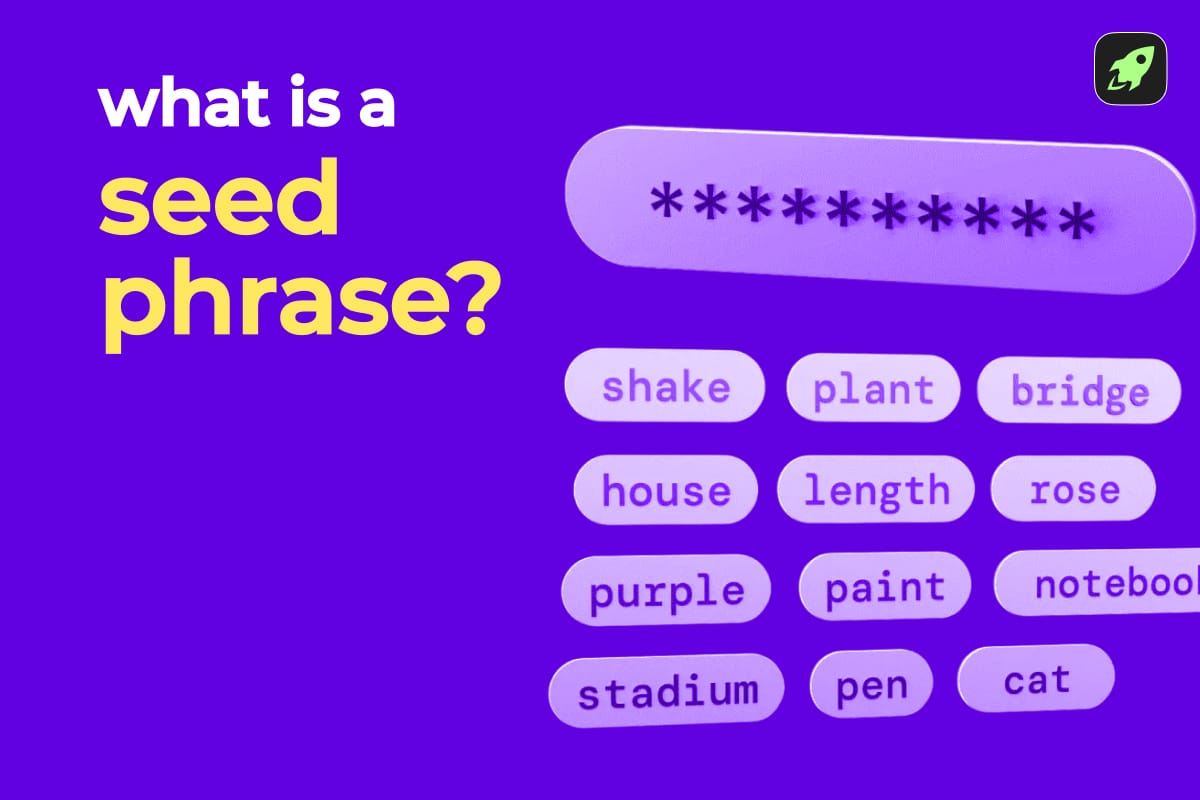
A seed phrase (also called a recovery phrase or mnemonic phrase) is a list of 12 or 24 random words generated by your wallet under the BIP39 standard. It acts as the master key to all your private keys and wallet addresses. Without it, there is no recovery — no password reset, no support hotline. Your funds are simply gone.
How a Seed Phrase Works
Enter your seed phrase into any compatible wallet app or hardware device, and it recreates your entire setup: private keys, public keys, and addresses. This is possible thanks to hierarchical deterministic (HD) wallets, which always derive the same key tree from the same seed. The seed is the root, private keys are branches, and addresses are leaves.
12 vs. 24 Words: What’s the Real Difference?
Both lengths follow BIP39 but use different entropy levels. A 12‑word phrase is built from 128 bits of randomness; a 24‑word phrase uses 256 bits. More bits mean exponentially more combinations. Brute‑forcing a 12‑word seed would take longer than the age of the universe. Still, many hardware wallets default to 24 words as a best practice, especially for large holdings. Either way, treat your seed like gold.
Creating a Wallet and Storing Your Seed Safely
When you create a non‑custodial wallet, the software shows your seed phrase once. The correct workflow: choose a trusted wallet app or hardware device; select “create new wallet”; write the words down on paper; verify every word’s order and spelling; store the paper in a fire‑proof safe or a metal backup; and finally test recovery on a second device.
The golden rules of storage: never take a screenshot, never save it to cloud storage, never email it. Digital footprints are the biggest risk. Keep the phrase in a discreet, offline location only you can access. Do not reuse the same seed across multiple devices — if one is compromised, all associated wallets are at risk.
Six Common Mistakes
Even experienced investors fall into these traps: ① saving the seed digitally (screenshots, cloud, email); ② failing to create a physical backup; ③ sharing the phrase with anyone, including “support agents”; ④ storing it in an obvious spot like a desk drawer; ⑤ misspelling a word or getting the order wrong; ⑥ never testing the recovery process until it’s too late.
What Happens If You Lose It?
No seed phrase means no access. If your phone dies, your laptop crashes, or your wallet app is deleted, and you don’t have the seed — your assets are gone forever. No one can help. That’s the deal: total freedom requires total responsibility.