
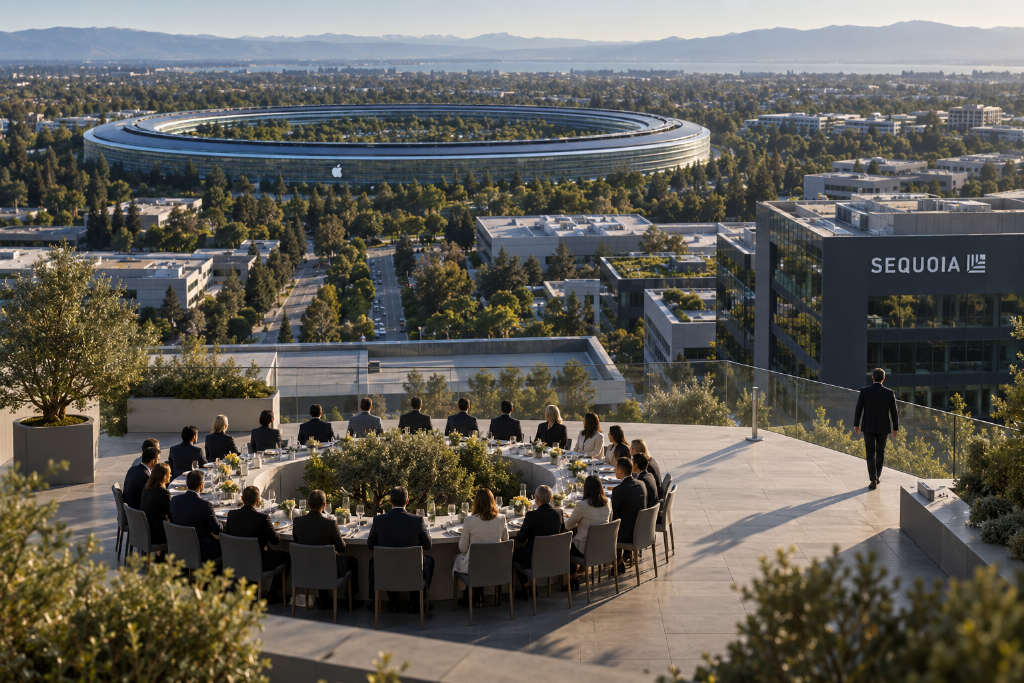
Sequoia Capital partner Shaun Maguire said Silicon Valley, which should be one of the most non-consensus places in the world, is moving in the opposite direction.
Maguire says he left Silicon Valley six years ago
Maguire said one important reason he left Silicon Valley six years ago was the rise of what he called a "monoculture." He described the region as "the most extreme groupthink place on Earth."
He said that at a Silicon Valley dinner, nearly everyone at the table is usually from the tech industry. Once people share the same value system, they begin ranking one another in subtle ways.
An unspoken ranking built on valuation, prestige, and title
According to Maguire, that ranking looks something like this: a founder of a $100 billion company ranks above a founder of a $50 billion company; a managing partner at a top-tier venture firm ranks above a hired CEO of a $50 billion public company; and that person ranks above a founder of a $10 billion company. Company valuation, fund brand, title, and seniority combine into what he called "The Hierarchy."
He said the bigger risk is not that people compare themselves with others, but that the hierarchy starts to shape whether they are willing to say what they actually believe. The more clearly people understand their place in that order, the more likely they are to align with power and avoid challenging those above them.
He says conformity pressure weakens creativity
In Maguire’s view, a place that should reward heresy and encourage non-consensus thinking has instead produced intense pressure to conform. When smart people start thinking mainly about what other smart people think, creativity gets weaker.
Maguire noted that he himself is a beneficiary of the same hierarchy. He is a Sequoia partner, has a physics PhD from Caltech, and works inside one of the world’s top venture capital circles.
His answer was direct: "Reject this absurd thing. Stay weird, think independently, be honest with yourself, and enjoy it."
That leaves the tension at the center of his argument. For an industry that built wealth by backing non-consensus ideas, what is left of real heresy once non-consensus itself becomes a consensus?