


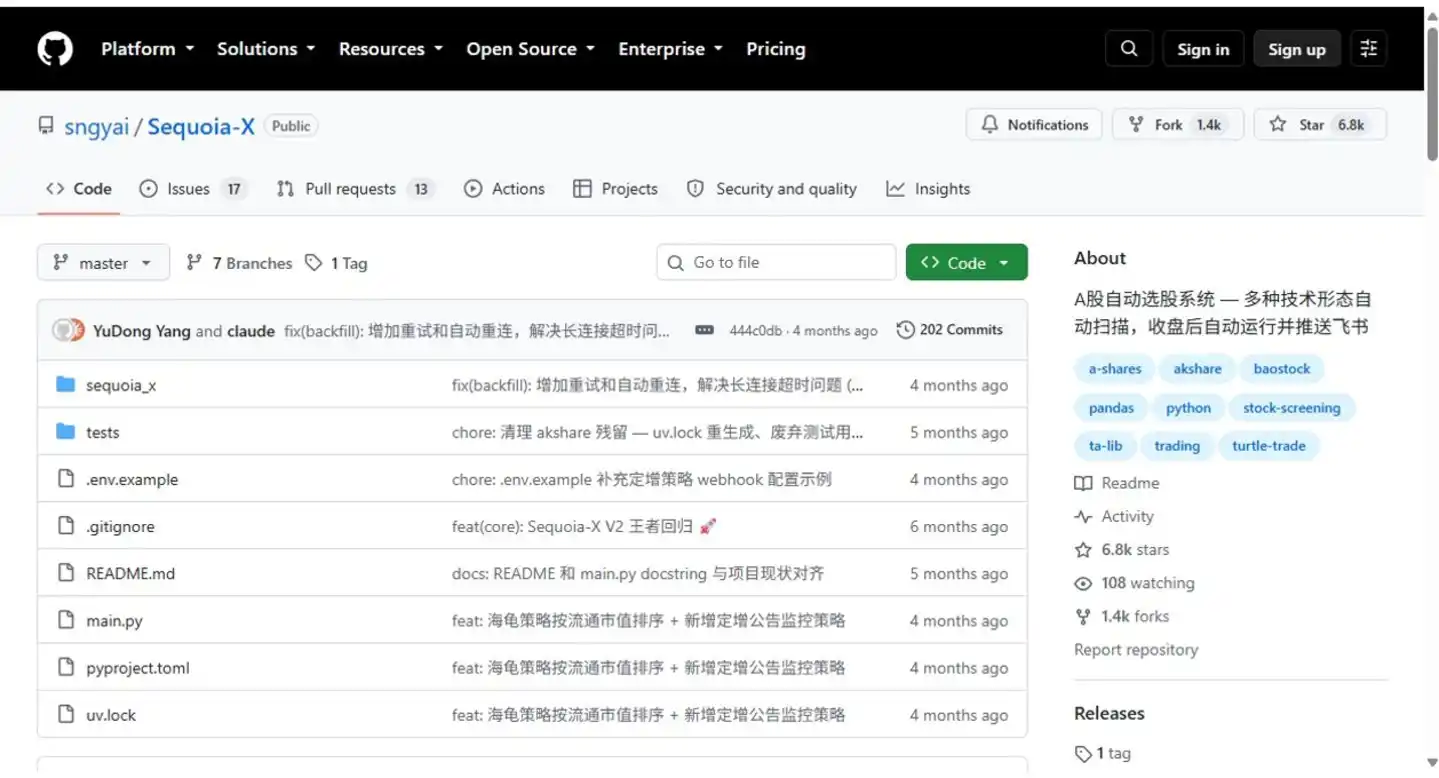
Sequoia-X is an open-source Python project built for after-hours A-share stock screening. And in roughly six months, it climbed from 3,000 GitHub stars to more than 6,800, then landed on GitHub Trending in early September, according to a MarsBit piece that cited a report first published by TMTPost App. The tool is aimed at automating a routine many retail traders in China know too well: going through charts after the close and cutting a universe of more than 5,000 stocks down to a smaller watchlist for the next session.
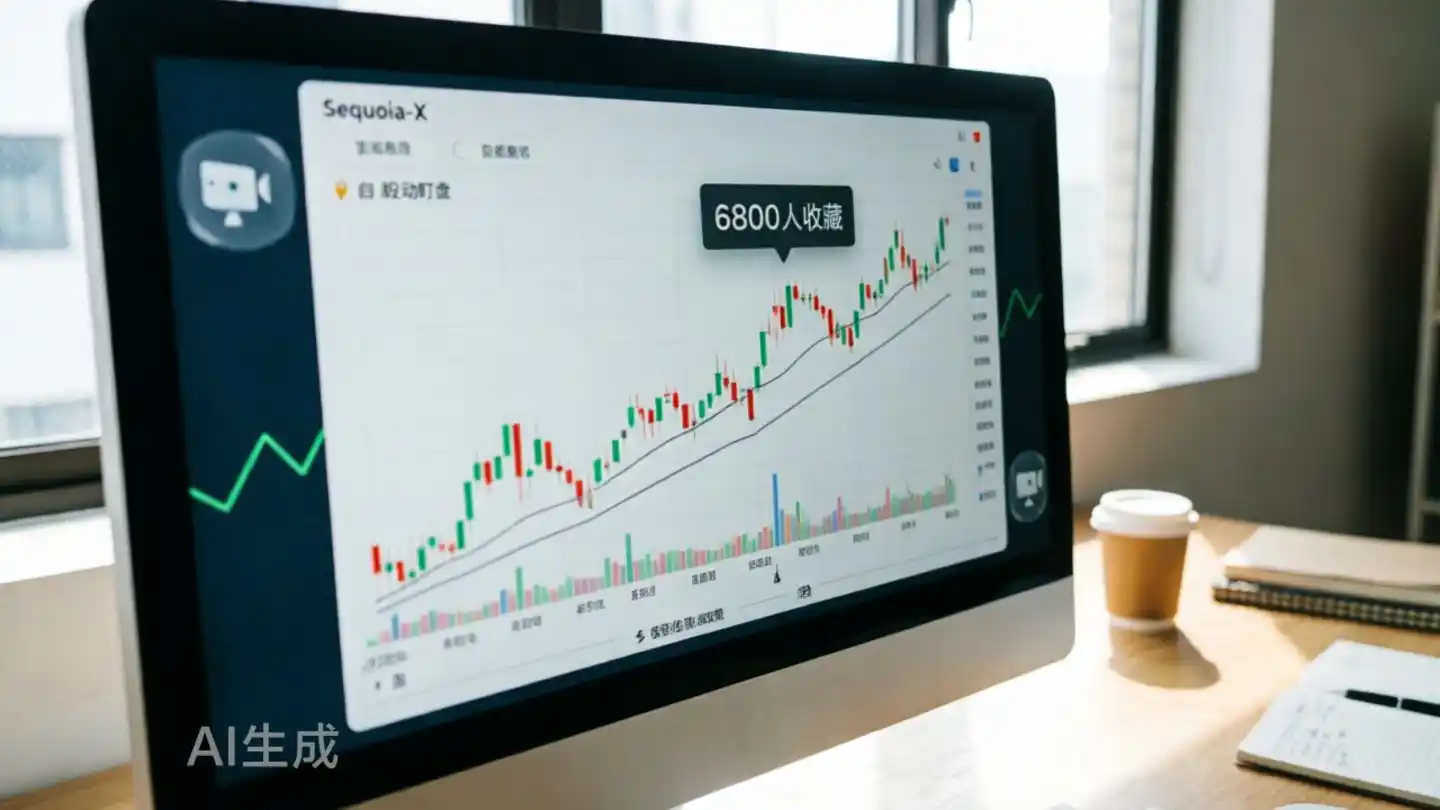
The repository is here: https://github.com/sngyai/Sequoia-X. The core flow is easy to grasp, even if it covers a lot. After the market shuts, the system grabs market data, scans the full A-share universe with seven built-in technical strategies, and pushes the results into Feishu groups through webhooks, so users can review everything before the next opening bell.
An attempt to turn stock picking into an unattended pipeline
The article puts the project in the context of three problems retail investors keep running into. First, scale. There are more than 5,000 listed A-share stocks, so doing full manual coverage just is not realistic. Second, data access. Free APIs can be incomplete or throttled, while paid services may cost thousands or even tens of thousands of yuan. Building your own scraper sounds nice until anti-bot defenses on financial websites start breaking things. Third, time. A lot of technical setups need constant monitoring during trading hours, which is a bad fit for people with full-time jobs.
Sequoia-X tackles that with an engineering-first setup. It uses baostock for data, keeps historical K-line data in a local SQLite database, runs automatically once a day after the close, and sends screening results to Feishu. So instead of spending the evening flipping through chart after chart, the user just checks a phone before the next trading day starts. Much cleaner.
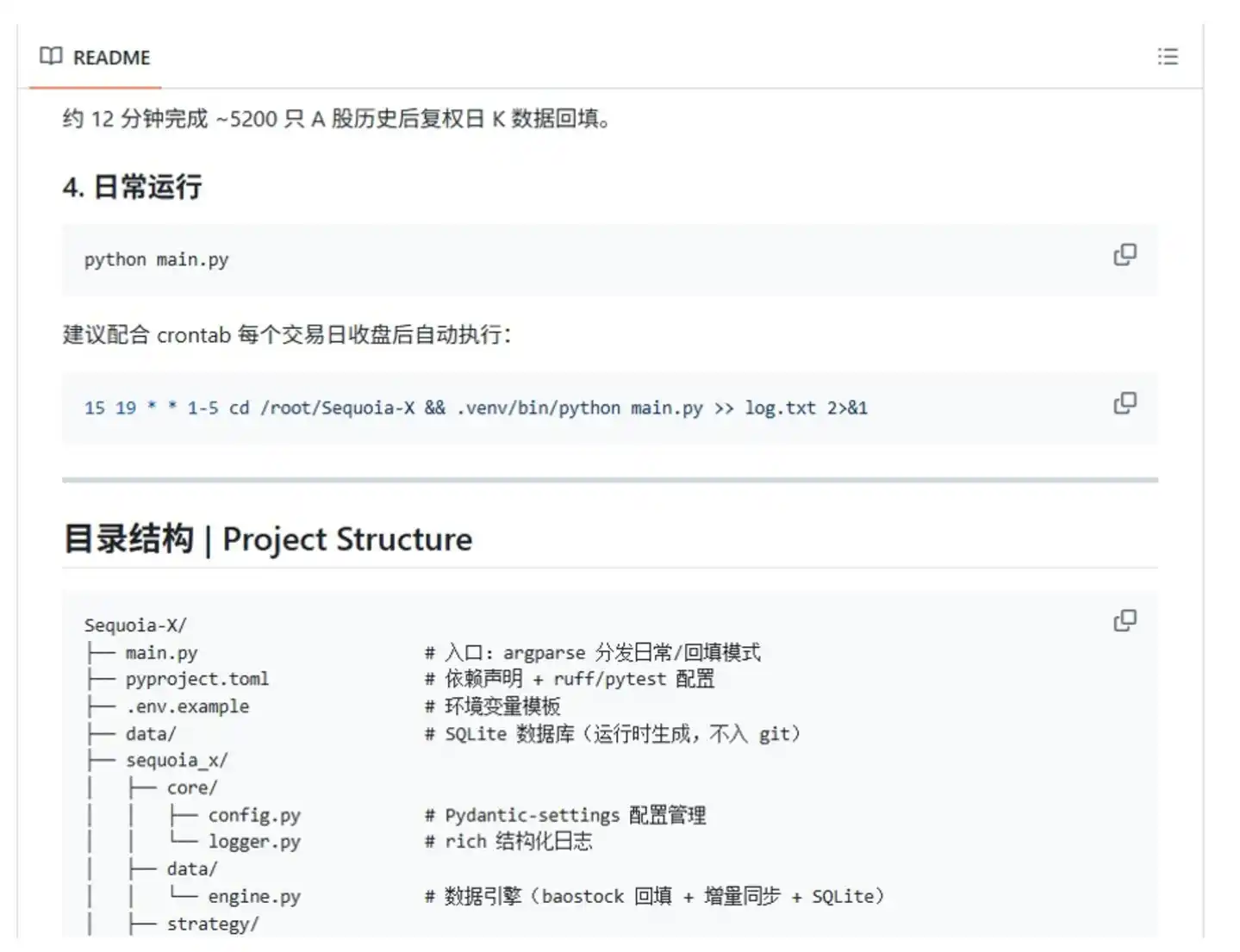
The report says the first historical backfill takes about 12 minutes. After that, normal daily runs need only around two to three minutes per trading day.
Built with an infrastructure mindset
The author, YangYuDong, is described as a developer whose GitHub profile also includes infrastructure-heavy work, including an MQTT middleware project and an instant messaging service. The article says those projects have the same basic bent: handling large amounts of data and keeping operations stable. In the A-share quant setting, that thinking shows up in Sequoia-X’s treatment of stock screening. Data comes in. Results go out. The middle part is handled by a full engineering pipeline.
Sequoia-X also got a rewrite. Version 1 leaned mostly on akshare. The report says that release had wide functionality, but it depended on web interfaces, which led to recurring trouble from anti-scraping controls and missing fields. In V2, the project switched to baostock and was rewritten around modern engineering standards. The README phrase “The king returns” is tied to that relaunch.
Three layers: data, strategy, and delivery
The article splits the system into three layers.
The data layer is the foundation. Sequoia-X pulls backward-adjusted daily K-line data through baostock. As the report explains it, backward adjustment takes the latest price as the reference and proportionally adjusts historical prices after dividends or other corporate actions. That keeps newly added daily bars aligned with the pricing basis already stored in the database and avoids isolated jumps caused by adjustment mismatches. So in routine operation, the system only has to append one new bar per stock instead of downloading the entire history again. With eight parallel processes, incremental updates for the whole market can finish in about two to three minutes, versus more than ten minutes for a full refresh.
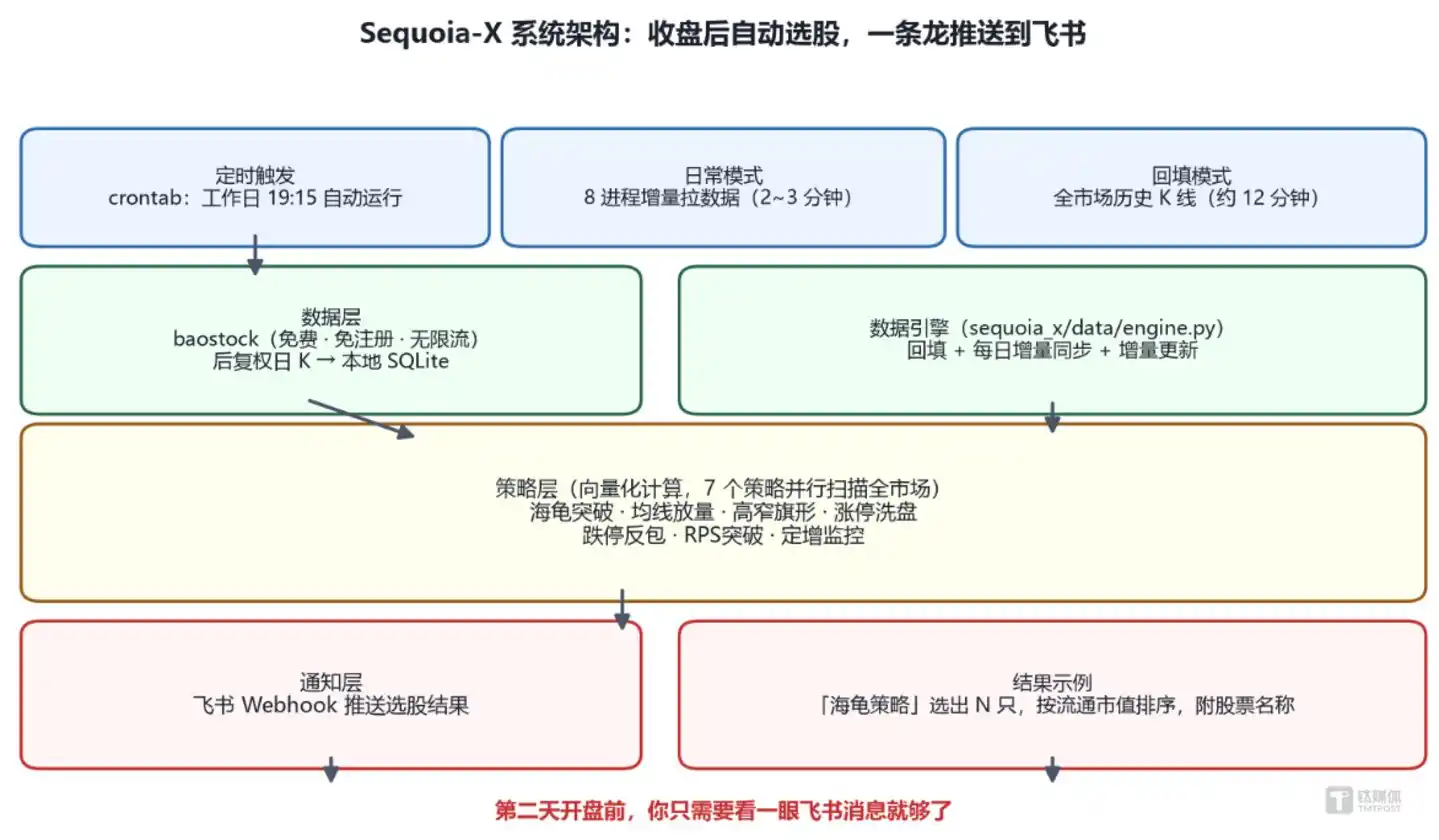
The piece says this is a standard local quant workflow: one full historical load at the start, then incremental updates for day-to-day use.
The strategy layer is the heart of it. All seven built-in strategies use vectorized calculations, relying on pandas rolling windows for batch processing instead of looping through candles one at a time. The code reportedly even carries a blunt warning: “iterrows is strictly forbidden.” Fair enough. The practical reason is speed. Once the dataset grows past one million rows across the market, row-by-row Python loops bog down badly, while batch operations backed by C-level execution can run dozens of times faster.
The notification layer handles the last mile. Each strategy can be tied to its own Feishu bot, so one group might get turtle breakout signals while another gets RPS output. Before sending alerts, the system also looks up stock names through baostock, rather than dumping code-like tickers on users and forcing them to search the companies themselves. The article treats that as one of the small touches that helped the project spread by word of mouth.
SQLite was picked for storage. The report calls it a practical choice: one file, no separate service to deploy, and backups or migration are as simple as copying the file. For a personal project, that keeps upkeep light.
The flagship strategy is turtle breakout, adapted for A-shares
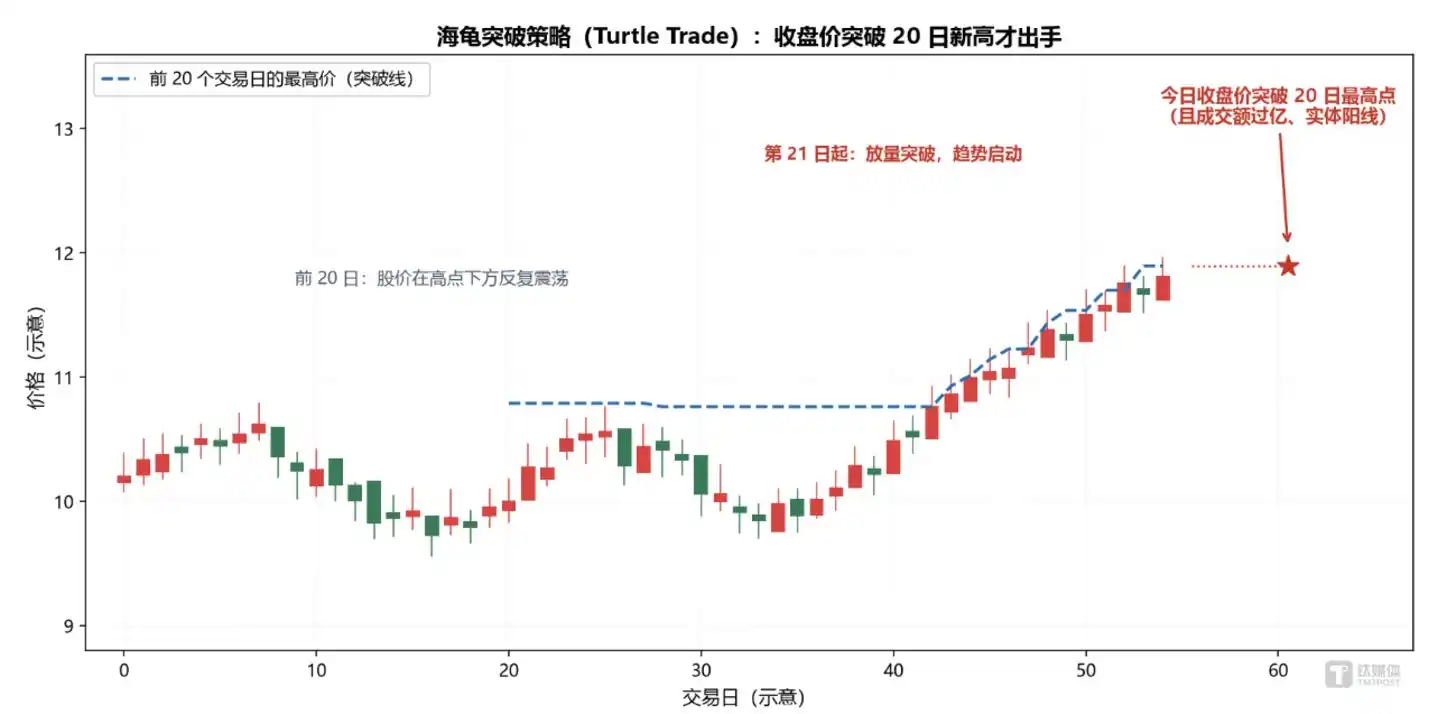
The article spends the most time on turtle breakout. It traces the setup back to 1983, when trader Richard Dennis recruited 13 people from different backgrounds, trained them for two weeks, and gave each person a live trading account on the scale of one million dollars to test whether trading skill could be taught through rules. The report says the Turtle students later produced average annualized returns of about 80% over four years. Curtis Faith later documented the method in the 2007 book Way of the Turtle.
The core rule is simple: buy when price breaks above the highest point of the past 20 days, and get out when it drops below the lowest point of the past 10 days. The article says the system does not try to forecast price moves. It follows them. That is the whole idea.
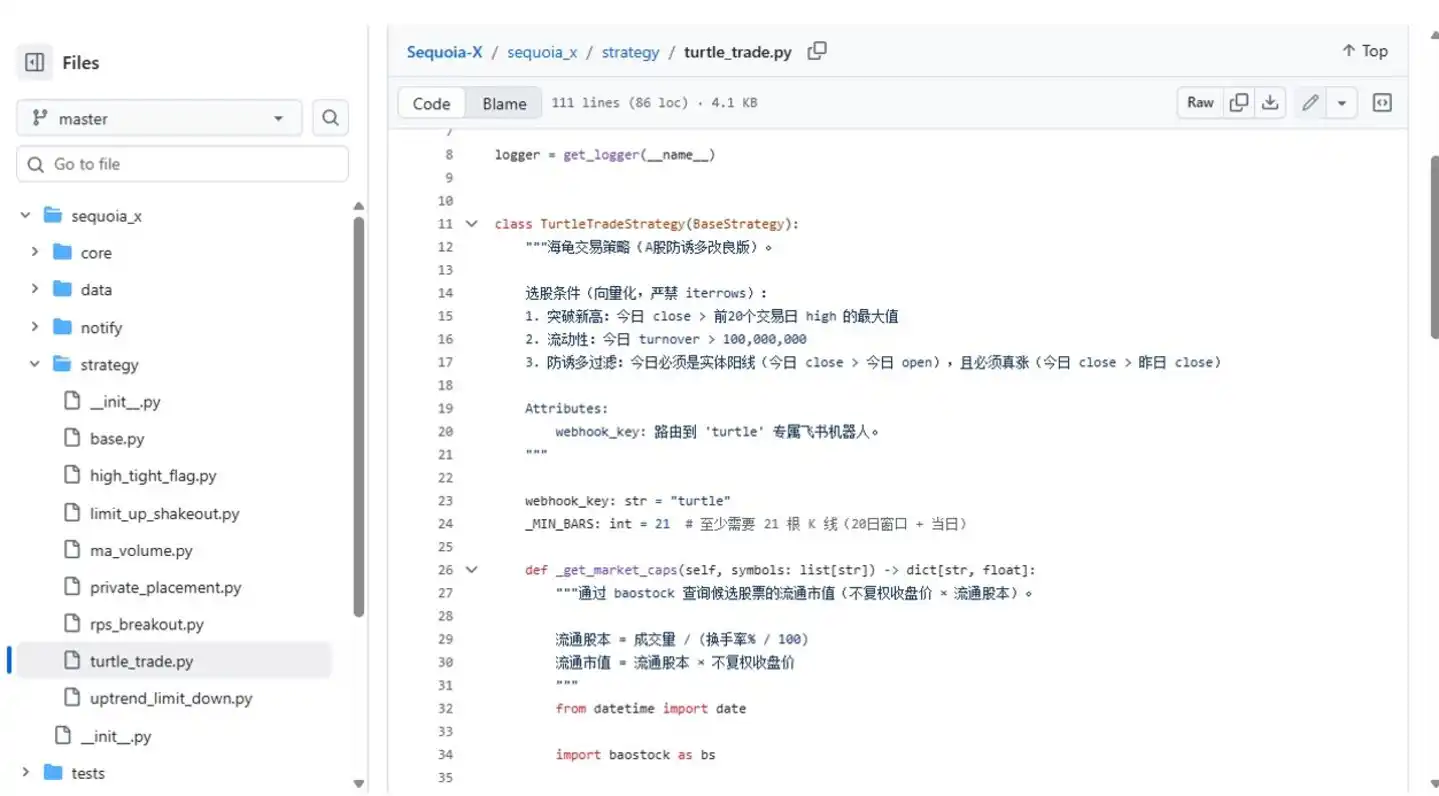
Sequoia-X modifies that framework for the A-share market and adds three defensive filters:
- daily turnover must exceed CNY 100 million to ensure liquidity;
- the day’s candle must be a solid bullish candle, meant to screen out large bearish reversals after a high open;
- the closing price must be above the previous day’s close, used to remove false bullish candles created by intraday fade.
After passing those checks, screened stocks are ranked by free-float market capitalization from large to small. Bigger names come first, as a way to cut the risk of price action being pushed around by speculative capital.
The report says the source code includes a comment reading, “[New defensive condition added] Reject the kind of high-open, low-close large bearish candle seen in Zhengzhou Coal Electric!” The article uses that line to make a point: these filters were not dreamed up in theory. They came from actual trading lessons. Hard-earned stuff.
Seven strategies span trend, pattern, sentiment, and event-driven ideas
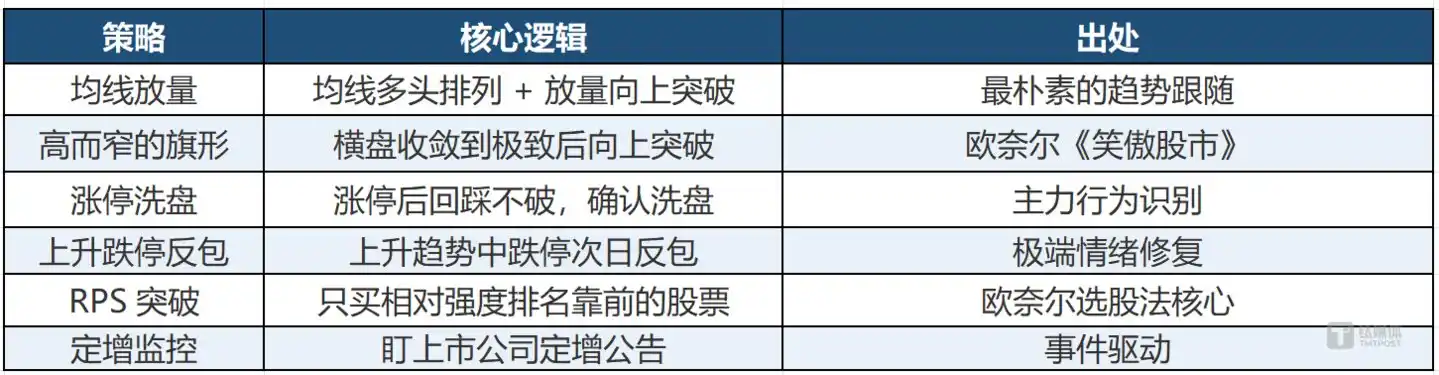
Beyond turtle breakout, the report names six other strategies. One highlighted example is RPS breakout, which the article connects to William O’Neil’s How to Make Money in Stocks. The idea underneath it is to buy stocks with strong relative strength rankings, based on the view that names beating the broader market often keep leading. Another example is private placement monitoring, which the report classifies as event-driven rather than purely technical because it tracks announcements for news-based signals.
Taken together, the seven strategies are described as covering four dimensions: trend, chart pattern, sentiment, and events. The article says none of them is meant to answer whether a stock will rise tomorrow. That is not the target. Instead, they answer a tighter question: which names deserve attention right now. In the report’s wording, that is a shift from guessing to filtering.
Python 3.10 and a short setup path
For people who want to run the project themselves, the report says the barrier is fairly low. The only explicit environment requirement mentioned is Python 3.10 or above.
Setup is described in three steps. First, install dependencies; the article recommends uv. Second, set up notifications by copying .env.example to .env and filling in the Feishu bot webhook address. Third, backfill historical data with python main.py --backfill, then run python main.py each day to generate the latest results. A crontab task can be added so the whole thing runs automatically with no manual intervention.
Users who want to write a strategy of their own can do that by inheriting the BaseStrategy class, implementing a run() method that returns a stock list, and adding one registration line in main.py. The article says the surrounding pieces for data access, logging, and exception handling are already there.
A showcase for AI-assisted software development
The report also presents Sequoia-X as a current example of Python engineering. It says the project uses Pydantic-settings for configuration management, rich for structured log output, hypothesis for property testing, and ruff together with pytest for code quality gates. Dependency versions are locked with uv.
The article also says AI tools were part of the development process. Several commits are signed by claude, and the piece sums that up as a case of one experienced programmer working with an AI assistant on a project that has now crossed 6,800 stars.
Why the project gained traction
The article wraps up by linking Sequoia-X’s momentum to three overlapping trends. First, quant tools are becoming democratized: systematic trading is no longer just for institutions, and an ordinary computer plus a free data source can be enough to begin. Second, free and unlimited data interfaces such as baostock are available, lowering a major barrier for individual developers. Third, AI-assisted development is becoming normal, illustrated here by the collaboration between the author and Claude.
As for why this project in particular stood out, the report points to a mix that is hard to get in one package: a free data source, clear strategy logic, a fully automated workflow, and source code users can modify on their own. It does not make decisions for the user. But it does help with two areas retail investors often struggle with most: processing information and staying disciplined.
The article ends with a warning. Sequoia-X is a tool, not a money printer. Technical setups are still probability-based, every strategy can hit periods when it stops working, and the output should be treated as a watchlist rather than a direct buy signal. The report suggests testing it with small positions before putting more capital to work.