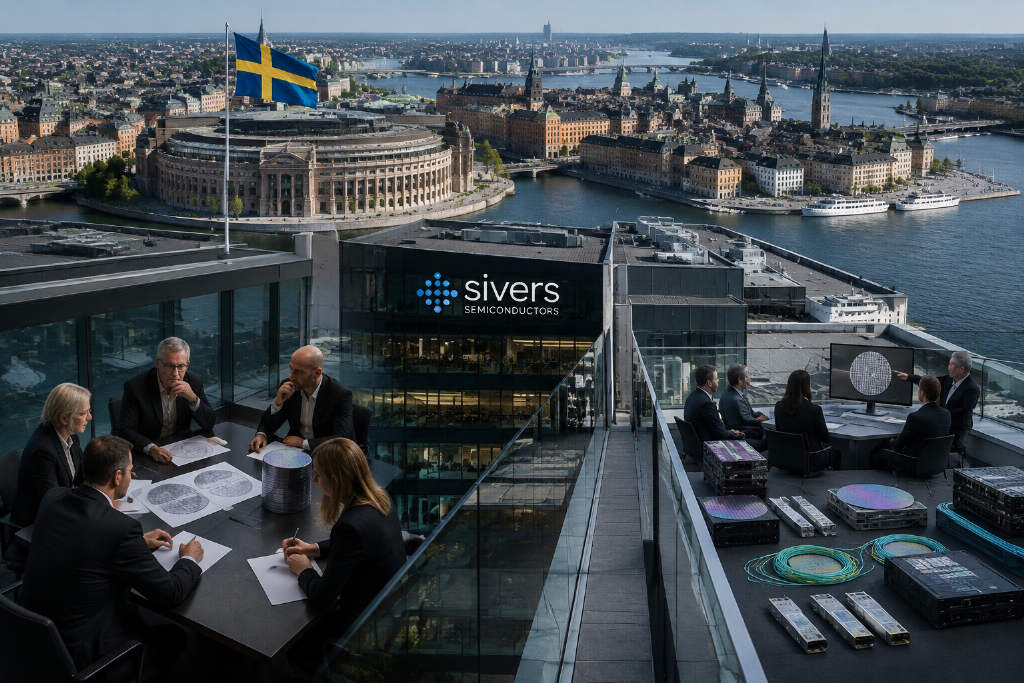
Serenity, the investor known as the 'White-Hair Stock God,' has publicly questioned Sivers Photonics' (SIVE) current strategy, arguing that the company remains overly focused on the Swedish market while US investors are more likely to reward its future growth potential and the real economic value of its order book. According to Serenity, American analysts would be more interested in what Sivers' two recent wafer fab capacity allocations actually mean—and, with supply bottlenecks and rising average selling prices (ASP), how much revenue and operating leverage those volumes could translate into. Serenity also said topics like NPO/CPO, pluggable optical modules, the 2028 volume ramp of CPO makers such as Ayar, the ELS product collaboration with O-Net, and the scale and potential total addressable market (TAM) of six newly added pluggable customers deserve deeper discussion. By contrast, local market participants keep pressing management on 'how to stop the bleeding,' why private customers cannot be disclosed, why the company is focused on transceivers, and what the 'business opportunity pipeline' actually means—forcing management to spend considerable time defending itself instead of talking about future growth. Serenity believes the more time Sivers spends on the Swedish market, the more its valuation becomes constrained by Swedish market investment logic, and it should therefore present its growth opportunities and their economic value more aggressively to US investors.
Serenity, the investor known as the 'White-Hair Stock God,' has publicly questioned Sivers Photonics' (SIVE) development strategy, arguing that the company is too anchored to the Swedish market and needs to make its case to US investors or risk capping its own valuation, according to Odaily.
In his view, American investors are more likely to focus on what Sivers' two recently secured wafer fab capacity allocations actually mean. With supply bottlenecks unresolved and average selling prices (ASP) rising, the key question is how much revenue and operating leverage those capacity commitments can generate.
Serenity also flagged a set of topics he believes deserve deeper discussion: NPO/CPO trends, pluggable optical modules, the 2028 volume ramp from CPO players such as Ayar, the ELS product tie-up with O-Net, and the scale plus potential total addressable market (TAM) of six newly added pluggable customers.
In the Swedish market, the conversation looks different. Local participants, Serenity observed, keep pushing management on 'how to stop the bleeding,' why private customers cannot be disclosed, why the company remains focused on transceivers, and what the 'business opportunity pipeline' actually means. That dynamic forces management to spend much of its time fielding skeptical questions rather than laying out the growth narrative.
Serenity's warning is blunt: the more time Sivers devotes to the Swedish market, the more its valuation gets trapped inside Swedish market logic. His advice is to move more aggressively in showing US investors the future growth opportunities and the economic value behind them.
This article was originally published by Bit.Fan. For more cryptocurrency news and market insights, visit www.bit.fan. Disclaimer:
The market information, project data, and third-party content displayed on this platform are for industry information sharing only and do not constitute any form of investment advice or return commitment.
Cryptocurrency trading carries high risks. Users should fully assess their risk tolerance and make independent decisions. All profits, losses, and legal responsibilities are borne by the users themselves.