
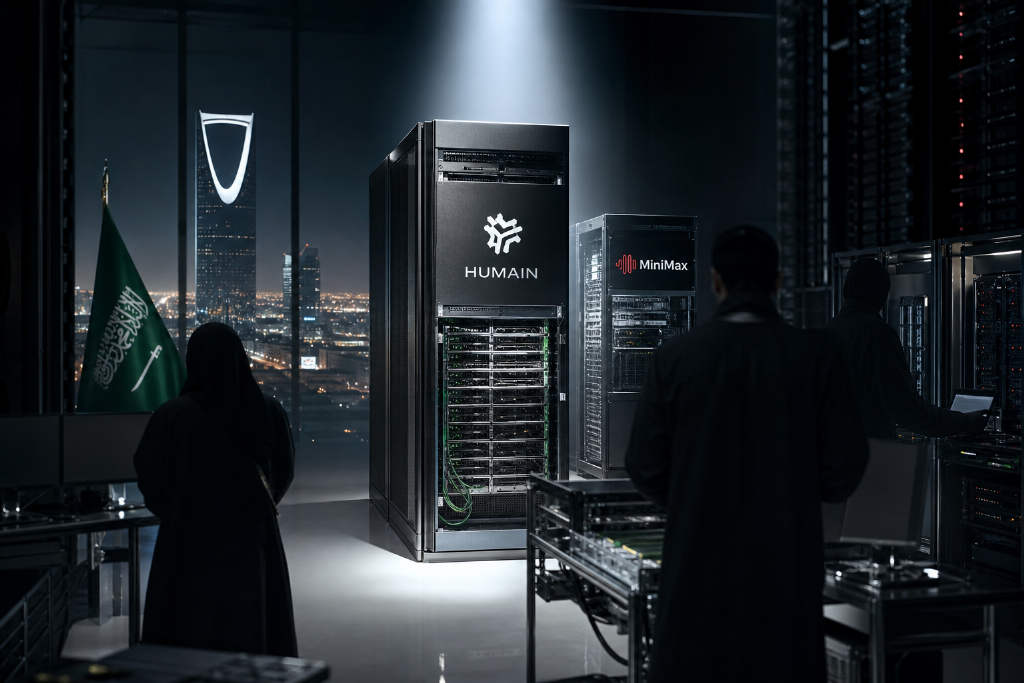
Saudi AI firm HUMAIN has just rolled out its M3 model, and at first it was presented as “100% Saudi-made”. But that claim drew questions from people in the technical community. After that, project lead Sultan Alfaifi said HUMAIN M3 is in fact built on top of the M3 model created by China’s MiniMax.
A report from Max For AI says HUMAIN M3 and MiniMax M3 both use a Mixture-of-Experts (MoE) architecture. Same setup, basically: 428 billion total parameters and 23 billion active parameters, which points to a very high level of architectural consistency. HUMAIN said it carried out post-training on the MiniMax base with more than 1 trillion Arabic tokens. The work was aimed at improving Arabic language understanding, local culture, agentic AI, tool calling, and computer operation.
HUMAIN said the model posted an average score of 89.37% across seven Arabic-language benchmarks. And the company says it will open-source the model weights and deploy them on servers in Saudi Arabia so it can satisfy local data sovereignty requirements.
Max For AI said the partnership shows Chinese AI models are moving beyond merely supplying APIs and products. They are becoming the technical backbone for other countries trying to build their own sovereign AI systems. Big shift. The trend also points to the rising global competitiveness of Chinese foundational AI models and their integration into international AI ecosystems.