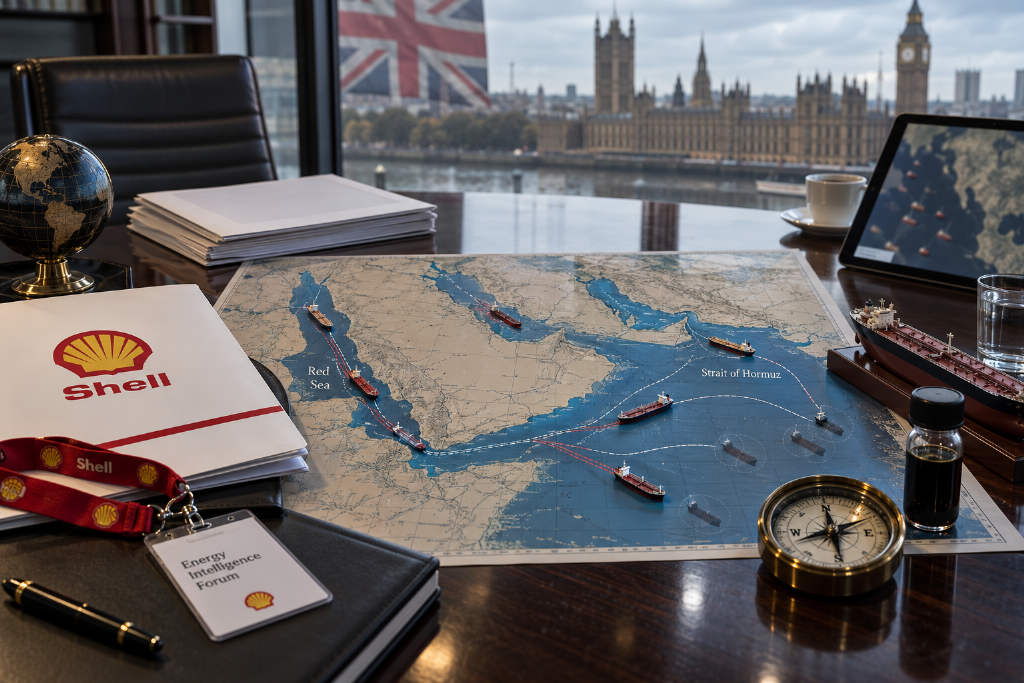
Shell CEO Wael Sawan said oil flows from the Middle East have recovered to more than 80% of their pre-conflict level, offering one of the clearest assessments so far of how far the region’s energy exports have rebounded. Speaking Tuesday at the Energy Intelligence Forum in London, Sawan said that despite recent disruptions, many countries in the region have shown resilience and continued to meet their commitments to supply energy to global markets. He said current flows are now above the 80% mark compared with levels seen before the conflict.
His remarks come as several large banks and shipping data analytics firms have also assessed that Middle East oil flows are moving closer to pre-conflict levels. Even so, the exact pace and scale of the recovery remain disputed in the market. One reason is that vessel traffic through the Strait of Hormuz and parts of the Red Sea is difficult to measure precisely. According to the report, many ships frequently switch off their satellite positioning signals, making it harder for outside observers to estimate cargo volumes accurately.
BlockBeats reported on Oct. 6 that Shell CEO Wael Sawan said oil flows from the Middle East have recovered to more than 80% of their pre-conflict level, in what the report described as one of the most significant assessments so far of the region’s energy export recovery.
Speaking Tuesday at the Energy Intelligence Forum in London, Sawan said: "Despite everything that has happened, we are now back to more than 80% of pre-war levels, which shows that many countries in the region still have strong resilience and can continue to honor their commitment to supply energy to global markets."
Several large banks and shipping data analytics firms have also said Middle East oil flows are approaching pre-conflict levels. Even so, the market is still divided over the exact extent of the recovery.
The actual number of vessels moving through the Strait of Hormuz and parts of the Red Sea is not easy to track with precision because many ships frequently turn off their satellite positioning signals, making it harder to calculate cargo volumes accurately.
This article was originally published by Bit.Fan. For more cryptocurrency news and market insights, visit www.bit.fan. Disclaimer:
The market information, project data, and third-party content displayed on this platform are for industry information sharing only and do not constitute any form of investment advice or return commitment.
Cryptocurrency trading carries high risks. Users should fully assess their risk tolerance and make independent decisions. All profits, losses, and legal responsibilities are borne by the users themselves.