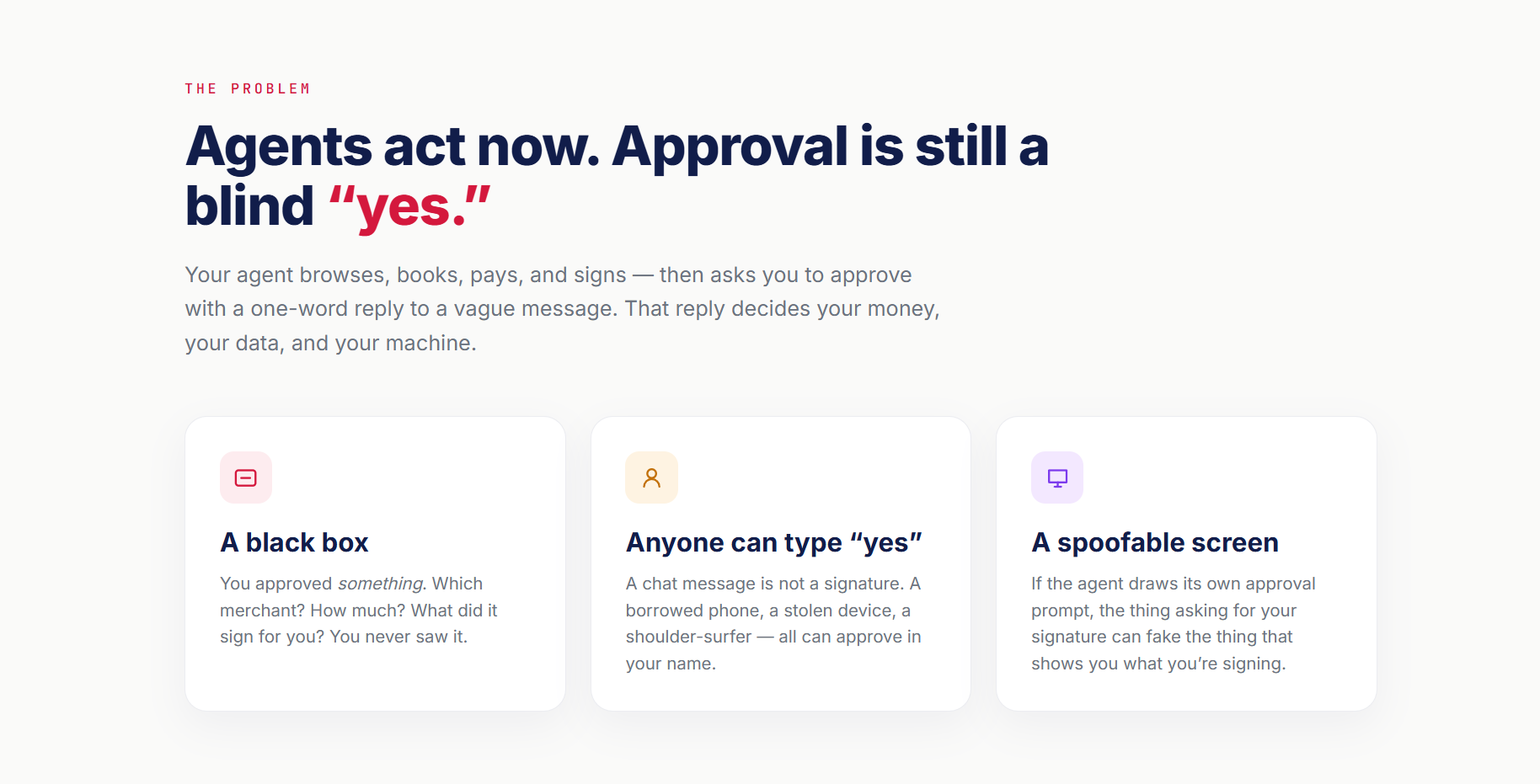
AI agents are increasingly taking over daily tasks—from payments to contract signing—but a single vague 'confirm' message can hand over users' assets and device permissions. Under traditional authorization schemes, users often click 'Yes' without full transparency, leading to theft or malicious smart contract calls.


Sigil addresses this exact pain point. Its core idea: an AI agent should not gain execution rights based solely on a pop-up message. Before executing any sensitive operation, Sigil forces the agent to present the intent, parameters, and scope in a structured format. Users must 'inspect' the details and then 'sign' with their private key, rather than simply clicking 'agree.' This mechanism locks the agent's autonomy within a safety boundary, ensuring asset permissions always remain under user control.
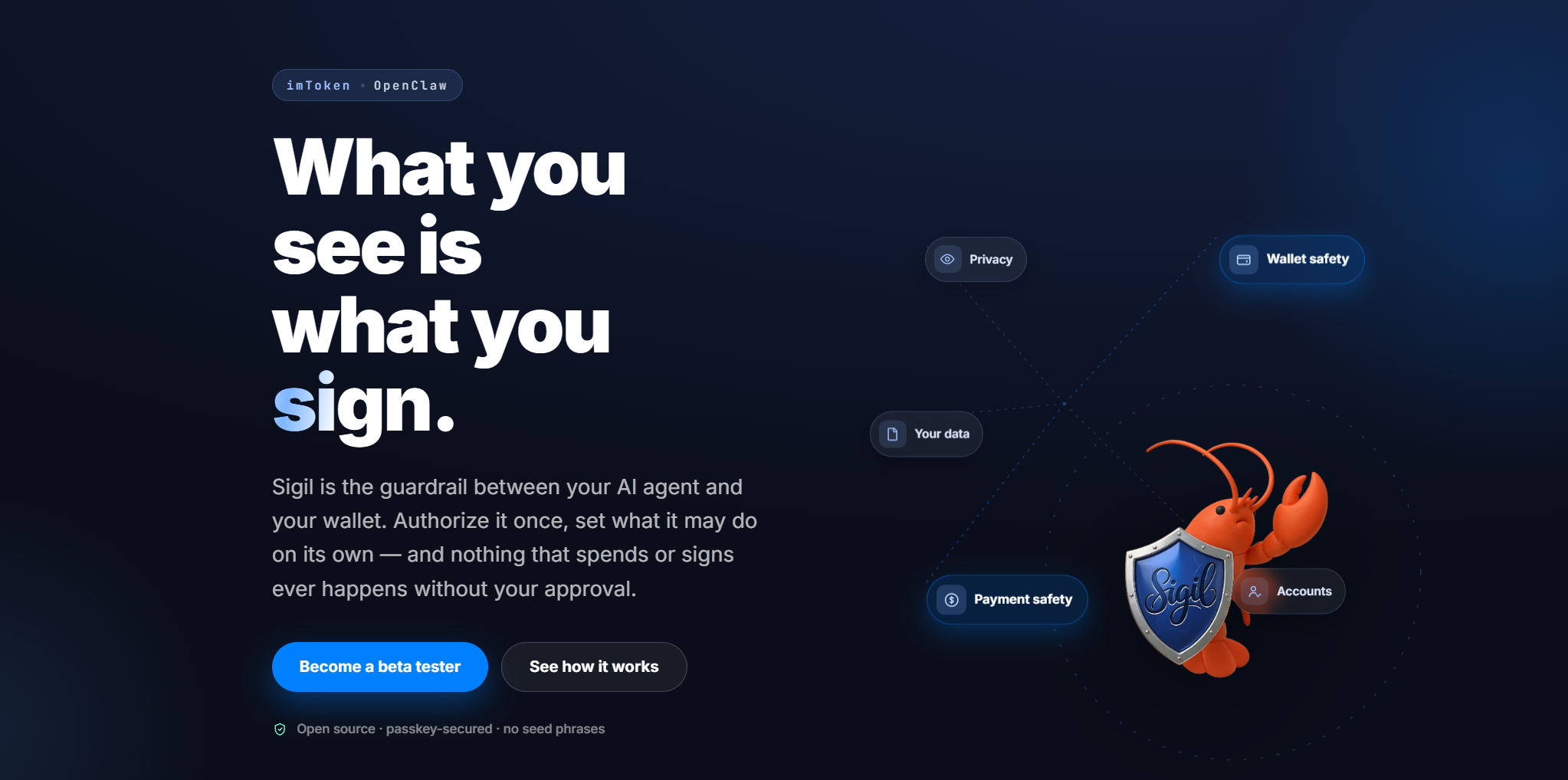
Sigil's solution provides a critical security foundation for the mass adoption of AI agents. As the agent economy arrives, such guardrails will become infrastructure-level necessities.