
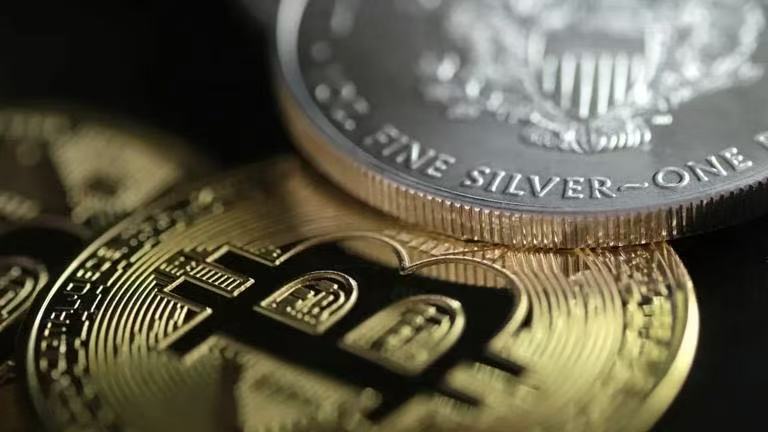
On January 27, silver prices surged as much as 16% to hit an all-time high of $117.73 per ounce. Over the past 12 months, silver's market cap increase has been twice that of Bitcoin. The iShares Silver Trust (SLV) saw trading volume surge to $32 billion in a single day, 15 times its daily average and surpassing the combined volume of SPY, Nvidia, and Tesla, making it the most traded security globally.
Silver, a precious metal dormant for nearly a decade, is rebranding from "poor man's gold" to "industrial growth necessity." An irreversible industrial revolution is reshaping its fundamentals.
Solar, EVs, and AI: Three Industrial Demand Drivers
The solar sector's silver demand spiked in 2022 as technology shifted from PERC to higher-efficiency cells requiring more silver paste. In 2024, global solar silver consumption hit 6,147 tonnes, accounting for nearly 30% of total demand, matching jewelry demand. Silver paste now makes up 53% of non-silicon costs in solar cells. Giants like Longi Green Energy report profit margin pressure from rising silver costs, but have no viable substitutes.
Electric vehicles are another key driver. Global EV penetration rose from 3% in 2019 to 21% in 2024. Each EV uses 2-3 times more silver than a gasoline car. A typical 100kWh battery pack requires about 1 kg of silver. BYD alone, with projected 4.3 million vehicles in 2025, could demand 4,300 tonnes. The company is also developing silver-based solid-state batteries.
AI data centers are the fastest-growing silver segment, with demand jumping 30% in 2025 to over 1,000 tonnes. A single Nvidia H100 server contains 1.2 kg of silver, more than double a traditional server's 0.5 kg.
Supply constraints compound the pressure. About 70% of silver is a byproduct of copper, lead, and zinc mining, making it price-inelastic. The market has faced structural deficits for five consecutive years since 2021, with the gap widening.
Gold-Silver Ratio Plunges Below 50: Monetary and Rotation Forces
Silver's monetary attributes are reawakening. The gold-silver ratio has fallen below 50, halved from 103 at the start of 2025 and hitting a 14-year low. The historical average is 60-70; breaking 50 signals a clear silver revaluation.
Once gold enters a bull market, money rotates to silver for higher beta. In 2025, gold rose 67.5%, while silver surged 175% — 2.6 times gold's gain. The collapsing ratio reflects this rotation.
JPMorgan: From Manipulator to Largest Silver Hoarder
The most telling signal comes from JPMorgan Chase, fined $920 million in 2020 for manipulating silver prices. After the penalty, it pivoted to hoarding physical silver. Estimates show JPMorgan now holds over 750 million ounces of physical silver, more than the SLV ETF. It closed about 200 million ounces of paper shorts from June to October 2025, then added 21 million ounces of physical in just six weeks through December. CFTC data confirms non-commercial net longs hit a record in January 2026, with JPMorgan a major contributor.
Bloomberg and Reuters suggest JPMorgan learned of huge Chinese solar and EV demand through client orders. In late 2025, it moved its precious metals trading desk to Singapore and built vaults there.
When the former manipulator becomes the biggest holder, a violent bull market follows.
Money Rotates Out of Bitcoin Into Silver: ETF Data Speaks
In January 2026, Bitcoin spot ETFs saw $1.7 billion in net outflows over 11 trading days, while silver ETFs attracted record inflows. On January 27, SLV's $32 billion trading day led all ETFs globally, with the 2x leveraged silver ETF AGQ ranking fifth. Retail investors poured over $920 million into silver ETFs in 30 days through January 15, a record, per VandaTrack.
Market chatter points to concerns over Bitcoin safety — reports of the U.S. government cracking Bitcoin wallets and quantum computing threats accelerating the shift to physical assets. Bitcoin fell over 30% from its highs in 2025, while silver rose 175%. The divergence is clear: silver is the new favorite.