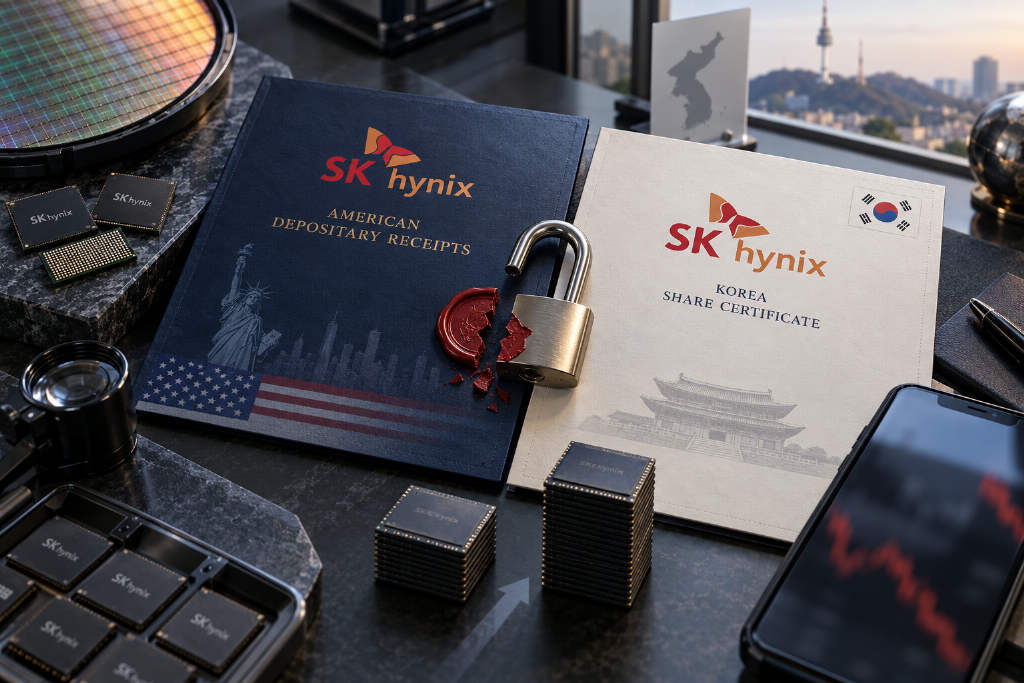
SK Hynix’s U.S.-listed American depositary receipts are set to face a lockup expiry on Wednesday, according to ChainCatcher. Under the arrangement, the company, its affiliates and management had been restricted from selling shares. The timing comes as the market questions how long the upcycle in memory chips can last.
The company’s ADR posted its biggest one-day drop in three weeks on Monday. Even so, by Tuesday’s close, the SK Hynix ADR was still trading at a 38% premium to the company’s Korea-listed shares, the highest among major Asian issuers tracked by Bloomberg. While that premium has pulled back recently, the ADR price remained more than 20% above its listing price.
The report also said there is no sign the company plans to issue more shares, unlike some Asian artificial intelligence companies that have recently returned to the market with follow-on offerings.
SK Hynix’s U.S.-listed American depositary receipts are due to hit a lockup expiry on Wednesday, according to ChainCatcher. Under the arrangement, the company, its affiliates and management had been barred from selling shares.
The development comes as the market questions how long strength in the memory-chip cycle can last. The company’s ADR logged its biggest drop in three weeks on Monday.
As of Tuesday’s close, SK Hynix’s ADR was trading at a 38% premium to its locally listed shares in South Korea, the highest level among major Asian issuers tracked by Bloomberg. Despite a recent pullback, the ADR price was still more than 20% above its listing price.
There is currently no sign that SK Hynix plans to sell more shares, unlike some Asian artificial intelligence companies that have recently carried out additional offerings.
This article was originally published by Bit.Fan. For more cryptocurrency news and market insights, visit www.bit.fan. Disclaimer:
The market information, project data, and third-party content displayed on this platform are for industry information sharing only and do not constitute any form of investment advice or return commitment.
Cryptocurrency trading carries high risks. Users should fully assess their risk tolerance and make independent decisions. All profits, losses, and legal responsibilities are borne by the users themselves.