
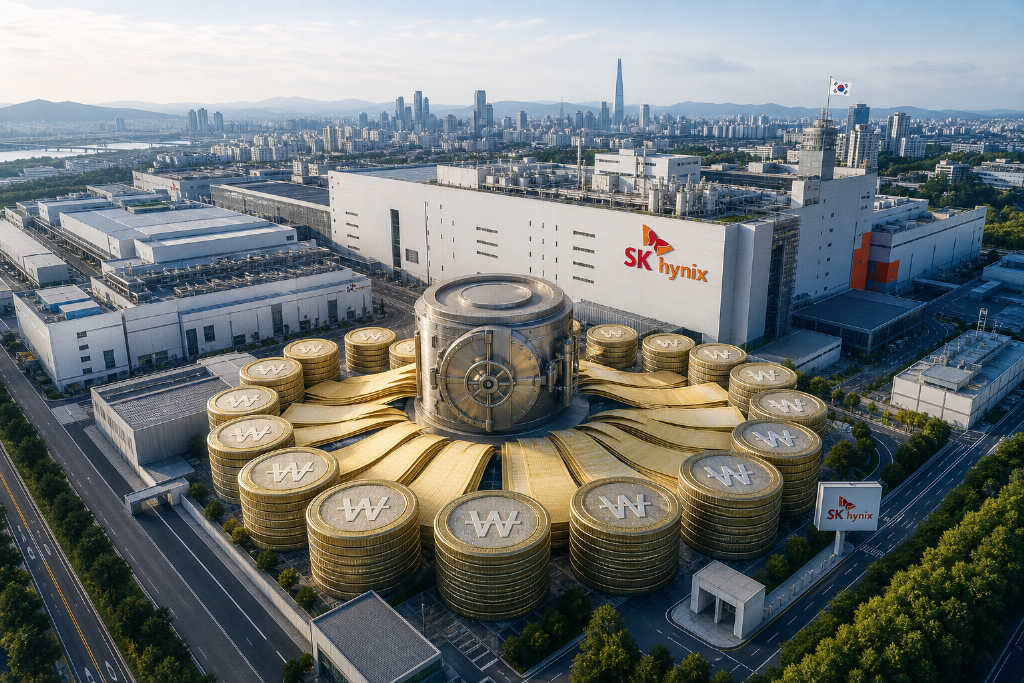
JPMorgan said SK Hynix could add at least $130 billion in shareholder returns by 2027, according to a Bloomberg report cited by BlockBeats on Aug. 20.
The projection came after SK Hynix announced a 40 trillion won share buyback plan, valued at about $290 billion, and changed its payout framework for 2025 to 2027. The company said the share of cumulative free cash flow allocated to shareholder returns would move from “up to 50%” to “at least 50%.”
JPMorgan ties upside to revised return policy
In a report, JPMorgan analyst Jay Kwon said the central point in the 40 trillion won repurchase plan was not only the headline size of the buyback, but the fact that SK Hynix raised the upper bound of its shareholder return commitment. Under the revised policy, he estimated the company could deliver “at least 180 trillion won in additional shareholder returns” by 2027, equivalent to 16% of its current market capitalization.
Kwon said that could support the stock after its recent decline. He wrote: “We believe the worst period has already passed, and we expect stock sentiment to gradually improve from a medium-term perspective, and recommend investors increase holdings in the stock.” He also said the company announced the buyback earlier than the market had expected.
Shares jump in Seoul, Samsung also rises
SK Hynix shares rose as much as 13% on Thursday on the Korea Exchange. The company had previously said it would buy back and retire as many as 24 million shares, a scale that would mark the largest share retirement plan ever announced by a listed South Korean company.
The move in SK Hynix also lifted the Korea Composite Stock Price Index, or KOSPI. Rival Samsung Electronics rose as much as 10% during the session. The market sees room for South Korean memory chip stocks to rise again if expectations for shareholder returns continue to increase.
Sector had pulled back before the rebound
Before the rally, memory-chip names had come under pressure as the market weighed concerns over the durability of AI investment and competitive pressure from China. Even after Thursday’s move, SK Hynix shares remained more than 40% below the record high reached in June.