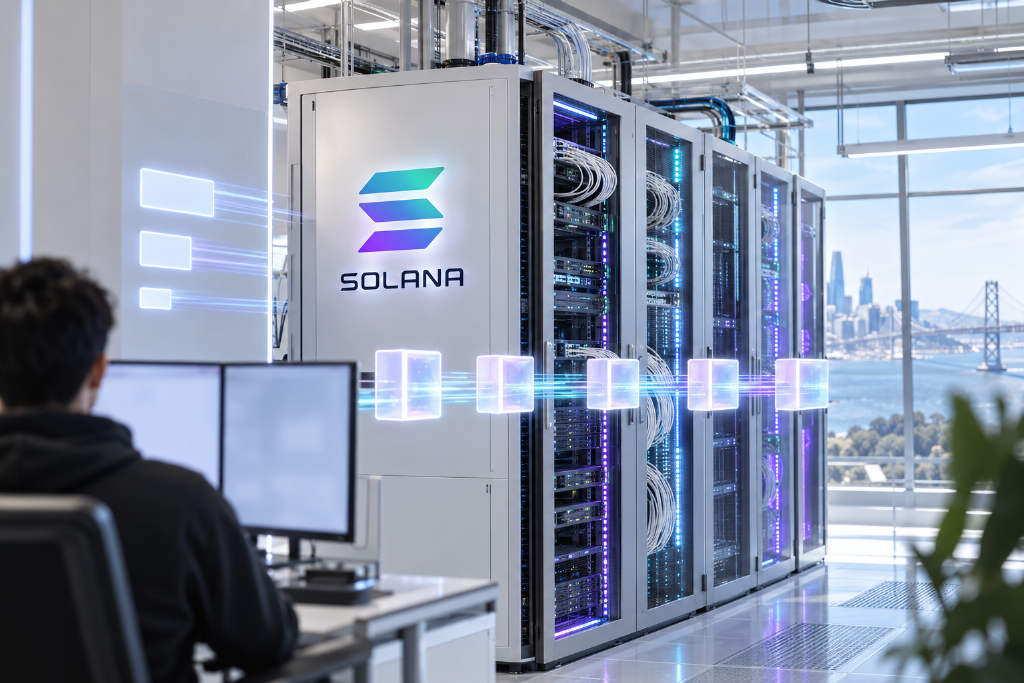
Solana is set to reduce its target block time from 250 milliseconds to 200 milliseconds when the network reaches Epoch 1053 on Friday, according to ChainCatcher. The move completes a series of block-time reductions that began in August from an initial 400 milliseconds. After the change, the network is expected to produce five blocks per second. At the same time, Solana will lower the compute limit for each individual block so that overall throughput stays roughly unchanged. The faster block cadence could help reduce transaction latency and curb transaction arbitrage activity. Still, the adjustment also raises operational demands on validators by increasing voting requirements, which may put more pressure on network connections and shorten the effective window for transactions.
Solana plans to lower its target block time from 250 milliseconds to 200 milliseconds when the network enters Epoch 1053 on Friday, according to ChainCatcher.
The change completes a series of block-time reductions that started in August from 400 milliseconds. Once the upgrade is in place, the network will produce five blocks per second. Solana will also reduce the compute limit for each block so that overall processing capacity remains roughly unchanged.
Faster block production could reduce transaction latency and transaction arbitrage activity. It will also increase validator voting demand, put more pressure on network connections, and shorten the window in which transactions remain valid.
This article was originally published by Bit.Fan. For more cryptocurrency news and market insights, visit www.bit.fan. Disclaimer:
The market information, project data, and third-party content displayed on this platform are for industry information sharing only and do not constitute any form of investment advice or return commitment.
Cryptocurrency trading carries high risks. Users should fully assess their risk tolerance and make independent decisions. All profits, losses, and legal responsibilities are borne by the users themselves.