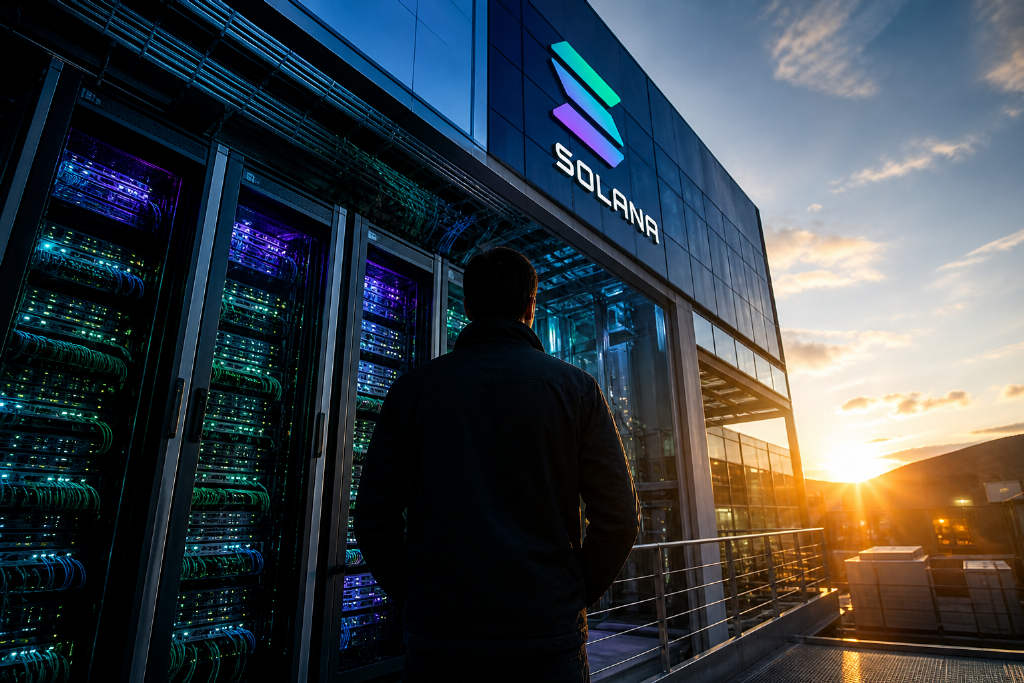
Solana validators have switched on the first of four planned slot-time reductions, cutting the network’s base timing from 400 milliseconds to 350 milliseconds. The change marks the first reduction to slot length since genesis and is part of a path toward 200 milliseconds. Solana says the upgrade should improve confirmation speed and narrow the amount of time a leader controls block production, which may help both latency and censorship resistance. But the move is rolling out in stages over the next few months, so the final 200ms target is not live yet.
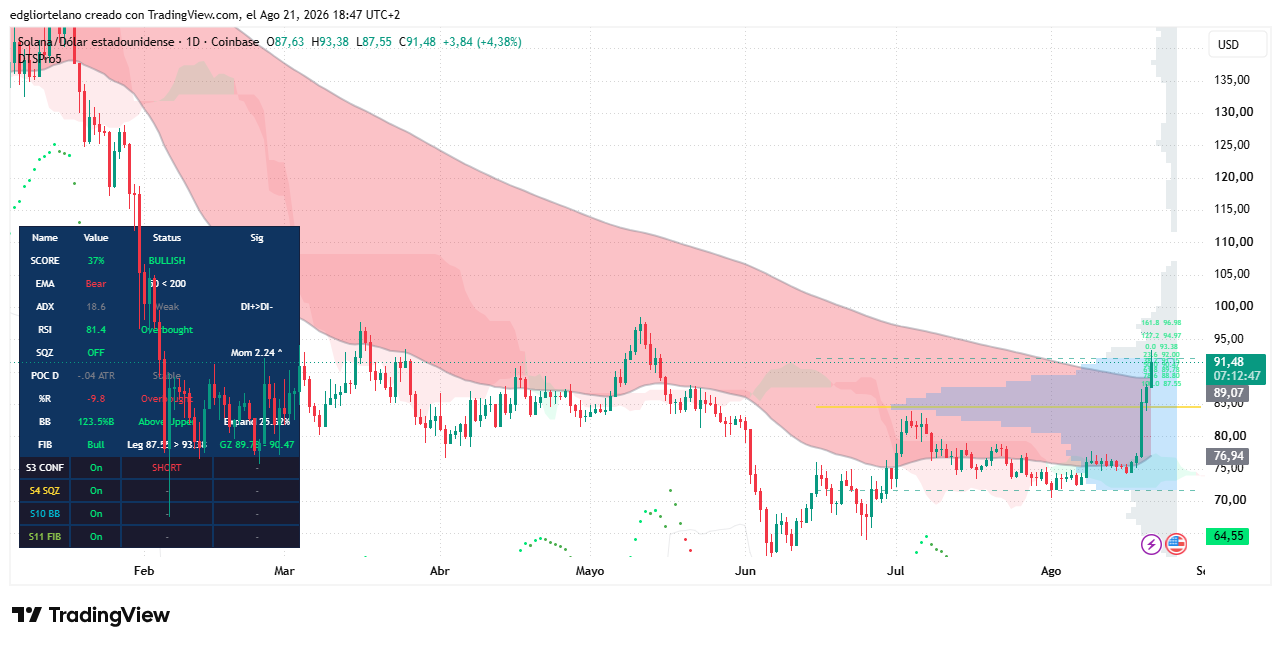
At the time of writing, SOL was trading around $91, up about 4.4% on the day and well above its June low near $64.55. The daily RSI printed 81, deep in overbought territory, while the 200-day average still carries a bear label. The article argues that the upgrade is real infrastructure work, but the broader move in SOL appears to be driven more by Bitcoin’s push to its highest level since June and roughly $3 billion in short liquidations this week. For now, the faster slot time looks more like a narrative boost for Solana’s “fastest chain” pitch than a direct price driver.
Solana has taken its first step toward faster transaction finality, with validators running the Agave v4.2 client turning on the first of four planned slot-time reductions. The network’s base timing has moved from 400 milliseconds to 350 milliseconds, the first cut to slot length since genesis.
A slot is the fixed window in which a leader can produce a block. Shorter slots mean transactions can reach finality faster, and Solana says the staged rollout is meant to push the network toward 200 milliseconds over time. The current step is part of SIMD-0525, which was first discussed as SIMD 469 and later formally approved.
The Solana Foundation says the upgrade leans on performance gains already shipped in validator clients, especially in Turbine, which handles block fanout across the network, and Replay, which lets validators re-process blocks. The Foundation describes the change in two ways: lower latency and stronger censorship resistance. A shorter slot reduces the time any leader holds block-building control, and a separate proposal to cut consecutive leader slots would tighten that further.
Solana also stressed that the rollout is gradual. Each step has its own feature gate and will switch on in a later epoch, giving the network room to pause between steps if block-skip rates climb and hardware can’t keep up.
On price, the story is less straightforward. SOL was trading around $91, up roughly 4.4% on the day and well above its June low near $64.55. The daily RSI printed 81, which puts it deep in overbought territory, while the 200-day average still shows a bear label.
The article argues that the slot-time cut is real infrastructure work, but not yet a direct catalyst for the token. Markets tend to treat changes like this as evidence of execution, not as an immediate spark for price.
For now, SOL’s broader rally appears tied more to the wider crypto move. Bitcoin climbed to its highest level since June, and roughly $3 billion in shorts were liquidated this week, lifting altcoins with it.
Where the upgrade may matter is narrative. Solana has spent years defending its throughput edge, and a public, staged move toward 200 milliseconds gives that “fastest chain” story another technical data point. That is bullish for the network itself. It is not necessarily bullish for SOL right away.

This article was originally published by Bit.Fan. For more cryptocurrency news and market insights, visit www.bit.fan. Disclaimer:
The market information, project data, and third-party content displayed on this platform are for industry information sharing only and do not constitute any form of investment advice or return commitment.
Cryptocurrency trading carries high risks. Users should fully assess their risk tolerance and make independent decisions. All profits, losses, and legal responsibilities are borne by the users themselves.