
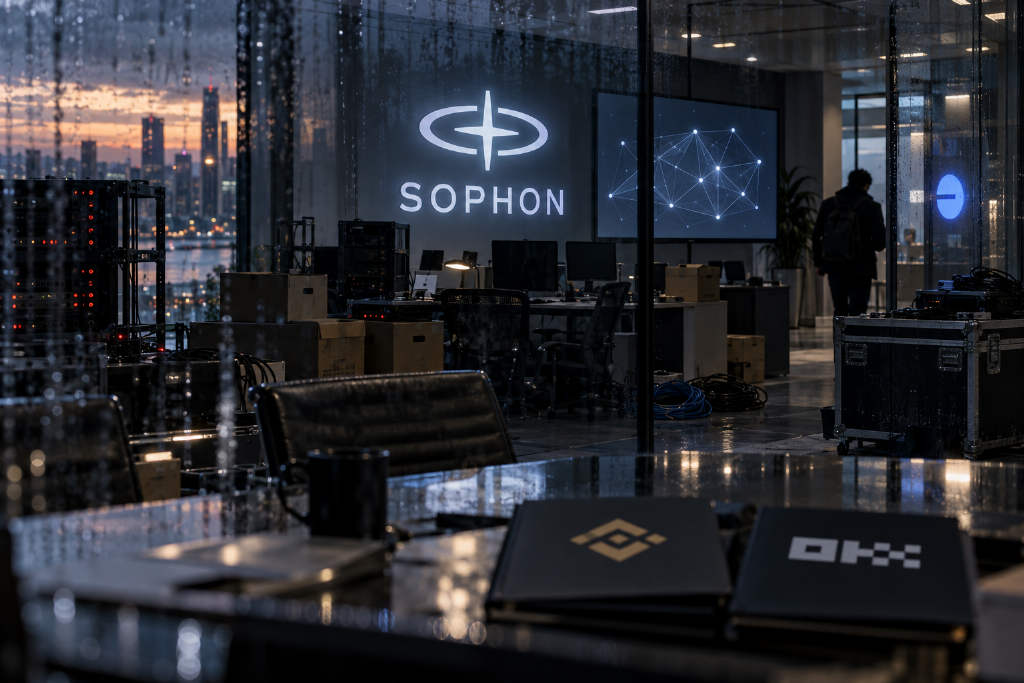
Sophon, a modular blockchain project that raised more than $70 million, said its mainnet will permanently shut down on Nov. 30. Users have until Nov. 25 to withdraw assets. The shutdown had already been mapped out earlier this year. In June, the team said it would close its Layer 2 network, migrate to Base, and focus on consumer application development.
That arc took about two and a half years: from investor enthusiasm in 2024, to a strategic pivot in June 2025, to a final mainnet shutdown now set for late November.
Funding, token launch, and exchange listings
Sophon drew strong market attention after raising more than $70 million in total.
In March 2024, the project raised $10 million from Paper Ventures, Maven 11 Capital, The Spartan Group, SevenX Ventures, OKX Ventures, HTX Ventures, and other investors.
In May 2024, Sophon raised another $60 million through node sales.
Its investor roster expanded again in October 2024, when Binance Labs, now Yzi Labs, joined the round. The amount of that investment was not disclosed. In December 2024, Sophon officially launched its mainnet.
In May 2025, Sophon completed its token generation event. SOPH has a total supply of 10 billion tokens, with 57% allocated to the community and 9% set aside for an airdrop. The token later listed on Binance, OKX, Upbit, and Gate. Its price climbed to $0.111 before falling back and then continuing lower.
June pivot to Base and cost disclosures
On June 25 this year, Sophon said it would shut down its own Layer 2 blockchain and migrate to Base, while shifting its future focus to consumer-facing applications.
Co-founder Sebastien said the team believed the real value was not in "who runs the underlying rails," but in the products built on top of them. On that basis, Sophon said it would stop maintaining infrastructure and redirect resources to the application layer.
The team also disclosed the cost of keeping Sophon running. Annual hard costs were about $3.4 million, covering chain infrastructure, RaaS, data, analytics, and developer tools. After the shutdown, Sophon said it expected to save about $3 million a year, extend runway, and put more capital into application development.
Support pullback and on-chain activity collapse
The shutdown plan triggered a series of follow-up changes. Binance stopped on-chain deposits and withdrawals, LayerZero stopped providing off-chain support, and Upbit ended trading support. SOPH also continued to fall in price.
According to DeFiLlama, Sophon's TVL dropped from a peak of about $20.1 million on May 30, 2025 to about $16,500. Fees, revenue, and active addresses on the network had all fallen to zero.
That left a project once backed by tens of millions of dollars in funding moving steadily toward its exit.
What users need to do before Nov. 25
For Sophon network participants, the report highlighted three main items.
- Withdraw liquid assets such as SOPH, ETH, and USDC through official channels, and claim any previously unclaimed staking or Guardian rewards.
- Handle unwithdrawn Sophon farm assets through official channels.
- Node holders and other participants need to follow the official migration guide. New deposits have been closed since June 25, 2026, and SOPH already has an Ethereum ERC-20 version.
All of those steps need to be completed by Nov. 25 rather than waiting until the Nov. 30 mainnet shutdown date.
Modular blockchain projects are diverging, while general-purpose L2s face pressure
With Sophon heading toward shutdown, the market is again asking whether modular blockchain networks have been fully disproven.
Based on the projects still operating, the answer is not a clear yes. But general-purpose Layer 2 networks and AppChains are clearly entering a washout phase.
- In the data availability segment, projects such as Celestia, Avail, and EigenDA are still improving technical metrics including throughput and sampling volume. Real fee generation and large-scale adoption remain bottlenecks, while some teams are trying new narratives tied to AI payments and agent economies.
- At the application layer, activity is concentrating around larger platforms. Mature L2s such as Base and Arbitrum, along with aggregation approaches such as Polygon Agglayer, are becoming the default choice. That has changed how teams calculate the cost and threshold of launching a general-purpose chain.
For ZK Stack and rollup projects like Sophon, backing from firms such as Binance Labs and OKX Ventures has not been enough on its own. Without a clear business model and recurring revenue, the report said, it is difficult to make it through another cycle. It also pointed to Abstract and Blast as earlier examples, and said more blockchain ecosystems could end up in a similar position.
Sophon's path, from fundraising and token issuance to listings on major centralized exchanges and then a planned shutdown, shows how far narrative alone can carry a project. In the end, the report argues, long-term survival still comes down to liquidity, ecosystem building, and the ability to generate sustained revenue.



