
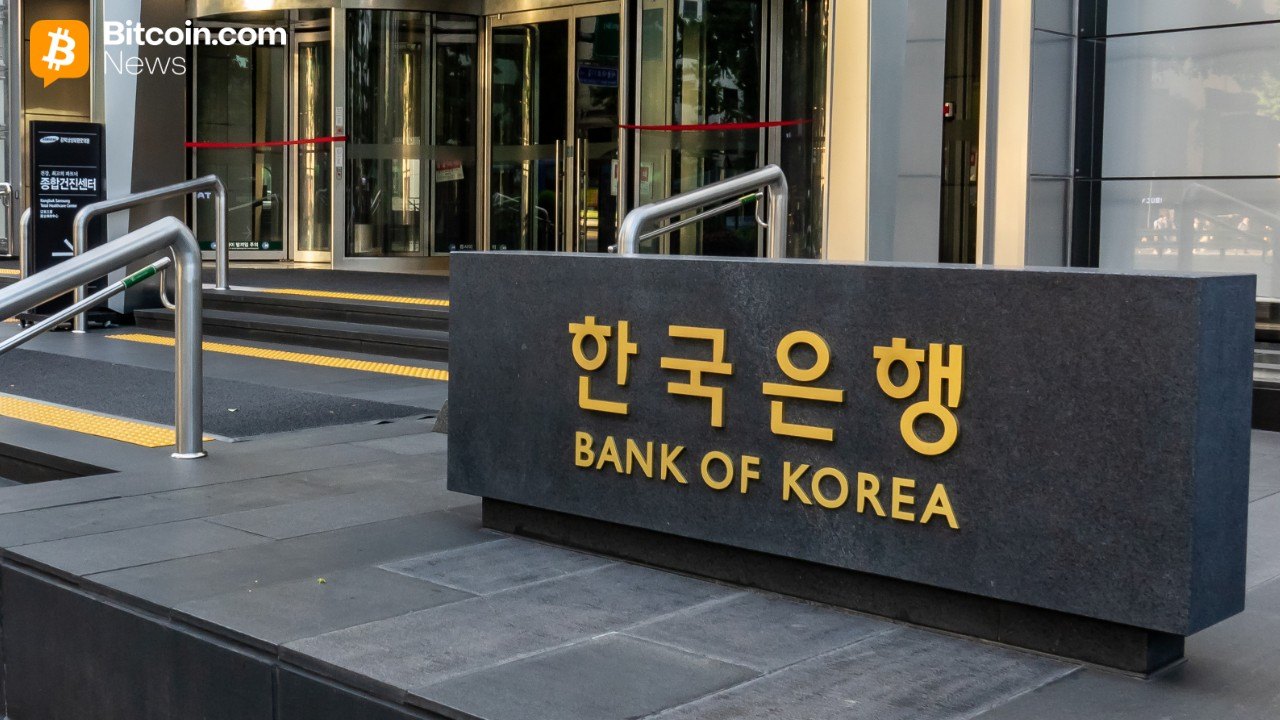
The Bank of Korea (BOK) recommended that cryptocurrency exchanges implement circuit breakers in its annual payment and settlement report released April 13. The push follows a severe operational failure at Bithumb in February: the exchange intended to distribute bitcoin rewards worth roughly 620,000 Korean won (about $419) but instead issued 620,000 BTC, valued at approximately 60 trillion won. The transfer bypassed all approval and monitoring systems, with no threshold limits triggered.
How a $419 Reward Became a $60 Trillion Flash Crash
Bithumb, one of South Korea's largest exchanges, made a critical error during a routine airdrop. Instead of sending the equivalent of $419 in bitcoin, the system released 620,000 BTC. Recipients quickly liquidated their holdings, triggering a flash crash and cascading liquidations. Stop-loss orders amplified the decline, while the exchange's fraud detection system remained inactive. The report notes that these 'ghost coins' circulated for roughly 35 minutes before trading was halted manually, with no automated alerts or supervisory intervention.
The BOK stated bluntly: 'The primary cause was the lack of internal control systems designed to prevent such operational risks … Compared to traditional financial institutions, the crypto asset industry has weaker internal controls and lower regulatory standards.' The incident demonstrated that operational errors alone can drive extreme volatility in crypto markets lacking layered safeguards, independent of market fundamentals.
Three Regulatory Prescriptions from the Central Bank
The BOK proposed three key remedies. First, adopt circuit breakers modeled on the Korea Exchange (KRX) system, which automatically pause trading during extreme price swings or abnormal order volumes. Second, build real-time ledger verification systems that automatically cross-check internal ledgers against blockchain balances to detect discrepancies instantly and prevent erroneous payments. The report emphasizes: 'There is a need for IT systems that can automatically and in real time verify whether internal ledgers match blockchain balances, and prevent erroneous payments caused by human error.' Third, mandate multi-layer supervisory approval for high-value transactions: eliminate single-employee execution authority, require dual authorization, and impose system-enforced caps tied to exchange reserves, bringing crypto platforms closer to banking-grade operational standards.
These recommendations aim to transplant traditional financial risk controls into the digital asset space. The BOK's stance could accelerate regulatory revisions under South Korea's forthcoming Digital Asset Basic Act, with stricter internal control requirements likely for all licensed exchanges.