

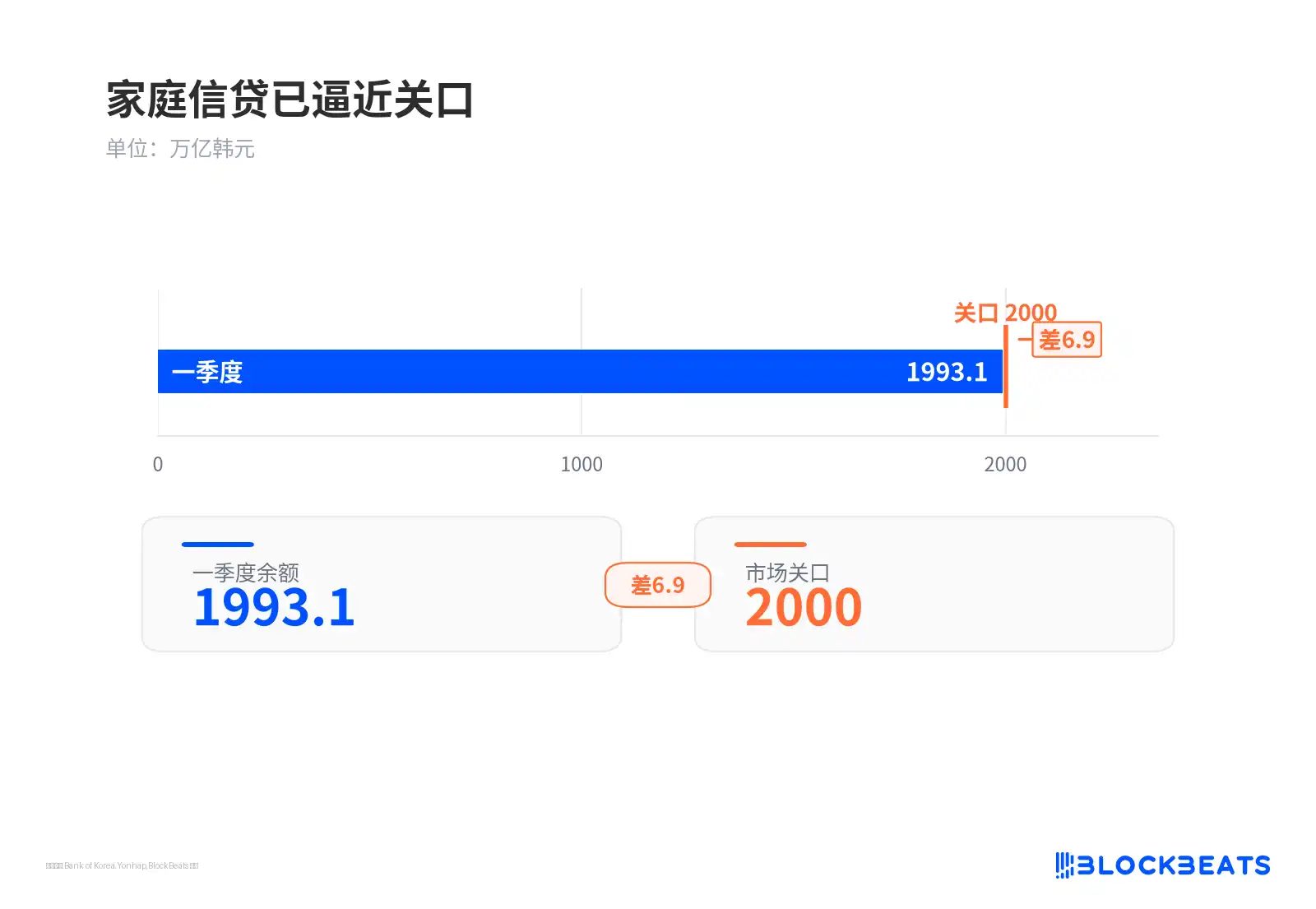
South Korea’s preliminary second-quarter household credit reading is due on Aug. 19, and markets are already focused on one threshold: whether outstanding household credit has reached or exceeded KRW 2,000 trillion.
The number is drawing attention because household credit already stood at KRW 1,993 trillion at the end of the first quarter, while household lending kept rising in May and June. For investors, the issue is not just how large household debt has become. It is whether leverage and housing prices could pull the Bank of Korea back toward a tighter path.
On July 16, the Bank of Korea raised its benchmark rate by 25 basis points to 2.75% and cited housing prices, household loan growth, and financial stability pressure in its policy considerations. It was the central bank’s first rate hike since January 2023.
Household credit is approaching a key line
Household credit refers to the stock of money borrowed by households from financial institutions including banks and insurers. It covers mortgages, consumer loans, and stock-backed or margin-style financing, and it is a stock measure rather than a monthly flow.
As that stock grows, each rate increase has a larger effect on cash flow. For highly leveraged households, a 25-basis-point move changes more than monthly payments. It can also affect home purchases, consumption, and allocations to risk assets.
The Bank of Korea said in its July statement that housing prices were rising in the Seoul metropolitan area and household loan growth was expanding. Inflation has also stayed relevant to the rate discussion, with June CPI up 3.2% from a year earlier.
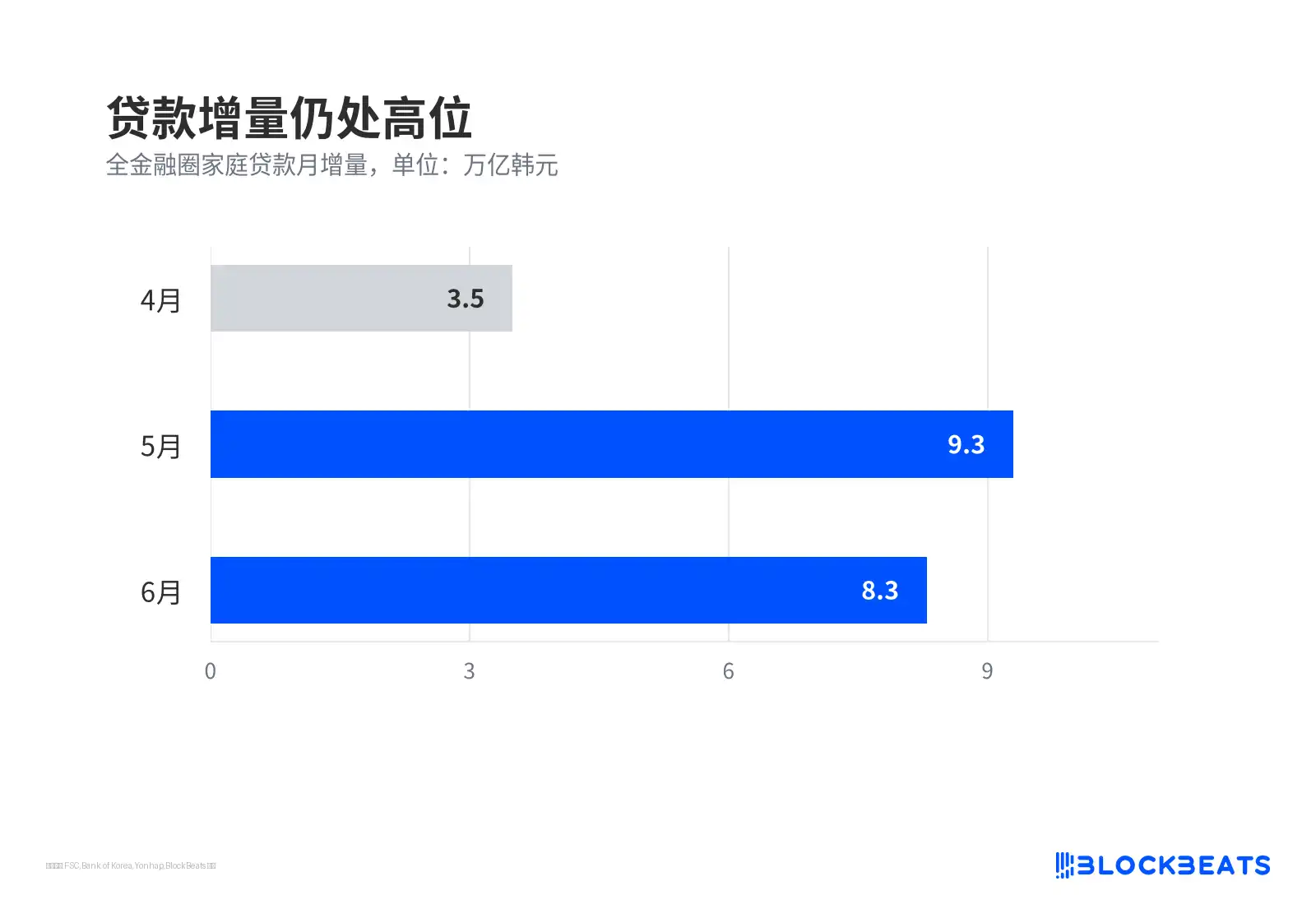
Loan growth data helps explain the policy constraint. Figures released by South Korea’s Financial Services Commission showed household loans across the full financial sector rose by KRW 9.3 trillion in May and KRW 8.3 trillion in June. Bank of Korea data also showed bank household loans increased by KRW 7.6 trillion in June, while outstanding mortgage balances reached KRW 945 trillion.
M&G sees markets as too hawkish on rates and supply
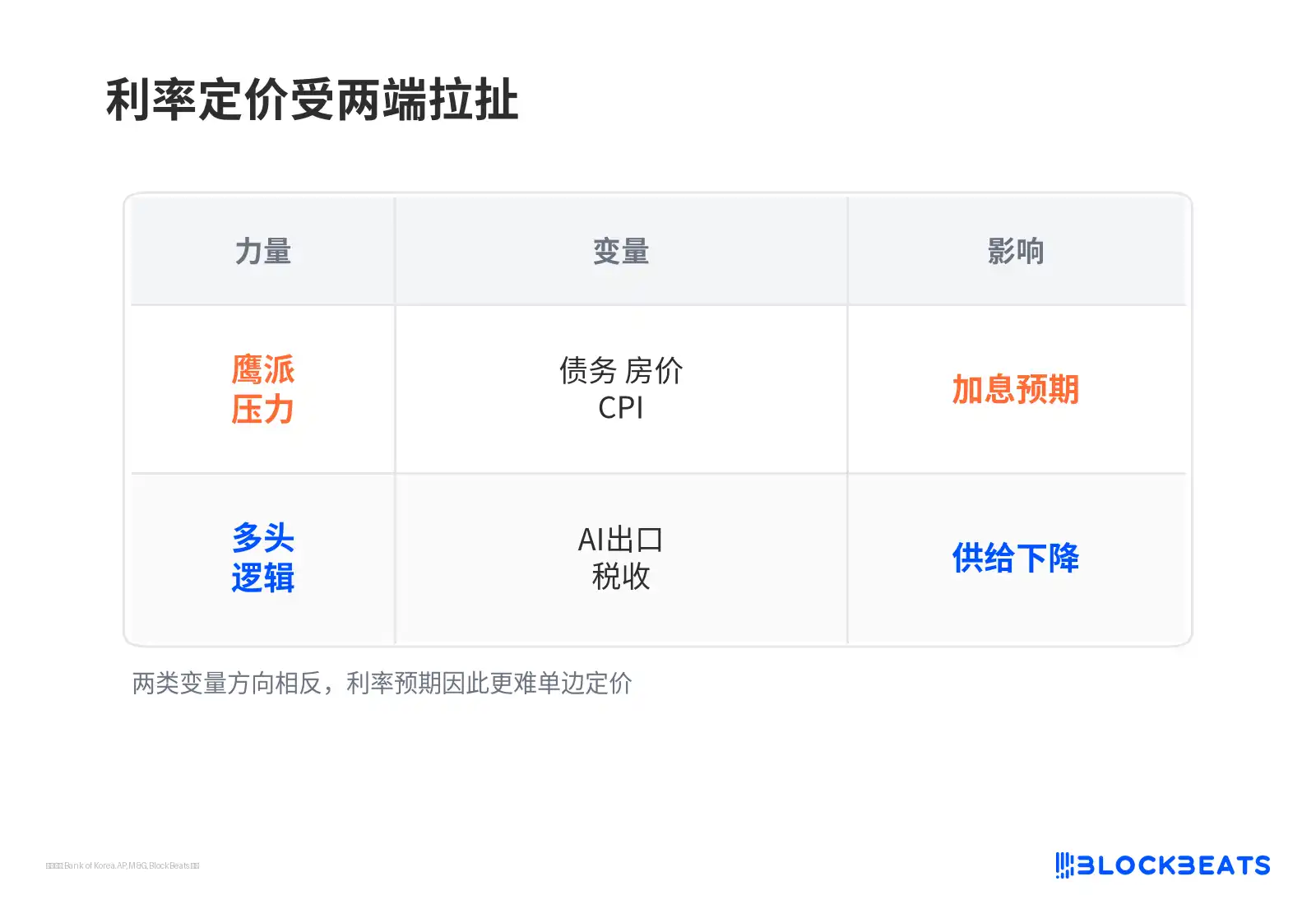
M&G Investments Asia fixed income head Low Guan Yi has argued from the other side. According to media-reported comments summarized in the source article, markets may be overstating the likelihood of further Bank of Korea tightening. At the same time, the AI chip cycle could lift corporate profits and tax revenue enough to reduce government bond issuance needs.
That argument does not dismiss debt pressure. It questions whether market pricing has moved ahead of the underlying data. If inflation is near a local peak, the case for additional rate hikes becomes weaker.
If South Korea’s semiconductor exports continue to benefit from AI demand, stronger earnings at Samsung Electronics and SK Hynix could broaden the tax base. Better fiscal revenue, in turn, could lower government borrowing needs. For bond investors, less supply pressure would usually support bond prices and could allow South Korean government bond yields to fall.
The appeal of that view is that it moves the discussion beyond a single high-debt narrative. AI chip strength would not only affect equities. It could also shape bond supply through taxes and fiscal channels. Still, the article treats this as a trade thesis that remains unproven. Low’s view is closer to an optimistic scenario than a market consensus, and whether AI-led exports translate into better fiscal conditions will depend on later tax receipts and issuance plans.
Housing, leverage, and policy are pulling in different directions
The current pressure point in South Korea is that household leverage and asset-price recovery are showing up at the same time. Rising mortgage balances suggest households are still using leverage to participate in the housing market. Rising stock financing loans suggest the equity rally is also attracting leveraged money.
A recovery in housing prices in the capital region makes the policy choice harder. Higher home prices can support household balance sheets in the short run, but they can also trigger fresh borrowing demand and create another source of pressure for policymakers.
If asset prices keep rising, paper wealth may help households absorb higher interest costs, and bank credit risk may stay less visible for longer. But if higher rates start to suppress transactions and both housing and equities weaken at once, debt-servicing pressure could pass more quickly into consumption and bank asset quality.
That is also why the won and South Korean bank stocks remain tied to the policy debate. A more hawkish central bank could support the currency in the short term, but it would also add pressure to household balance sheets and banks’ asset books. A quicker dovish turn might help bonds, while leaving the won exposed to rate-differential pressure.
The stronger semiconductor exports become, the more support South Korea gets for growth and tax revenue. The more willing households are to add leverage, the harder it becomes to ignore financial stability risks. Markets are now trading the tension between those two forces.
Aug. 19 data will test the KRW 2,000 trillion level first
The Aug. 19 release of preliminary second-quarter household credit data will be the first test of the KRW 2,000 trillion threshold. If the balance is confirmed above that level, markets are likely to read it as support for the Bank of Korea’s emphasis on financial stability.
The next policy meeting may not hinge only on whether another rate hike arrives. It may matter more how the central bank describes inflation, household debt, and housing prices. If the statement keeps financial stability near the center, pricing for further tightening may not unwind quickly.
Loan growth remains the harder variable. As long as mortgage lending stays strong, the household credit overhang will continue to limit policy flexibility. If new lending cools, the pressure for further tightening could ease.
M&G’s constructive bond view also needs fiscal confirmation. If the AI semiconductor cycle shows up mainly in share prices and export data, but does not materially reduce sovereign bond supply, the case for a rally in South Korean government bonds would weaken.
The South Korean setup is becoming clearer. Technology exports can improve the macro narrative, but they do not immediately remove the constraint created by household leverage. Investors are left to judge whether market pricing for a hawkish Bank of Korea path has already moved beyond what upcoming data can justify.