

MarsBit columnist Danny argues that South Korea’s embrace of leverage runs far deeper than casino traffic or a simple label of national risk appetite. He opens with a comparison: there are 33 weekly direct flights from South Korea to Macau, versus about 21 weekly direct flights from Incheon to London Heathrow. In the article’s framing, Macau is only the visible entrance. The real betting tables, he writes, are also found in Seoul apartment mortgages, margin-financed brokerage accounts, crypto exchanges, and 2x products tied to Samsung Electronics and SK Hynix.
The article says the question is not whether Koreans want anything unusual. It says they want stable income, well-located housing, and room to plan their lives. What has changed, in Danny’s telling, is that the price of those ordinary goals is increasingly set by asset markets.
Life satisfaction, income pressure, and a shrinking sense of choice
Citing the World Happiness Report 2026, the article says South Korea ranked 67th globally based on life evaluations from 2023 to 2025, with a score of 6.040. It adds that while the country ranks highly among developed economies in income per capita and healthy life expectancy, it placed 101st in the perceived freedom to make life choices.
Danny argues that the issue is not poverty or a lack of education and healthcare. Instead, he says many people live on top of strong social and economic foundations while still feeling that the range of available paths is narrow.
The piece cites Statistics Korea’s 2025 social survey, saying only 15.6% of household heads felt their income was more than enough relative to minimum living needs. Some 27% expected household finances to improve over the following year, while overall job satisfaction among wage workers stood at 38.3%. When choosing jobs, 40% prioritized income. Among people aged 13 to 34, large corporations were the most desired employers at 28.7%, ahead of public corporations and government agencies.
The same survey, according to the article, showed that 65.7% of respondents wanted to travel in the future and 41.7% wanted to develop hobbies or pursue self-improvement. Among those dissatisfied with their leisure lives, 48.7% cited financial burden as the reason.
The article’s point is that these are standard middle-class aspirations, but access to them is increasingly filtered through asset prices. Entry into a major conglomerate can secure stable pay, but positions are limited. Those left outside the chaebol system can buy chaebol stocks. People priced out of Seoul apartments can increase leverage. Those with too little principal but a desire to ride the semiconductor cycle can use margin financing or 2x ETFs. In that setting, Danny writes, investing stops being optional and becomes a required exam.

From industrial policy to household leverage
The article says Korea’s economic structure helps explain why. A person may not use a Samsung phone, it notes, but is still unlikely to escape the chaebol-centered system. Large corporations dominate exports, research and development, and high-quality jobs. Samsung Electronics and SK Hynix also carry enough weight in market indices that pensions, funds, and retail portfolios are tied to their stock prices.
Danny traces that structure back to South Korea’s industrialization model. In his account, the country lacked capital during its development phase, so the government used the banking system and external borrowing to support export industries. Companies borrowed to build steel mills, shipyards, and semiconductor plants, then repaid the debt with future export earnings. Leverage shortened the timetable for industrialization and expanded the power of the chaebol.
The article cites late-1997 figures to show how far that model went. It says the debt-to-equity ratio of Korea’s 30 largest chaebol reached 509% by the end of 1997. Across manufacturing, the debt-to-equity ratio rose from about 300% in 1996 to about 400% in 1997. When foreign-currency funding dried up, companies collapsed in waves.
Danny draws a line from that history to households. The state once built factories with future export income, he writes; ordinary families later bought apartments with future wages. That method delivered growth at one stage and, in his view, created a social habit: waiting for savings to accumulate takes too long, while borrowing lets people catch the cycle in time.
Housing policy lowered the threshold for debt use
The article does not argue that the Korean government promoted gambling. It says something narrower and more specific: policy support for home buying, capital-market development, and domestic financial products made leverage easier to use in practice.
According to the piece, the Financial Services Commission raised the maximum loan-to-value ratio for first-time homebuyers to 80% in 2022 and removed distinctions based on location and home price. Government-backed mortgage maturities were also extended from 40 years to 50 years, and repayment structures with lighter initial burdens and heavier later payments were designed for younger buyers and newly married households. Officials presented those steps as a way to reduce the upfront burden and help residents onto the housing ladder.

The article says a 2023 special policy mortgage then allowed eligible first-time buyers to borrow up to 80% of a property’s value, choose a 50-year term, and in some cases avoid the usual debt-service-ratio limits. Extending maturities lowers monthly payments, Danny writes, but it also pulls more future income into the purchase contract.
He argues that while the stated goal was to help end-users, the effect did not stop there. If buyers can borrow more, they can tolerate higher prices. Sellers know this, and new credit can flow into the property price itself. The government later tightened lending in Seoul, restricted mortgage amounts, and lowered loan-to-value ratios in some areas. For Danny, that back-and-forth reflects a recurring policy conflict: helping households buy homes without allowing credit growth to push home prices even higher.
His broader criticism is not centered on one round of easing or tightening. It is that Korean housing policy has repeatedly treated lending as the tool for solving housing affordability. When homes become too expensive, the answer is often longer repayment periods or higher allowable leverage. The price of the apartment, he writes, has not come down. Buyers have simply won more time to repay it.
Household debt and the jeonse structure
As of the end of March 2026, South Korea’s household credit balance stood at KRW 1,993.1 trillion, including KRW 1,865.8 trillion in household loans, the article says. Household loans increased by KRW 12.9 trillion in a single quarter.
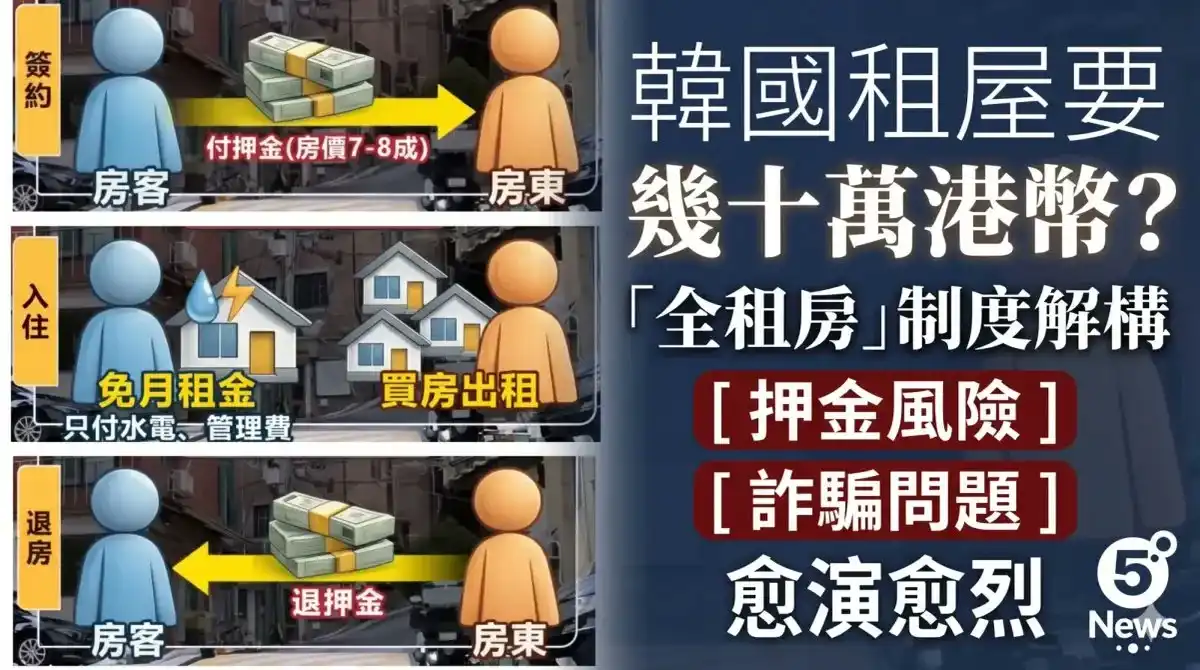
Danny adds that housing leverage in Korea also runs through the jeonse rental system. In that model, tenants pay a lump-sum deposit worth 50% to 70% of the property value in exchange for low monthly rent. The tenant may borrow from a bank to raise the deposit, while the landlord can use the deposit to pay down a mortgage or purchase another property.
The article gives a numerical example. If an apartment is worth KRW 1 billion, a landlord puts in KRW 100 million, borrows KRW 400 million from a bank, and collects a KRW 500 million jeonse deposit from a tenant. That leaves the landlord controlling a KRW 1 billion asset with KRW 100 million in equity. If the apartment price rises 10%, the gain is KRW 100 million, equal to the initial capital. If the price falls 10%, the landlord’s equity goes to zero. If the next tenant is willing to pay only KRW 400 million as a deposit, the landlord has to find KRW 100 million to return to the previous tenant.
During rising markets, the article says, this looks like a route to capital appreciation. In falling markets, the embedded risk shows up quickly. Danny writes that the problem becomes even sharper if landlords use tenant funds to speculate in stocks or crypto and then lose the money while banks move to seize the property.

Even so, the article notes that mortgage debt carries social legitimacy in Korea. Borrowing to buy stocks draws questions about risk; borrowing to buy a home is often read as a step toward building a family. Because property is tied to marriage, education, and retirement in social expectations, leverage acquires a life-planning meaning beyond finance.
How 2x single-stock products reached retail users
The article says leveraged products once belonged mainly to trading floors and professional investors, but mobile brokerages changed who could reach them.
In April 2026, the Financial Services Commission approved domestic listings of single-stock ETFs and ETNs with up to 2x daily exposure. The article says regulators justified the move by citing investor demand, a desire to keep capital from flowing overseas, and improved trading convenience. Policy documents also noted that Korean investors had already been able to buy similar products listed in the US and Hong Kong through local brokerage apps.
Under the framework described in the piece, investors could trade single-stock leveraged products after completing a course, adding one hour of intensive study, and maintaining KRW 10 million in base cash collateral in the account. That opened the door for 2x Samsung Electronics and 2x SK Hynix products to reach a far wider retail audience.
Danny cites a Reuters case involving a 24-year-old Korean university student who used margin financing to turn KRW 10 million to KRW 20 million in principal into nearly KRW 300 million. When the market reversed, those gains disappeared within weeks, yet the student still planned to borrow and try again. The article says the case is not representative of every retail trader, but it shows how leverage can change a person’s understanding of principal. If the first major success comes from borrowed money, Danny writes, the gain created by position size can be remembered as proof of skill while the amplifying role of debt fades from memory.
SK Hynix as a national wealth story
For the article, leveraged demand also needed a symbol, and in 2026 that symbol was SK Hynix.
On April 23, SK Hynix reported first-quarter operating profit of KRW 37.61 trillion, up 405% year over year, according to the article. The result reached television news and drove brokerages to raise target prices. One well-known investment bank, Danny writes, lifted its target from KRW 1.6 million to KRW 2 million.
In May, SK Hynix shares traded above KRW 2 million intraday, turning “KRW 2 million Hynix” into a headline. The stock later touched KRW 2.5 million. In the article’s telling, repeated breaks above round-number levels gave the story a social reach that went beyond standard earnings coverage.
Employee pay became part of the same narrative. The article says SBS used annual profit forecasts from 17 securities firms to estimate that, if the profit and bonus formula held, average performance bonuses for SK Hynix employees could exceed KRW 600 million. During the same period, Hynix and its workers negotiated over compensation until government intervention calmed the dispute. Another report described admissions competition for Hynix-linked contract departments as a “Hynix exam,” with an average application ratio of 30.98 to 1 across three related schools.
Danny says those social stories were not advertisements, but they functioned like them. Households saw a direct message: profits up fourfold, stock prices clearing one round number after another, and employee bonuses on a scale that can exceed many years of ordinary income. In that environment, earnings coverage turned into a model of visible wealth. People without positions did not just see a stock going up, he writes; they began to worry they were missing South Korea’s next industrial upgrade. That feeling entered family chat rooms and lunch conversations. If a friend holds Hynix while a co-worker buys the 2x version, leverage stops looking like a specialist hazard and starts to look like a way to catch up.
Policy reversal came within three months
The article says single-stock leveraged products entered the Korean market in late May, with regulators hoping to bring offshore demand back onshore. Once trading began, 2x Samsung Electronics and 2x SK Hynix quickly became central to retail activity.
By the end of May, stock borrowing created through margin finance and leveraged products had reached about KRW 60 trillion, according to the piece. In July, regulators suspended new listings of single-stock leveraged ETFs and raised the minimum cash collateral requirement from KRW 10 million to KRW 30 million.
On July 28, the KOSPI closed down 10.84%, while Samsung Electronics and SK Hynix each fell about 14%, the article says. The next day, the index dropped another 12.6% intraday. Danny writes that leveraged ETFs then had to rebalance positions, margin accounts faced collateral calls, and selling fed into another wave of selling.

On July 29, South Korea’s finance minister and the chair of the Financial Services Commission publicly apologized for approving single-stock leveraged ETFs and admitted that the policy design had not fully considered the risks, according to the article. The time between launch and public apology was less than three months.
Crypto, gold, and US assets fit the same pattern
The article then shifts from Korean equities to the broader menu of assets available on the same smartphone screens.
In the second half of 2025, average daily trading volume and total market capitalization in the Korean crypto market declined, but the number of tradable users rose by 360,000 and KRW deposits on exchanges increased 31%, the article says. In Danny’s reading, weaker prices did not drive accounts or cash away. Participants stayed and waited for the next cycle. Crypto suits that kind of waiting, he argues, because it trades around the clock, requires no down payment, and comes with none of the hiring gatekeeping attached to the chaebol system. A small amount of capital can still buy exposure to a highly volatile outcome. Most people will not change their lives through tokens, he writes, but every cycle produces a few success stories that spread quickly.
Gold joined the same interface as well. The article says the Korea Exchange allows investors to trade gold in 1-gram units through desktop or mobile brokerage systems. An asset that once required a trip to a gold shop has been turned into a live account price.
Overseas securities buying has also expanded sharply. Korean residents bought $140.3 billion of foreign securities in 2025, up from $67 billion in 2024, according to the article. Overseas securities investment as a share of GDP rose from 3.6% to 7.5%. Buying US stocks, Danny writes, means both owning companies and holding dollars. When the won weakens, people with US equities and gold gain on exchange rates. Those without offshore assets see their purchasing power erode and move into foreign currency as a form of self-protection. Those personal choices become capital flows, and those flows can then shape exchange-rate expectations.
The article sums this up with a single contrast: a Korean worker earns wages in won and repays a mortgage in won, but their imagination of wealth is shaped by Seoul apartment prices, SK Hynix shares, and the dollar exchange rate at the same time.

Not just risk appetite, but an institutional setting
Danny closes by returning to the headline question. Flights to Macau, legal gambling, and leveraged brokerage accounts can show participation, he says, but they only capture the surface. The deeper issue is an institutional environment with its own history: a state that used credit to industrialize, housing policy that used loans to push households into the market, and capital-market policy that used leveraged products to keep money at home.
Each policy can be justified on its own terms, the article says. Taken together, they send a common signal: lack of principal is not the real obstacle because future income can be used now. At the same time, the life-evaluation data point the other way. Korea’s happiness ranking does not match the scale of its economy, and its ranking on freedom to make life choices is lower still. Fewer than one in six household heads feel they have income to spare, and fewer than four in 10 wage workers report overall job satisfaction. Many people want travel and personal time, but housing and retirement come first.
In that world, the article argues, asset markets take on the role of social mobility once people stop believing that wages alone can get them there. Policy supplies loans and products. News stories supply success models. Mobile apps supply instant execution.
The result, in Danny’s view, is that Korea’s leverage culture cannot be explained with a simple claim that people like to gamble. It is produced by the interaction between institutions and individual choice. For those with ample capital, leverage is a financing tool. For ordinary households, it is a claim on wages not yet earned. They may appear to be buying the same asset, but they do not own the same amount of waiting time. Korea’s industrialization showed that leverage can compress time when building national industries, the article says. Households and retail traders do not have the state’s tax power or the chaebol’s banking relationships. When prices fall, debt does not wait just because the long-term story still sounds good.
Macau’s 33 flights are only where the article starts. The real point, Danny writes, is that South Korea’s betting tables now sit inside ordinary life plans. When housing, retirement, and social position all depend on rising asset prices, refusing to bet can itself start to look like a risk.
In a brief postscript, the article adds that even after widespread pain, leveraged ETF products listed in the United States remain highly popular with Korean retail investors.