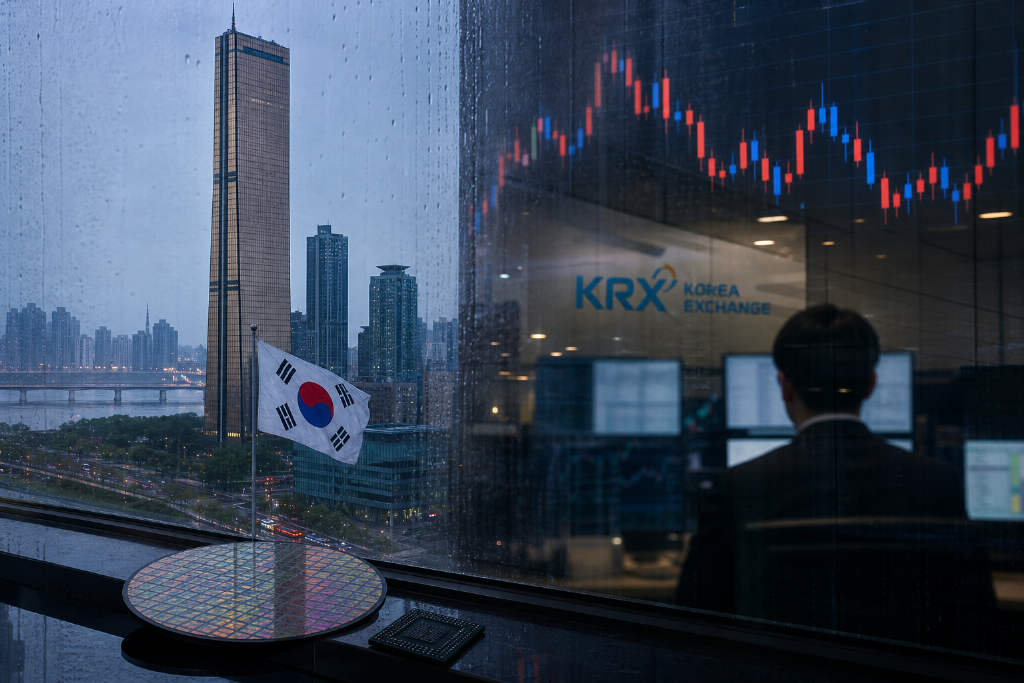
Short positions in South Korean equities continued to build even after the market bounced back from last month’s sell-off in chipmakers and AI-related names. Data released by the Korea Exchange on Sunday showed outstanding short balances stood at about KRW 19 trillion, or roughly $13.4 billion, as of Tuesday. That was up KRW 2.27 trillion, or 14%, from KRW 16.73 trillion at the end of last month.
The figures show short balances at KRW 15 trillion at the end of February, falling briefly to KRW 12 trillion in early March before rising to KRW 23 trillion in early June. At the same time, South Korea’s benchmark Composite Stock Price Index has gained 6% so far this month, while the tech-heavy junior market index has jumped 20%.
The report said South Korean stocks tumbled last month as investors questioned the profitability of AI-related investment, a concern that could weaken demand for chips. Even with the rebound, investors remain uneasy about how fast stocks have risen in the near term and are still unsure whether the chip industry has already peaked.
South Korean equities have rebounded from the panic triggered by a sharp sell-off in chipmakers and AI-related stocks, but short interest is still rising.
Data released by the Korea Exchange on Sunday showed outstanding short balances in the country’s stock market were about KRW 19 trillion, or roughly $13.4 billion, as of Tuesday. That was KRW 2.27 trillion higher than the KRW 16.73 trillion recorded at the end of last month, an increase of 14%.
Earlier this year, short balances stood at KRW 15 trillion at the end of February. They briefly fell to KRW 12 trillion in early March, then climbed to KRW 23 trillion in early June.
Market indexes have recovered this month. South Korea’s benchmark Composite Stock Price Index is up 6% so far this month, while the tech-heavy junior market index has surged 20%.
Last month, South Korean stocks were hit by a sell-off as the market grew concerned about the profitability of AI-related investment. The report said that concern could weaken demand for chips. Even after the rebound, investors are still worried that gains may have come too quickly in the short term, and uncertainty remains over whether the chip industry has already peaked.
This article was originally published by Bit.Fan. For more cryptocurrency news and market insights, visit www.bit.fan. Disclaimer:
The market information, project data, and third-party content displayed on this platform are for industry information sharing only and do not constitute any form of investment advice or return commitment.
Cryptocurrency trading carries high risks. Users should fully assess their risk tolerance and make independent decisions. All profits, losses, and legal responsibilities are borne by the users themselves.