
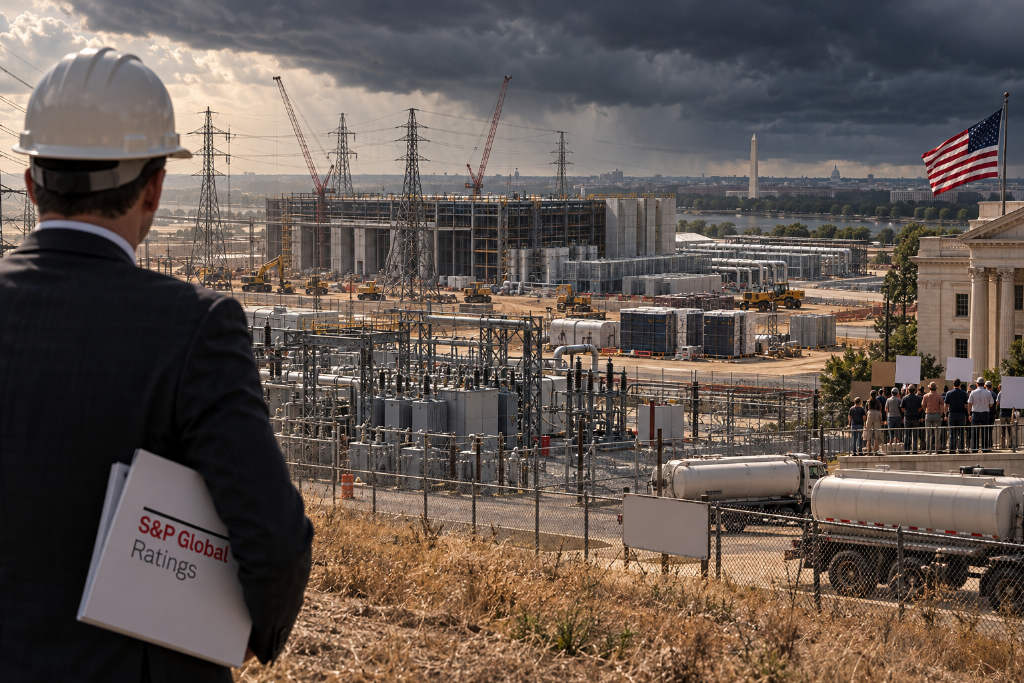
S&P Global Ratings said in its latest report that the rapid expansion of artificial intelligence applications is colliding with local opposition and grid constraints across the United States. According to the report, 146 data center projects have already been delayed or canceled because of public resistance, limited power grid capacity, and zoning rule changes.
Local governments in 40 states have slowed or halted approvals
S&P tracked moratoriums in multiple states and said local governments in 40 states have introduced bans or slower approval processes. The report linked those moves to public pressure over rising energy costs, water shortages, and air and noise pollution. In S&P’s view, those issues are becoming an unseen brake on AI infrastructure expansion.
The ratings agency said the immediate effect on overall credit ratings is still limited. Even so, it added that financial risks are building quickly as permitting barriers increase.
Project delays could trigger financial penalties
S&P said that if projects are materially delayed by local opposition or tighter regulation, developers could face financial penalties such as rent credits. In more serious cases, tenants could terminate contracts.
The first group under pressure is data center developers and operators. Delays, revoked permits, or environmental review setbacks could directly hit expansion schedules and cash flow stability.
Three parts of the industry chain face pressure
The report highlighted three groups as the most exposed. The first is data center developers and operators. The second is large technology companies and hyperscalers that are spending heavily on AI infrastructure. If data centers do not come online on schedule, market concern over whether that capital spending can turn into matching revenue is likely to rise. The third is energy and utility companies, which are facing strong community pushback over electricity use and water consumption, while local power restrictions and bans disrupt long-term electricity sales plans.
Markets are reassessing execution risk
From a capital markets perspective, S&P said reports like this do not usually trigger a sharp one-day sell-off in related stocks. Still, they can act as an important catalyst for lower valuations. With high interest rates and power constraints in place at the same time, investor sentiment toward the data center supply chain is shifting from earlier optimism to a more selective stance.
The warning also pushes the market to look more closely at the execution risk and regulatory costs behind the AI boom. As infrastructure deployment slows, valuation multiples and growth expectations for related companies are also coming under renewed scrutiny.



