
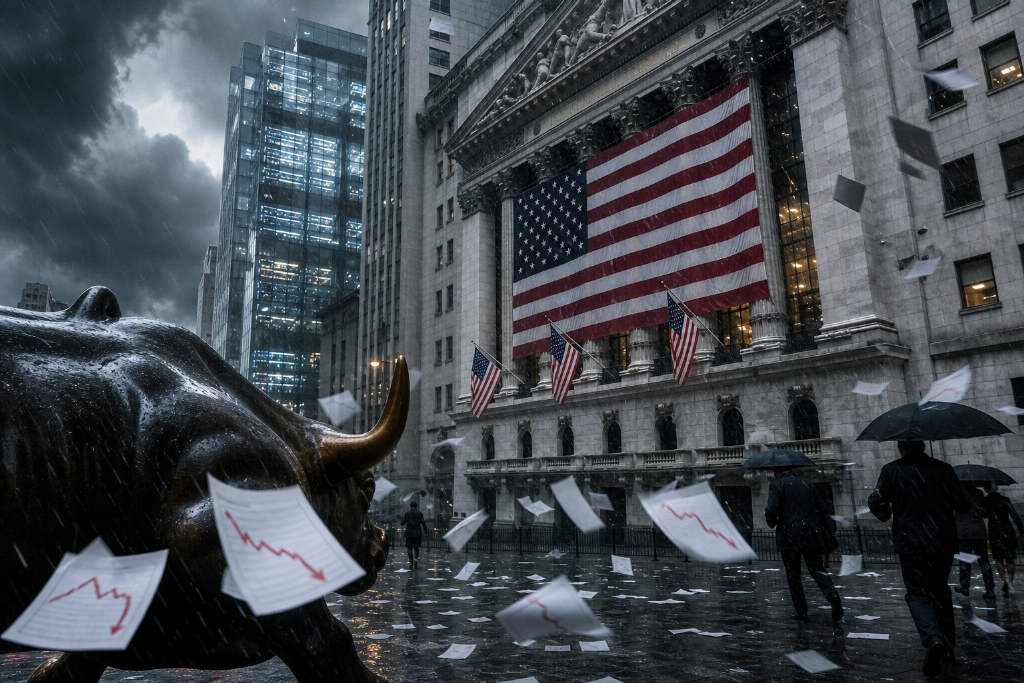
Wall Street’s long-running momentum trade, built on buying relative winners and selling laggards, has been hit by a sharp reversal as AI-related stocks swing violently and short covering intensifies, BlockBeats reported on Aug. 31.
Momentum index trails the broader market
Data cited in the report shows that since July 1, the S&P 500 Momentum Index has dropped more than 9%, while the benchmark S&P 500 has still gained about 2.8% over the same stretch. The momentum gauge is now heading toward its worst single-quarter showing in 25 years.
The move is a stark reversal from the second quarter of this year, when the S&P 500 Momentum Index jumped 44% for its best quarterly performance on record. Over the past five years, the index had gained 133%, at one point becoming one of the most crowded institutional strategies in the market.
Second-half reversal gathers pace
After the second half of the year began, some stocks that had previously been heavily shorted suddenly rebounded. That triggered large-scale position unwinds by quantitative funds and added to short covering pressure.
Bank of America data shows momentum trading in July posted its second-worst performance in nearly 40 years, behind only the period of the 2009 financial crisis.
Goldman Sachs data shows Aug. 19 was one of the worst trading days in nearly two years for systematic long-short funds, with about half of the losses tied to the breakdown of momentum strategies.
Risk of a sudden reversal draws attention
At the same time, speculative net short positioning in Nasdaq-100 futures has risen to its highest level in nearly 20 years.
Market participants warned that even though the broader U.S. equity market is still rising, stretched AI valuations, a surge in capital spending by major technology companies, and crowded momentum positioning are leaving the market more exposed to sudden reversals.