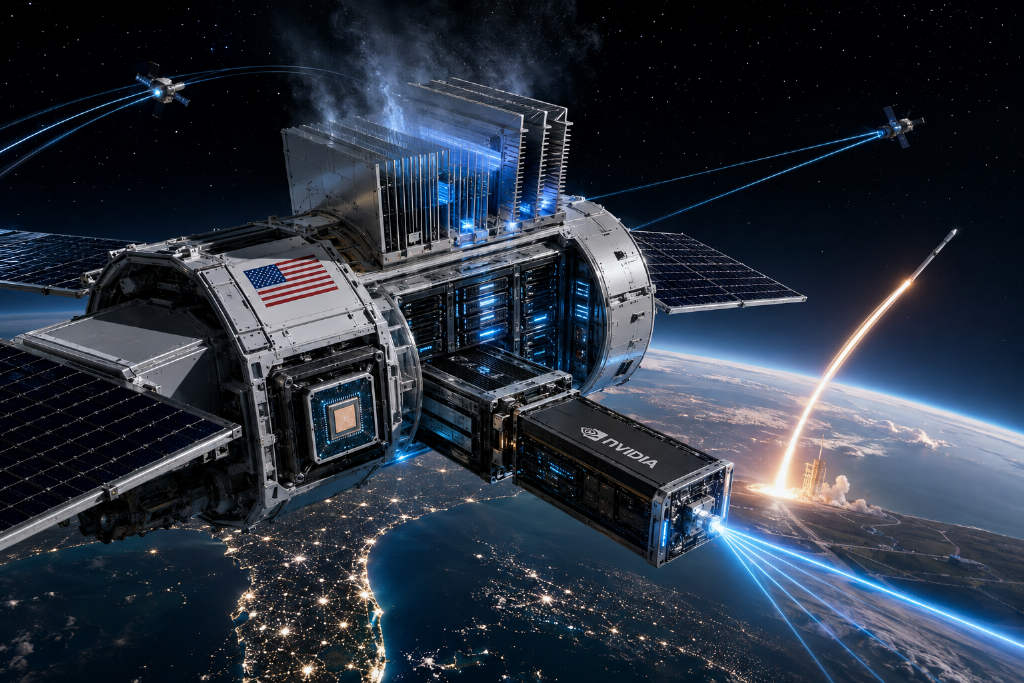
A CNBC report published Sept. 7 said SpaceX CEO Elon Musk is aiming to launch a space-based data center by the end of 2027, though several industry participants believe true scale is unlikely before the 2030s. The report identified four main obstacles: cooling systems in space, radiation resistance for chips, the fast replacement cycle of GPUs, and the challenge of moving large volumes of data. Evelyn Chow, a portfolio manager at Neuberger, said the next four to five years will need to bring a large number of satellite launches and matching connectivity infrastructure before orbital data centers can be discussed at meaningful scale. One of the early movers is startup Starcloud, which has raised about $200 million. The company plans to launch its first satellite carrying Nvidia H100 GPUs in November 2025. Its Starcloud 3 vehicle, now in development, is designed as a 200-kilowatt, 3-ton spacecraft planned for launch aboard Starship. Even with launch costs falling and SpaceX having deeper funding, the concept still faces economic challenges.
Sending AI compute into orbit is an ambitious idea, but the barriers remain high. According to CNBC on Sept. 7, SpaceX CEO Elon Musk has set a target of launching a space data center by the end of 2027. Several people in the industry, however, said real scale is more likely to come in the 2030s.
Four obstacles stand out
The report pointed to four core technical and economic constraints: cooling in space, radiation resistance for chips, replacement pressure caused by how quickly GPUs become outdated, and transmission of large volumes of data.
Evelyn Chow, a portfolio manager at Neuberger, said the market needs to see a large wave of satellite launches and related network buildout over the next four to five years before orbital data centers can be discussed at real scale.
Starcloud is already moving
Startup Starcloud is one of the earlier entrants in the field. The company has raised about $200 million and is set to launch its first satellite carrying Nvidia H100 GPUs in November 2025.
Its Starcloud 3 vehicle, now under development, is a 200-kilowatt spacecraft weighing 3 tons, with plans for launch on Starship.
The report added that even as rocket launch costs continue to fall and SpaceX has gained greater financial capacity, the concept still faces economic challenges.
ABMedia also noted that Chain News had previously reported on SpaceX working with Nvidia on a space data center project.
This article was originally published by Bit.Fan. For more cryptocurrency news and market insights, visit www.bit.fan. Disclaimer:
The market information, project data, and third-party content displayed on this platform are for industry information sharing only and do not constitute any form of investment advice or return commitment.
Cryptocurrency trading carries high risks. Users should fully assess their risk tolerance and make independent decisions. All profits, losses, and legal responsibilities are borne by the users themselves.