
The Reality of Index Inclusion: How Passive Funds Actually Operate
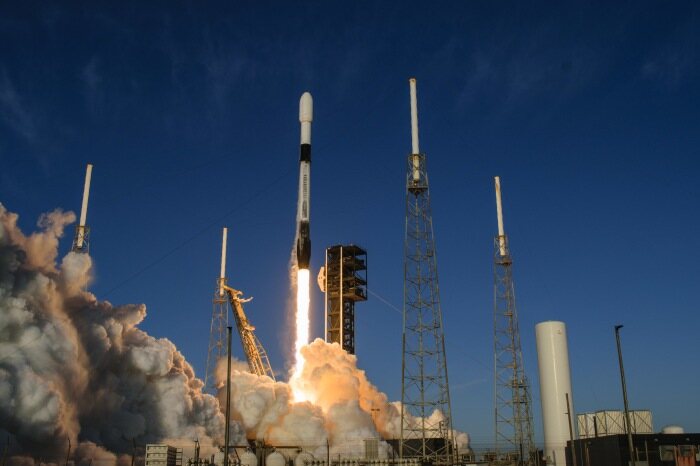
Retail investors often imagine that on the effective date of index inclusion (e.g., SpaceX joining the Nasdaq 100 on July 6), a single 'commander' will place a massive buy order, instantly spiking the stock price. In reality, billions of dollars are spread across hundreds of fund companies like BlackRock, Vanguard, and State Street. These firms do not collude but all follow the same golden rule: minimize tracking error. A passive fund's KPI is not 'how much profit' but 'how closely it tracks the index.' Buying at a price higher than the index closing price creates tracking error, which can cost fund managers their bonuses or jobs. Therefore, the only goal is to accumulate the required shares at a price as close to the closing price as possible on the effective date—without buying cheap or grabbing attention.
The problem: hundreds of hungry buyers must rush into the same store for the same scarce item at the same time, but the owner demands that no one pay extra. The result is that the actual buying never happens in a single, naive wave on the final day. Instead, it follows a carefully orchestrated schedule.

Two Indices, Two Distinct Playbooks
SpaceX is being added to two indices: the Russell US Index (adjustment announced on June 26, effective at close same day) and the Nasdaq 100 (announced June 26, effective July 6). Each has a different mechanism.
Russell Index: Action in the Final Seconds of Close. On June 26, the stock price may appear calm all day because all buying pressure is compressed into the closing auction. Wall Street uses MOC (Market-On-Close) orders, instructing brokers to buy the required amount at the closing price at any cost. During the Russell annual reconstitution, trillions of dollars in passive funds converge into MOC flow in the last few minutes, amplifying closing auction volume several-fold.

Nasdaq 100: A 10-Day Legal Front-Run Window. Three groups enter the market during this window: 1) Arbitrage funds begin buying on the announcement day, betting on the rigidity of passive buying; 2) Early-running funds start accumulating small lots via algorithms 1-2 days before July 6; 3) The most rigid index funds reserve their largest buy order for the July 6 closing auction. The actual script: arbitrage funds push price up in the first few days, early runners accumulate mid-week, and on the final day index funds and arbitrage funds execute a precise cross at the close. Retail investors who buy on July 6 expecting a passive fund pump are likely to become exit liquidity for the first two groups.
SpaceX's Free Float Crisis: 4% of Free Float Must Be Absorbed in One Day
SpaceX IPO'd on June 12, less than a month before the index inclusion. Under traditional lock-up rules, most original shareholders are restricted from selling for 180 days. The freely tradable float is likely only a small percentage of total shares, say 15%. With a market cap of $2 trillion, the free float market value would be about $300 billion. Yet passive funds tracking the Nasdaq 100 alone need to buy an estimated $10.2 to $12.7 billion in SpaceX shares—equivalent to over 4% of the free float. If all this buying were forced into the July 6 closing auction via MOC orders, the stock price could experience a pulse of tens of percentage points or more.

How Institutions Avoid a Stampede: Off-Exchange Block Trades and Derivatives Workarounds
To avoid market disruption, institutions don't go to the 'supermarket' at all. Fund managers call investment bank sales desks to arrange off-exchange block trades: private negotiations with large holders to transfer millions of dollars in shares at an agreed price, bypassing the exchange's centralized order book. These trades are reported days later. A more sophisticated method is to sign a total return swap with a locked-up major shareholder: the stock remains in the shareholder's name, but the fund receives the economic exposure (price gains/losses) via derivative payments, legally circumventing lock-up restrictions. These large transactions occur in dark pools and off-exchange, so the billions in passive buying never appear as visible volume on the candlestick chart.

Retail Strategies: Chasing, Patient Accumulation, and Volatility Options
Given the information, tools, and execution disadvantages faced by retail investors, three paths exist:

- Lowest: Directional chasing. Buying immediately on announcement or using high leverage via derivatives. Arbitrage funds have superior positioning; a wrong direction combined with leverage can lead to instant liquidation.
- Medium: Long-term investors wait for stabilization. The structural passive demand is real and lasting, but short-term volatility from arbitrage and sentiment is high. After the effective date (e.g., 1-2 weeks), once arbitrage funds have exited and volume normalizes, consider building a position in batches. Some decentralized RWA platforms (e.g., SoDEX) offer up to 20x leverage on SPCX and run $100,000 reward campaigns, providing additional yield for disciplined investors.
- Top: Selling options volatility premium. The most reliable certainty around index inclusion is a spike in implied volatility. When implied vol surges, selling a strangle (out-of-the-money call + out-of-the-money put) captures the premium. The strategy profits if the stock price stays between the two strike prices at expiration. Because most institutional flows end up crossing off-exchange, the actual volatility in the K-line is often lower than the options market prices—making this a ‘mispricing’ arbitrage. However, position size must be strictly controlled to handle tail risks (e.g., unexpected early unlock of lock-up shares).
In summary: the real price action for SpaceX likely occurs in the run-up after the June 26 announcement, driven by arbitrage and early-run funds. On July 6, the effective date, expect huge volume but a relatively flat price, as buyers and sellers execute a precise cross at the closing auction. Retail investors unaware of the game rules risk becoming exit liquidity. The true ‘smart money’ has already completed its trades in dark pools and off-exchange, invisible to most traders.