
Wall Street turns positive as initial coverage begins
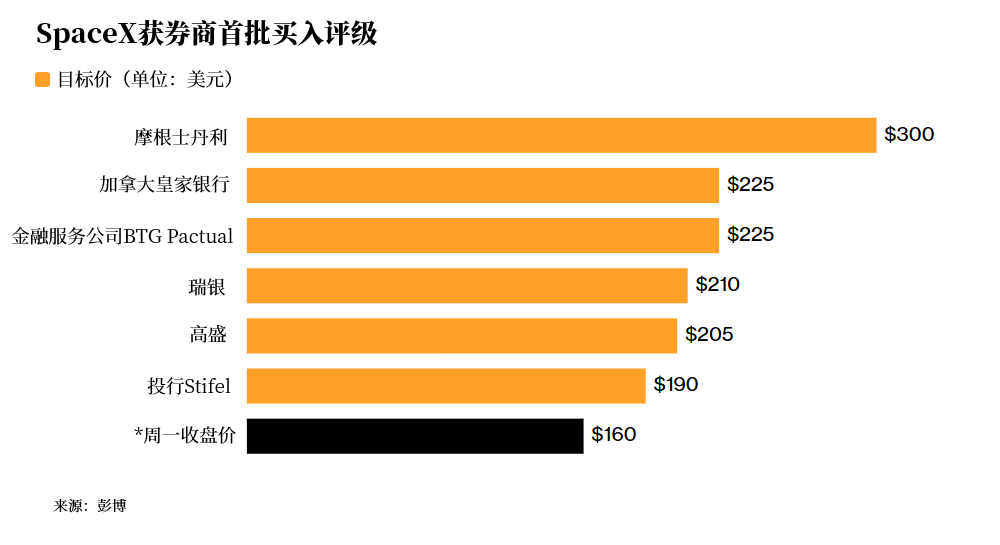
On July 7, multiple global brokerages initiated coverage on SpaceX (SPCX.O), marking the company’s first major round of formal Wall Street research coverage. Early sentiment has quickly converged on a bullish stance. According to the report, at least six institutions, including Morgan Stanley, Goldman Sachs, and UBS, assigned buy ratings to the stock, signaling broad confidence in the company’s long-term growth trajectory.
Even so, the bullish calls were not without caveats. Analysts noted that concerns remain around SpaceX’s profitability profile and valuation framework. In other words, while brokerages appear willing to endorse the stock on strategic and long-duration growth grounds, they are also acknowledging that key financial questions have not been fully resolved at this stage.
Morgan Stanley leads with the highest published target
In a July 7 research note, Morgan Stanley said SpaceX has the ability to convert energy into intelligence at scale and commercialize that capability through AI-era solutions aimed at both consumers and enterprises. The bank set a $300 price target, currently the highest among the published views from major Wall Street firms cited in the report.
Based on Monday’s closing price of $160.42, Morgan Stanley’s target implies about 87% upside. That target has made the bank the most aggressive among the initial group of covering institutions, reinforcing the market’s perception that SpaceX may be entering Wall Street research with unusually strong early support compared with a typical first-coverage cycle.
Bear and bull scenarios highlight wide valuation dispersion
Morgan Stanley also laid out a broad scenario range for the stock. In its bear case, SpaceX shares could fall as low as $75. In its bull case, the stock could rise to $600. The wide spread underscores the degree of uncertainty still embedded in the company’s valuation, despite the favorable long-term narrative adopted by several brokerages.
On the revenue side, Morgan Stanley projected that SpaceX could generate $319 billion in revenue by 2030 and as much as $3.3 trillion by 2040. Those figures illustrate the scale of the firm’s long-term expectations and help explain why several institutions are willing to look past near-term concerns over profitability and valuation in favor of a much larger future addressable market.