

The total supply of major stablecoins fell by $14.2 billion over the 30 days to Nov. 9, marking the largest 30-day decline since June 2022, according to Glassnode. The contraction leaves crypto markets with less liquidity available for a rally.
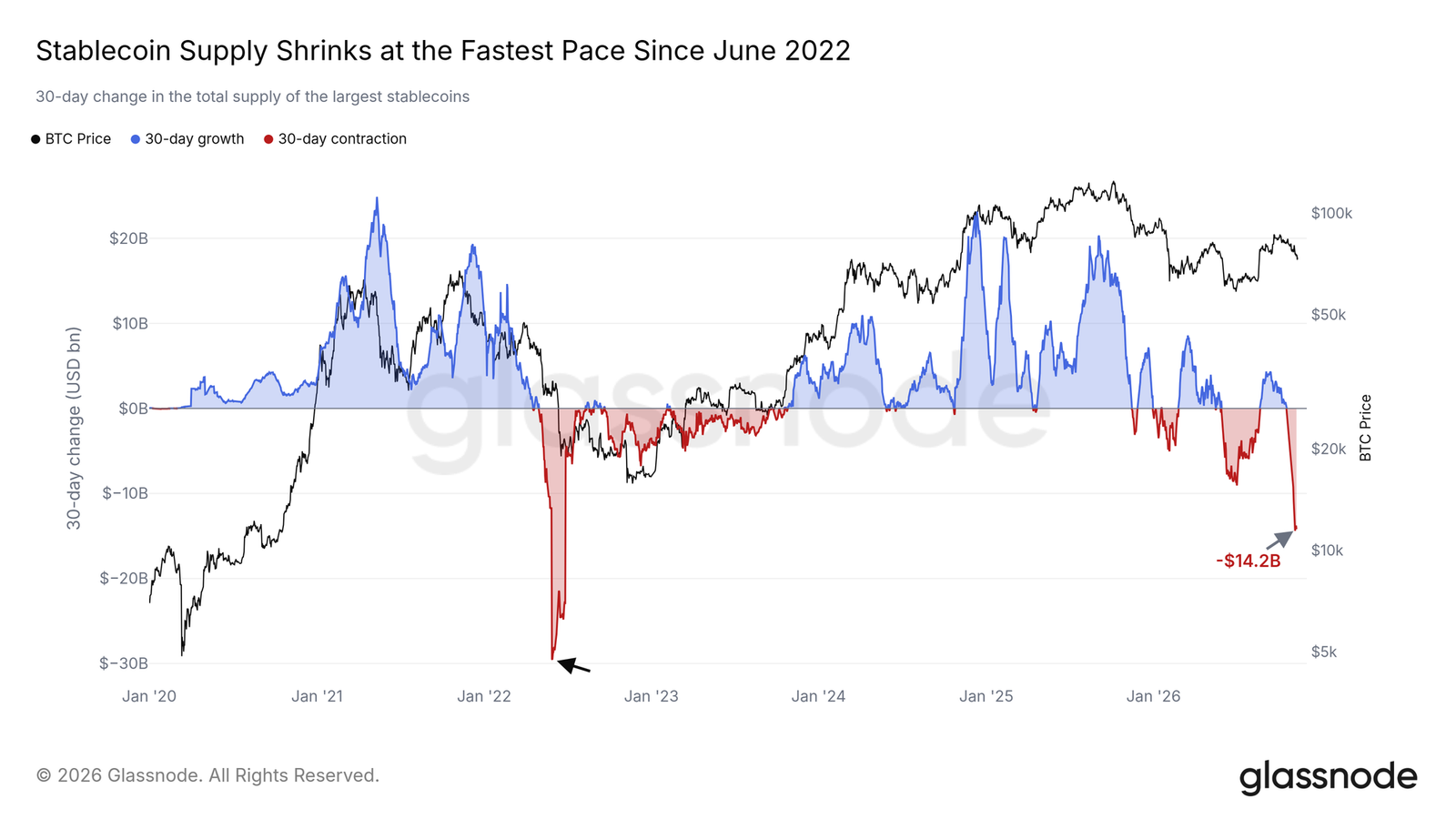
The rolling 30-day decline reached $14.2 billion this week. It exceeded the $9.5 billion drop recorded as Bitcoin (BTC) fell below $58,000 on July 1. The latest contraction was still smaller than the nearly $30 billion fall in stablecoin supply recorded in June 2022.
Stablecoin liquidity contracts
Stablecoin liquidity is a key measure used to gauge sentiment in crypto markets. Glassnode said: 「A shrinking supply means holders are redeeming stablecoins for dollars and taking that cash out of the market, which leaves less fuel for a rally.」
Tether’s USDT, the largest stablecoin by market capitalization, was trading slightly below its $1 peg, according to TradingView data. Glassnode linked the move to the 「same pressure」 created by investors rotating out of the stablecoin market.
Glassnode added that a return to growth in the 30-day change in stablecoin supply would be the first sign that new money was entering the market.
Selected stablecoin supply data. Source: Glassnode
Coinbase Premium Index remains negative
Other market metrics also pointed to weaker demand as Bitcoin traded near 11-week lows. The Coinbase Premium Index remained negative on Wednesday after reaching a four-year low at the end of October.
The index measures the difference between Coinbase’s BTC/USD price and Binance’s BTC/USDT price. It fell to -0.27% on Oct. 29, its lowest level since November 2022.
CryptoQuant contributing analyst Amr Taha wrote at the time: 「This unusually deep discount suggests weaker relative demand or greater selling pressure on Coinbase, a major venue for US-based trading activity.」
Bitcoin Coinbase Premium Index. Source: CryptoQuant
On Tuesday, onchain analytics platform CryptoQuant said its measure of Bitcoin demand had fallen by 284,000 BTC over 30 days. It described the move as the most pronounced downturn since March 2025.



