
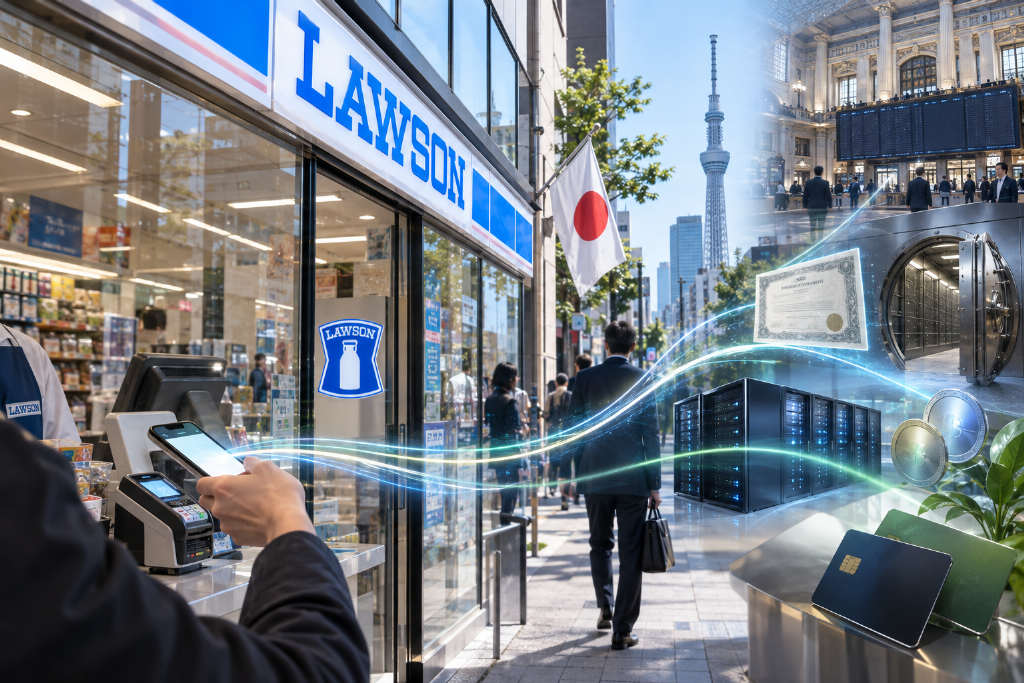
The stablecoin and RWA story is moving past the idea of issuing more tokens. According to a Foresight article written by imToken, the focus is shifting toward a financial network that can actually run from issuance to settlement and, eventually, real-world payments.

For years, real-world assets and stablecoins have been two of crypto's biggest narratives. One side has tried to bring U.S. Treasuries, stocks, funds, and private credit onchain so those assets can become programmable, composable, and globally transferable. The other has turned fiat currencies such as the U.S. dollar and euro into onchain cash that can move 24/7. The article says recent moves by traditional institutions and crypto platforms now look less like isolated experiments and more like pieces of the same system.
RWA is moving beyond simple token issuance
In its early phase, RWA was often framed in straightforward terms: take an asset and turn it into a token. A Treasury fund share held in a traditional financial account could be represented onchain. Gold that would normally trade through a fund, warehouse receipt, or broker could be turned into a digital certificate.
The article argues that this only solves the problem of digital representation. In the actual financial system, a token by itself is not enough. If a stock is only mirrored by an onchain token, it may not carry real shareholder rights. If the structure sits outside regulation and existing trading and settlement rules, institutions are unlikely to participate.
That leaves a series of practical questions: who holds custody of the underlying shares, how dividends are distributed, who records transfers of ownership, and how after-hours settlement is handled. The article says these issues are tedious but decisive.
That is why the New York Stock Exchange's recent work matters, in the article's view. In January, NYSE announced that it was developing its own tokenized securities platform. Based on the public plan cited in the piece, the goal is not to issue a few stock-mapping tokens. It is to make tokenized shares carry the rights attached to traditional securities while also supporting 24/7 trading, fractional share trading, instant settlement, and stablecoin cash settlement.
NYSE later brought in Securitize and tZERO to keep building out the stack around digital transfer agency, broker-dealer functions, securities registration, and onchain settlement. The article says this is fundamentally different from the earlier model in which crypto-native platforms issued tokenized stock products on their own. Traditional finance is now trying to figure out how blockchain can become a new technical base layer for securities markets without giving up securities law, investor rights, or the rules that govern existing markets.

Crypto platforms are moving in the other direction at the same time. Major trading venues have rolled out products tied to U.S. equities, ETFs, and even options. The article notes that users once needed one account to buy BTC, another securities account to buy Nvidia, and yet another account to trade gold. More crypto platforms are now trying to pull those assets back into a single account and funding system.
As one example, Bitfinex Securities recently launched five products that let qualified investors gain economic exposure to listed companies including Strategy and Metaplanet through tokenized securities, with trading available in U.S. dollars, USDT, and BTC.
In that sense, the competition in RWA is no longer about who can tokenize an asset first. It is about who can build an onchain capital market that can issue, trade, custody, settle, and keep operating over time. Once the discussion reaches settlement, stablecoins become the next necessary piece.
Stablecoins are starting to act as the cash layer
Once assets move onchain, the next question is what money will be used to settle them. For a long time, stablecoins functioned mainly as fiat-linked tokens inside crypto's own trading loop. People bought USDT or USDC largely to move funds around exchanges and trade digital assets.
That changes when the asset side starts operating around the clock. The article says the limits of the traditional banking system become obvious at that point. Securities markets do not open on weekends in part because the banking, custody, clearing, and cash systems behind them all run on their own schedules.
This is where stablecoins come in. In early September, 21 financial institutions, including Goldman Sachs, Bank of America, Citi, and Deutsche Bank, announced plans to jointly form a company and launch a U.S. dollar stablecoin in the first half of 2027. The plan could later expand to other G7 currencies, including the euro.
The article says this marks a shift in stablecoin issuance from competition among crypto companies to participation by the banking system itself. Circle CEO Jeremy Allaire described the current stage with a comparison: onchain finance and stablecoins today are roughly where the internet was in 2002.

The point, the article says, is not simply that stablecoins will grow by some multiple. It is that the infrastructure is crossing a threshold. The technology is maturing, regulation is becoming more acceptable to institutions, and the conditions for large-scale adoption are starting to fall into place.
Circle made a similar point in its latest report, describing stablecoins as entering the regulated financial system rather than operating only as crypto products outside the banking sector. That also helps explain why stablecoins and RWA are increasingly discussed together.
If a U.S. stock can truly trade onchain 24 hours a day in the future, tokenizing the stock alone does not solve the old market structure problem. Stablecoins provide the matching form of money. Assets can move 24/7, and cash can move 24/7 as well.
The article frames this as tokenized securities on one side and a stablecoin cash leg on the other, linked through near real-time delivery versus payment on blockchain rails. A securities settlement process that once required several institutions, multiple accounts, and in some cases several days could be compressed into a single system.
From that angle, once securities, funds, bonds, and other real-world assets move onchain, stablecoins could evolve from pricing instruments inside crypto markets into the cash layer of a broader onchain capital market. The article also says regulation is becoming more important, not less. Clearer regulatory boundaries are presented not as an obstacle to stablecoin expansion, but as a condition for bringing stablecoins into a larger financial system.
The last mile is real-world spending
Even if assets are tokenized, issued in compliance, and settled onchain, the article says stablecoins still need one more step before they can function as money in a fuller sense: they need to be spent in the real world.
Japan is presented as a useful example. In August, HashPort and Lawson completed an in-store yen stablecoin payment test at the Tokyo Takanawa Gateway City location. Customers paid with a wallet, while the merchant side connected directly to the convenience store's existing POS terminal. The article says this is different from the familiar Web3 event setup where two wallets transfer funds through a QR code. The goal here was to bring stablecoins into an ordinary retail system.

At the same time, NETSTARS completed its own Stablecoin Pay proof of concept at another Lawson store. That test verified connections between existing POS systems and multi-currency, multi-chain payments involving a yen stablecoin, USDC, and USDT.
Stablecoin Pay, which formally launched in July this year, charges merchants a 0.98% fee. The article says the objective is straightforward: merchants should not need to understand each blockchain, wallet type, or stablecoin separately. They should be able to connect through one payment infrastructure.
The article argues that this matters more than the headline that a convenience store can finally accept stablecoins for coffee. Credit cards, Alipay, and transit cards did not scale because every merchant understood Visa's clearing network, QR code protocols, or interbank systems. They scaled because mature payment networks hide the complexity underneath.
The same pattern is likely to apply if stablecoins move into offline payments. Consumers would only need to choose a wallet. Merchants would keep using familiar POS systems. Payment service providers would handle the chains, currencies, exchange rates, confirmations, compliance, and settlement in the middle. Blockchain may sit behind every transaction without appearing directly in front of every customer.
Wallets may become the user gateway between onchain finance and commerce
The article also points to changes on the other side of the payment terminal. HashPort announced Wallet MCP during the same period, with the aim of letting AI agents such as ChatGPT and Claude connect to wallets and, with user authorization, carry out balance checks, transfers, swaps, and payments for external services.
That suggests the stablecoin payment network now being built may not be designed only for people. If agents can book hotels, buy APIs, procure cloud computing resources, or manage company expenses on their own, then stablecoins, as natively digital, globally transferable, and programmable money, may be easier for machines to use than traditional bank cards.
The article describes a new payment network gradually taking shape: from consumer wallets to agent wallets, from onchain tokens to convenience store POS systems, and from U.S. dollar stablecoins to yen stablecoins.

That shift also changes the role of wallets. In the past, wallets mainly solved one problem: how to hold and use onchain assets safely. In the future, they may also serve as the user entry point between onchain financial networks and real-world commercial networks.
This is why the latest cooperation between imToken and NETSTARS stands out in the article. On Sept. 3, the two sides signed an MOU to explore connecting imToken's wallet infrastructure with Stablecoin Pay, with the aim of giving stablecoins held in wallets a path into offline merchants in Japan.
The article adds that the cooperation is still at the exploration stage and does not mean a specific payment service has already gone live. Even so, it sees the direction as meaningful. Wallets are moving beyond connecting users to onchain assets and dApps, and toward becoming an entry point for real-world payments.
From tokenized assets to real-world payments
The article closes by tracing a path that has become clearer over the past few years. The first question was whether assets could move onchain at all. Then the market found that onchain assets without liquidity were not enough, which led to experiments around DeFi lending. Now the discussion has become more concrete: can traditional institutions issue these products in compliance, can settlement happen with onchain money, and can stablecoins be spent in convenience stores or even in AI-driven scenarios.
When NYSE clearing, Wall Street stablecoins, convenience store POS terminals, and user wallets begin to connect along the same route, RWA stops being only about moving real-world assets into Web3. In the article's view, that is the point where crypto financial infrastructure starts entering the real world.
The piece ends with a risk reminder, saying the market carries risk and the article does not constitute investment advice. Users should decide whether the opinions, views, or conclusions discussed fit their own circumstances and bear responsibility for their own investment decisions.
