
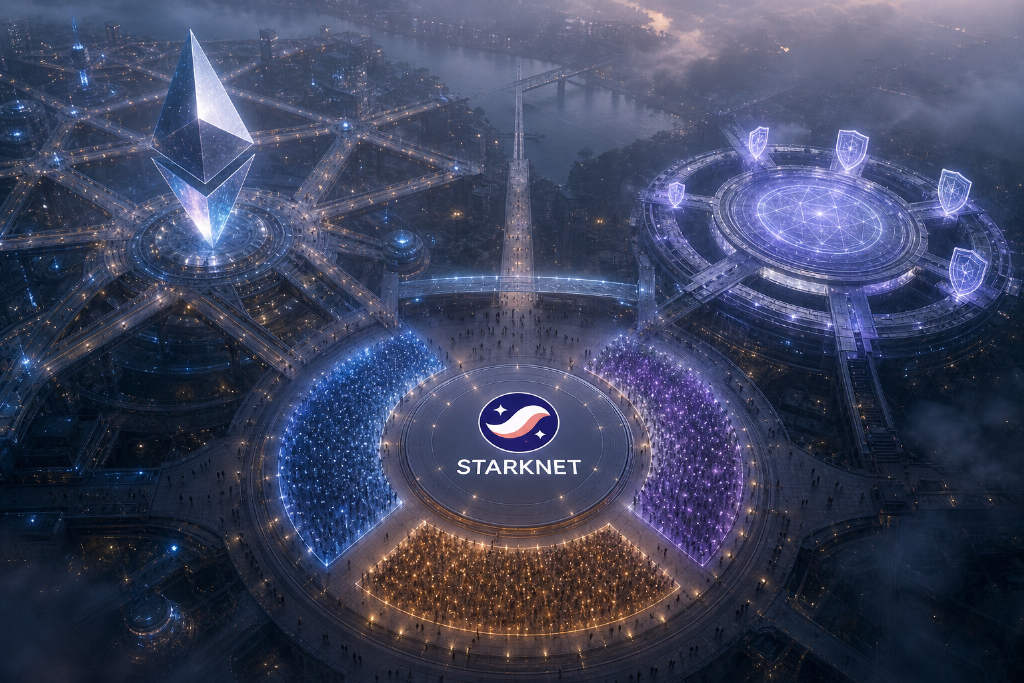
Starknet opens community vote on researching a move beyond Ethereum as a post-quantum L1

Starknet opens community vote on researching a move beyond Ethereum as a post-quantum L1

N
News Editor
2026-10-15 10:20:44
Starknet has opened a seven-day, non-binding vote asking STRK holders whether the network should study becoming an independent post-quantum Layer 1 rather than remaining tied to Ethereum’s upgrade path. The poll gives tokenholders three choices: support more research, oppose the idea, or stay neutral until more details are available, with voting set to close on Oct. 22 and results to be released afterward. The proposal does not authorize a transition. A favorable result would only indicate support for additional research, while any actual move would still require new proposals and governance votes. StarkWare, the developer behind Starknet, said the idea could let the network pursue quantum-resistant security without waiting for Ethereum’s timeline, since Starknet still depends on Ethereum for parts of its infrastructure such as its bridge and data availability. StarkWare CEO Eli Ben-Sasson said quantum-proofing crypto is urgent and argued that progress at Ethereum and Bitcoin has been slower. Earlier signals from Ben-Sasson and Starknet on X on Oct. 8 framed the effort around a 2027 goal of becoming the first fully quantum-resistant network. StarkWare had already published a three-phase roadmap in June, while Ethereum developers formed a dedicated post-quantum team in March targeting initial protocol-level protections by 2029.

Starknet has opened a non-binding governance vote asking STRK holders whether the network should explore becoming an independent post-quantum Layer 1 blockchain, a step that would reduce its reliance on Ethereum’s timeline for quantum-security upgrades.

The Ethereum Layer 2 network opened the seven-day poll on Thursday. Tokenholders can choose one of three options: support further research, oppose the idea, or remain neutral until more information is available. Voting closes on Oct. 22, and the results will be published afterward.

The vote does not approve a transition

Even if the proposal receives a "Yes" vote, it would only show support for continued research. It would not authorize Starknet to become a Layer 1 chain. Any such move would still need additional proposals and governance votes, and no timeline for an L1 transition has been announced.

StarkWare says Ethereum dependencies remain

StarkWare, the company behind Starknet, said an independent path could help the network pursue quantum-resistant security without waiting on Ethereum’s upgrade schedule. At present, Starknet still relies on Ethereum for core infrastructure, including its bridge and data availability. StarkWare identified those components as continuing quantum-security dependencies.

"Quantum-proofing crypto is urgent, so we must move at lightning speed," StarkWare CEO Eli Ben-Sasson told Cointelegraph. He contrasted the proposal with what he described as slower progress at Ethereum and Bitcoin.

A 2027 target has already been floated

Ben-Sasson and the Starknet account had both signaled the idea in separate X posts on Oct. 8. They framed the effort as a way for Starknet to become "the first fully quantum-resistant network" by 2027.

In June, StarkWare published a three-phase quantum-resistance roadmap for Starknet. The plan covers signature upgrades, smart-contract migration, and infrastructure that still depends on Ethereum.

Ethereum has its own post-quantum plan

Ethereum developers formed a dedicated post-quantum team in March. Their target is to introduce initial protocol-level protections by 2029.

This article was originally published by Bit.Fan. For more cryptocurrency news and market insights, visit www.bit.fan.
7800

Disclaimer:

The market information, project data, and third-party content displayed on this platform are for industry information sharing only and do not constitute any form of investment advice or return commitment.

Cryptocurrency trading carries high risks. Users should fully assess their risk tolerance and make independent decisions. All profits, losses, and legal responsibilities are borne by the users themselves.
