
Public-chain competition in 2026 is no longer just about claiming to be infrastructure. The harder question is which network can support real and durable economic activity.

That was the backdrop for Sui Basecamp 2026 in Singapore on Oct. 7-8, where Sui presented a cluster of updates spanning throughput, AI infrastructure, stablecoin distribution and institutional partnerships. Taken together, the message was broader than a performance pitch. Sui is trying to position itself as financial infrastructure for a wider set of users, assets and transaction types.
AI took center stage
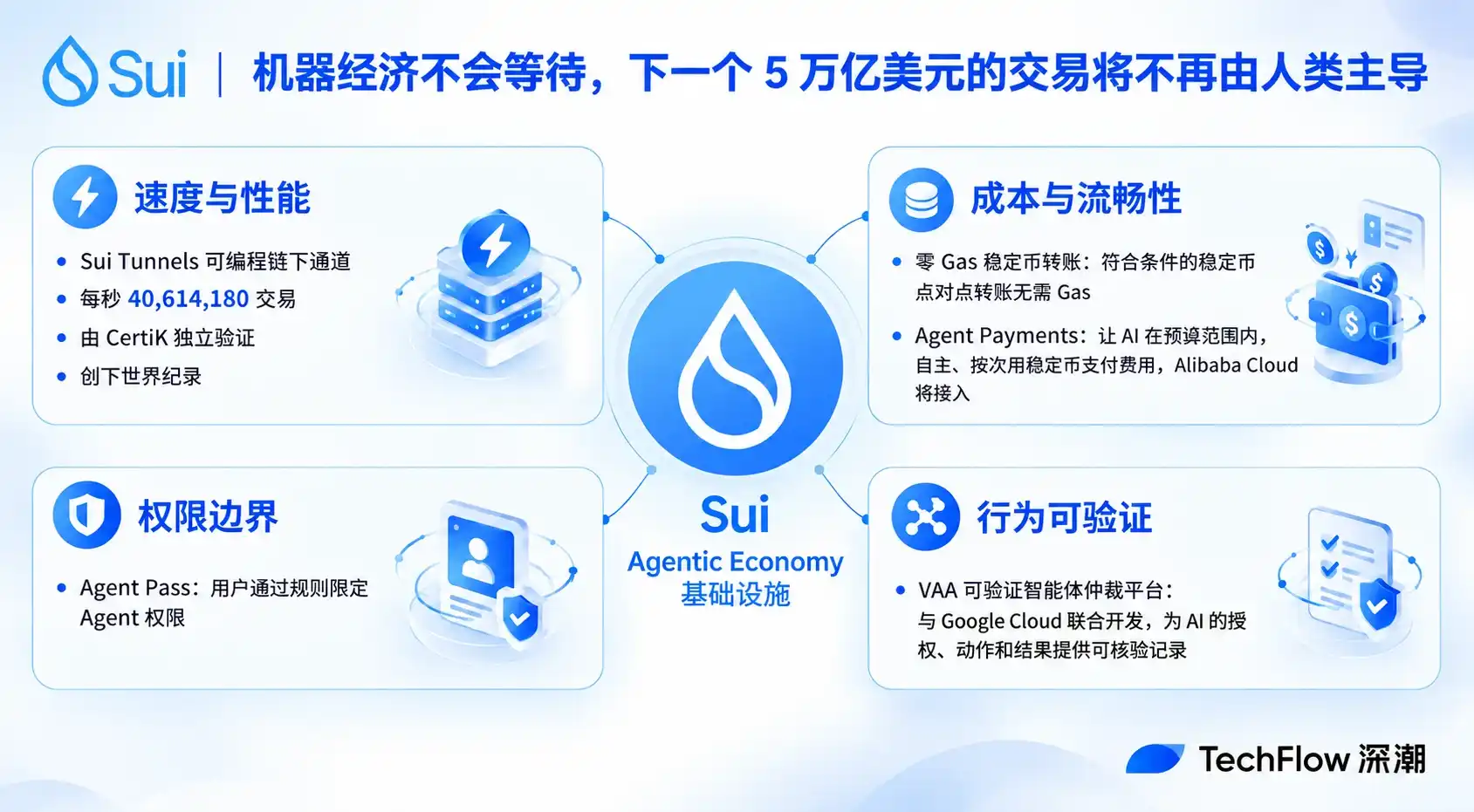
Mysten Labs co-founder Adeniyi Abiodun said at the event that the next $5 trillion in transactions will no longer be driven by humans. That line helps connect much of what Sui chose to emphasize during the conference: if machine-driven commerce is growing, the network wants to provide the rails it needs.
Speed was the most visible part of that case. Sui highlighted a figure of 40,614,180 transactions per second, independently verified by CertiK. The number was tied to Sui Tunnels, described as programmable offchain channels. The report noted that this does not represent production throughput at this stage, but Sui framed it as proof of capacity for AI microtransactions.
Raw speed was only one part of the pitch. Sui also focused on cost and execution. It introduced zero-gas stablecoin transfers and Agent Payments, a system that allows AI to pay for APIs or cloud services in stablecoins within user-defined permissions and budget limits. Alibaba Cloud has announced a partnership.

Autonomy without constraints was not the model presented here. Sui said Agent Pass is designed to define the boundaries of what AI can do, with users setting rules that keep agents operating inside a preset scope.
For verifiability, Sui pointed to VAA, a platform jointly developed by Mysten Labs and Google Cloud. Its stated purpose is to create verifiable records for AI authorization, actions and outcomes.
The pieces fit a single line of thinking: build infrastructure for an agentic economy in which AI can transact quickly, at controlled cost, with clear permissions and auditable behavior.
Stablecoins were framed as the payment layer for real-world use
If AI is the new transaction actor in Sui’s thesis, stablecoins are the transaction medium. The network used the event to show how far that effort has already moved.
According to the conference disclosures, stablecoin transfer volume on Sui has surpassed $1 trillion since August 2025. The launch of zero-gas stablecoin transfers was presented as another step toward making stablecoin payments usable in everyday consumer settings.
Several of the event’s announced partnerships were tied directly to that goal.
Through Circle CCTP V2, native USDC on Sui can move across 29 chains. The report said this setup also reduces bridge risk and liquidity loss, aiming for a safer and more continuous cross-chain experience.
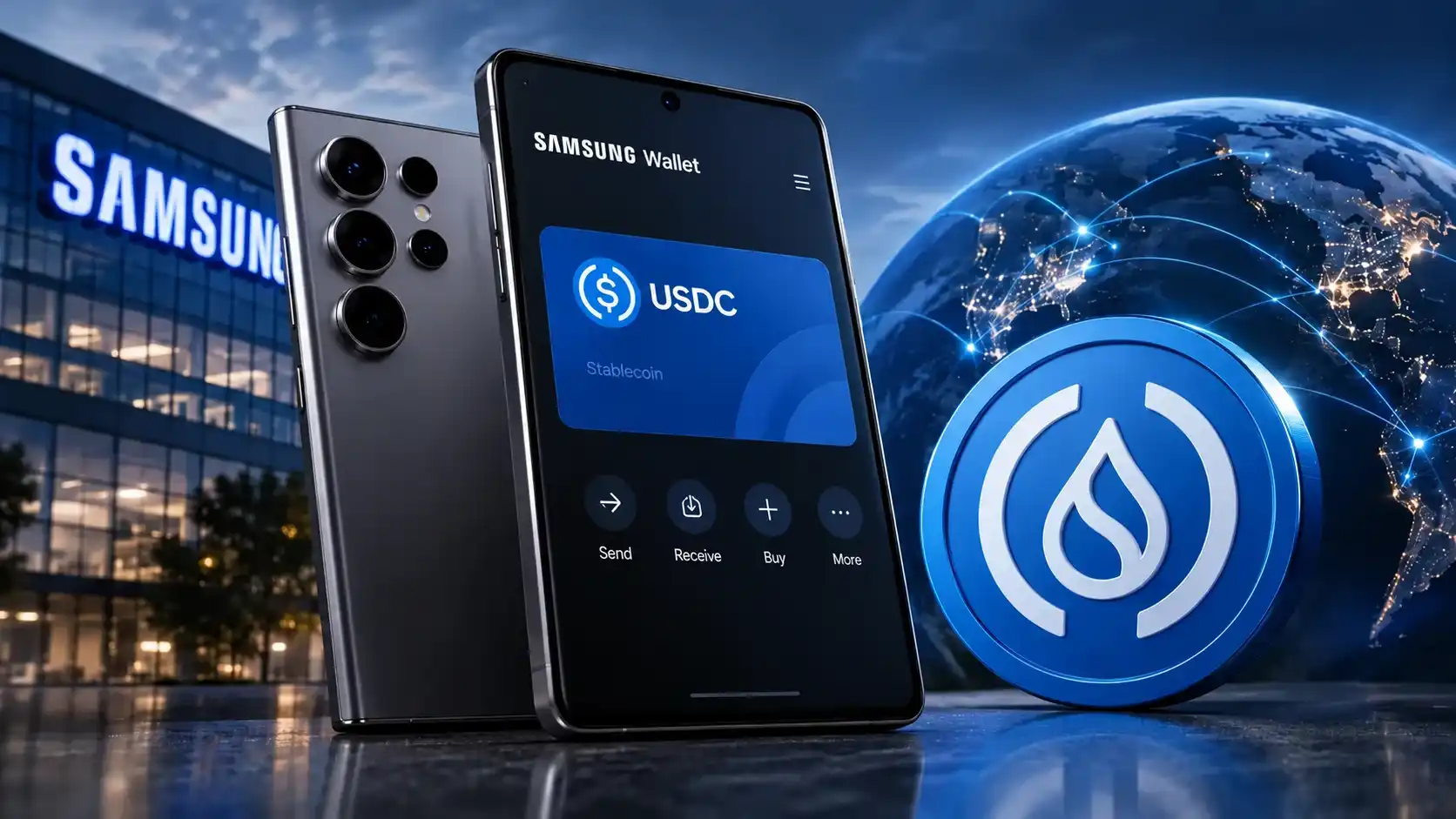
Through Samsung Wallet, Sui ecosystem USDC will be made available to 82 million Galaxy devices in the United States. The significance here is distribution: stablecoins move closer to a consumer entry point that already exists on users’ phones, rather than remaining confined to crypto-native interfaces.
Hashi advanced its mainnet plan as institutional support expanded
Institutional capital and Bitcoin finance formed another major thread at the event, centered on Hashi, a Bitcoin financial platform in the Sui ecosystem.
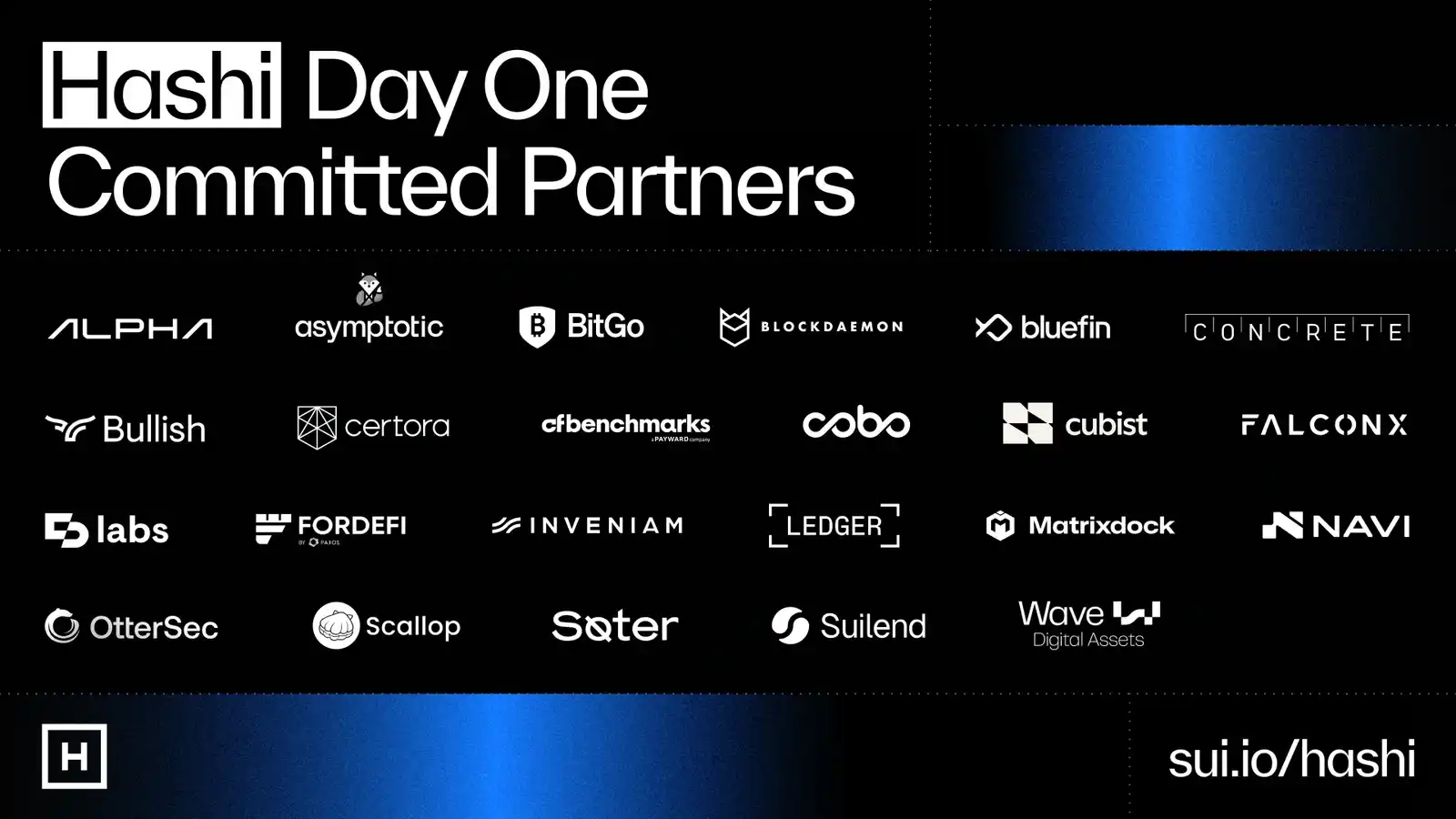
On Oct. 9, Hashi said its mainnet will begin a phased rollout in October. At the same time, Anchorage Digital, described in the report as the first federally chartered crypto bank in the United States, announced a partnership. Hashi has now secured $500 million in committed capital support.
The report added that more than 20 institutions had backed the project from its early stage, with partners spanning custody, liquidity, audit, insurance and applications.
Hashi had also made progress on the legal side before the conference. In July, it received a legal opinion from U.S. law firm Fenwick West stating that deposits and redemptions do not constitute taxable events. The report presented that conclusion as a compliance comfort point for institutions.
Those institutional names matter for more than optics. They represent channels through which institutional users can enter the Sui ecosystem, while also supporting liquidity around Hashi as it moves toward launch.
Three tracks, one target
Viewed separately, the announcements covered different parts of the stack. Viewed together, they point in one direction.
- AI expands the set of transaction participants.
- Stablecoins expand the range of payment and capital-flow scenarios.
- Bitcoin finance expands the pool of assets that can take part in onchain financial activity.
All three feed into the same objective: a fuller financial infrastructure where more participants, more assets and more forms of activity can exist on the network.
That does not mean the commercial loop is already closed. The report noted several open tests ahead, including how the record TPS figure performs in practice, whether announced partnerships convert into real deployment, and whether Hashi’s mainnet launch, product experience and institutional relationships can turn into sticky capital and liquidity.
Markets are often slow to price infrastructure before real usage appears. For Sui, Basecamp 2026 looked less like an endpoint than a clearer starting line.



