
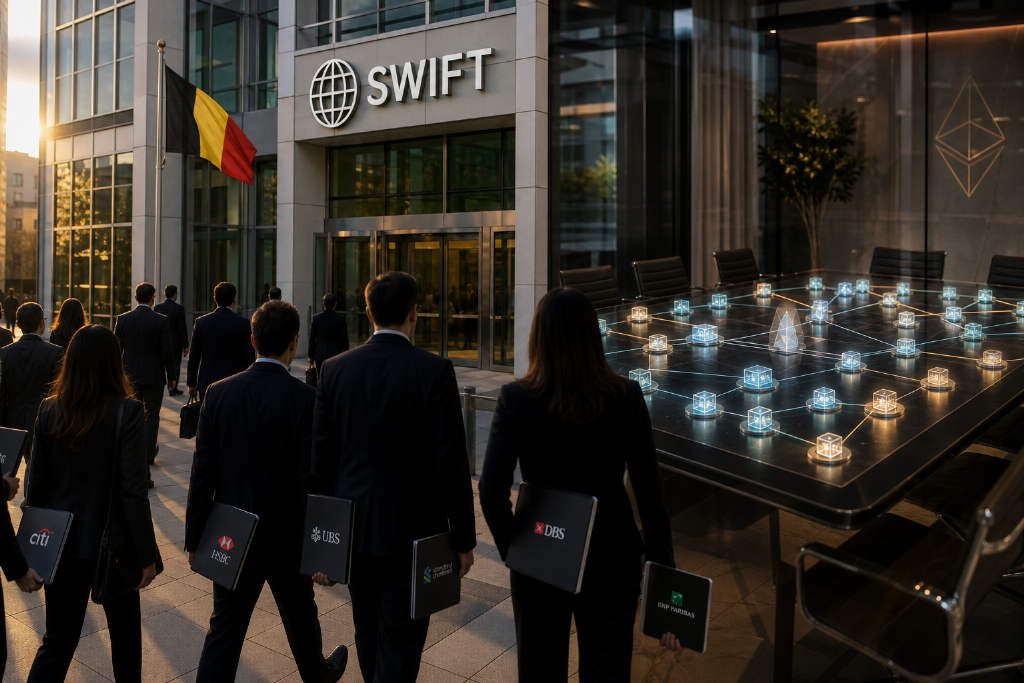
Swift is testing blockchain infrastructure inside its existing network, according to a CoinDesk report published on Aug. 29. The cross-border messaging system, which carries about $1.5 quadrillion in annual traffic, is using a shared blockchain ledger to see whether 24/7 tokenized payments can connect to its vast installed base.
Shared ledger runs on Linea
The ledger built by Swift is deployed on Linea, the Ethereum Layer 2 network developed by ConsenSys. The goal is to let banks move client funds at night and on weekends, opening the door to around-the-clock cross-border payments.
The first pilot includes 17 large banks from six continents. Those named in the report include ANZ, BNP Paribas, BNY Mellon, Citi, DBS, HSBC, Standard Chartered, UBS, Mitsubishi UFJ and Wells Fargo.
Settlement still uses existing payment rails
For now, final settlement is still completed through existing payment rails. The blockchain ledger is taking on a messaging and coordination role first.
ABMedia said the move points in the same direction as a recent wave of tokenized cross-border payment efforts in traditional finance, including JPMorgan’s Kinexys.
The real test is scale and reliability
Swift’s decision to build and test this system itself carries weight because it functions as a default standard for interbank money flows worldwide. For the new ledger, the real hurdle is not just whether the technology can run, but whether it can operate steadily under the scale, reliability demands and regulatory requirements tied to a network at Swift’s level.
When an institution that controls a key entry point for global banking flows starts bringing blockchain into formal infrastructure, the step goes beyond a routine pilot. It puts focus on whether the traditional payments system is willing, and able, to connect blockchain to its core.