
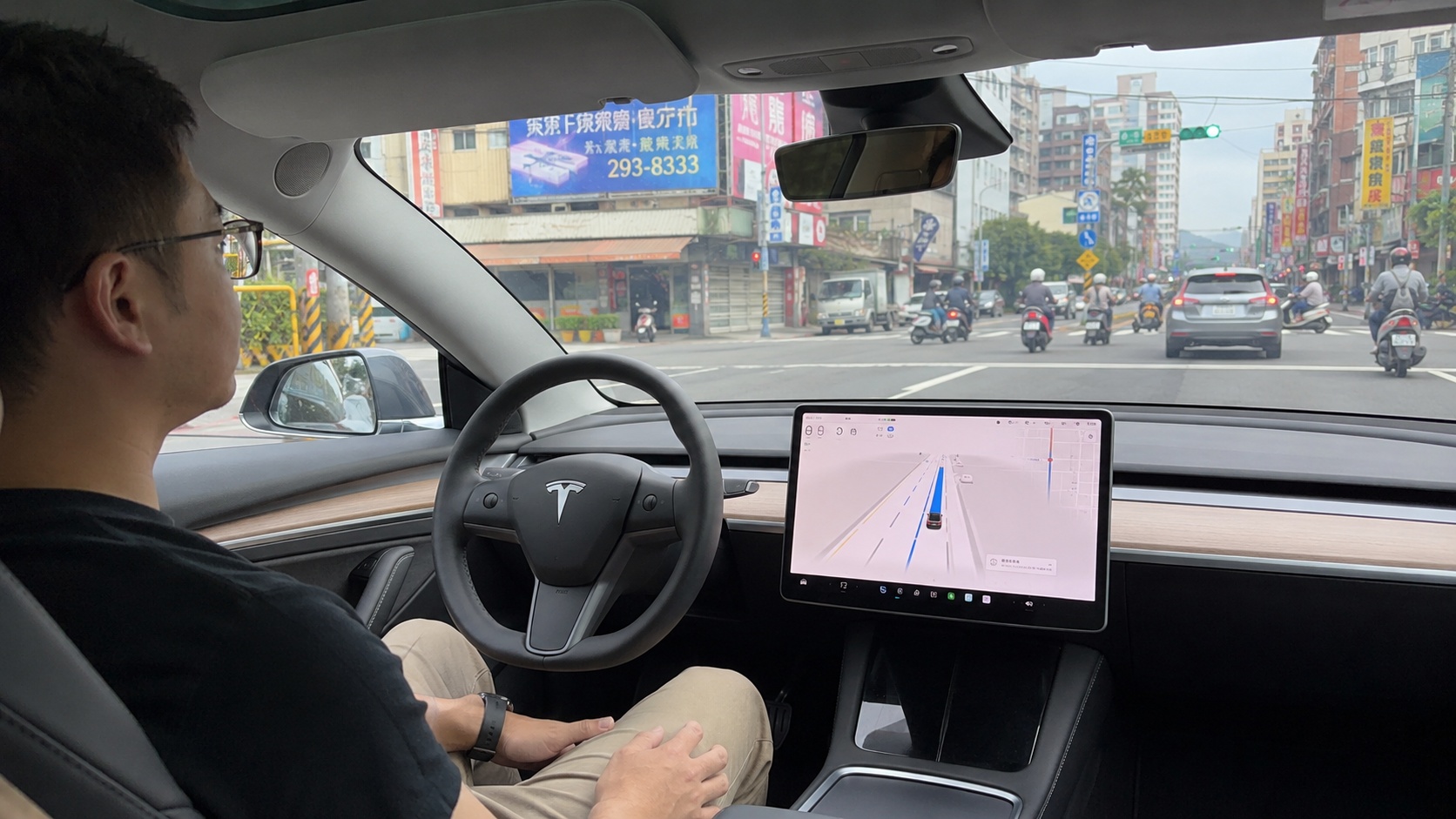
Tesla’s Full Self-Driving rollout in Taiwan has not been stopped by an explicit legal ban, according to a June 10 review meeting held at the legislature. The key issue laid out in the discussion was procedural: Tesla is still “in application” and has not formally submitted the case for review. Officials from the transport authority and the vehicle safety center said FSD is currently treated as a Level 2 driver-assistance system, which means it can be reviewed under the existing framework without waiting for a law change.
Current FSD classification keeps it under Level 2 review
The meeting pushed back on a common assumption in Taiwan that FSD is unavailable because regulators have outright prohibited it. Officials said Tesla’s current FSD (Supervised) remains a supervised driving-assistance product. The driver must stay responsible at all times, keep hands on the wheel, and remain engaged with the road. Under that definition, it stays in the Level 2 category rather than Level 3 or above.
That distinction matters. Level 2 systems can move through an administrative review process already in place. A move to Level 3 would raise separate questions around liability, insurance, and traffic regulation, which is where legal amendments would become necessary.
Formal submission remains the main bottleneck
The meeting record said Tesla is still preparing materials and communicating with the vehicle safety review body, rather than moving through a live review case. One reason cited in the source report is the lack of a full local technical team in Taiwan. Some technical documents need confirmation from overseas headquarters, and even validation engineers may need to travel in from abroad.
That leaves the current status fairly clear: the process is not blocked at the approval stage because the formal filing has not yet been completed. Without that filing, regulators cannot begin the full examination route.
Officials outlined a review schedule once Tesla files
Taiwan’s transport officials also gave a rough timeline for what happens after a formal filing. According to the meeting, a first technical committee could be convened within two to four weeks of submission to review the testing plan. If the plan passes and is approved by the ministry, that step would take about two weeks. Final review after road testing would take another two to four weeks. For confirmation tied to U.S. FMVSS standards, officials estimated roughly two to three months, with a clearer outcome expected by July.
The discussion added that testing arrangements for freeways and expressways were no longer a gray area. Taiwan’s freeway and highway authorities had already reached supporting consensus on May 27, according to the report.
Imported UNECE standards shape the limits
Another constraint comes from technical rules adopted in Taiwan’s vehicle approval system. The market relies heavily on regulations from the UNECE, and Taiwan began recognizing UN R79, a steering equipment rule, in January 2025. That matters because Europe has taken a cautious line on some advanced urban FSD functions, including automatic lane changes, intersection turning judgment, and automated steering on city streets.
Lawmaker Ko Ju-Chun argued during the meeting that Taiwan could recognize certification results from the Netherlands’ RDW directly rather than wait for a broader EU-level TCMV vote. Transport officials responded that recognition of RDW certification is not tied to the outcome of an EU-wide vote and remains a possible route.
Other markets are already live while Taiwan waits
The source material says FSD is already allowed on roads in the U.S., Canada, the Netherlands, South Korea, and mainland China. The U.S. has enabled the main features, the Netherlands approved it in April this year, and South Korea has also formally opened the service. Publicly disclosed figures in the report say Tesla FSD has logged more than 11 billion miles globally, including about 16.6 million kilometers without a collision on highways.
That gap is increasingly visible for Taiwan drivers. Similar vehicles, software, and hardware may already be on local roads, but access still depends on the regulatory filing moving forward. For now, the market is waiting on a formal submission.