
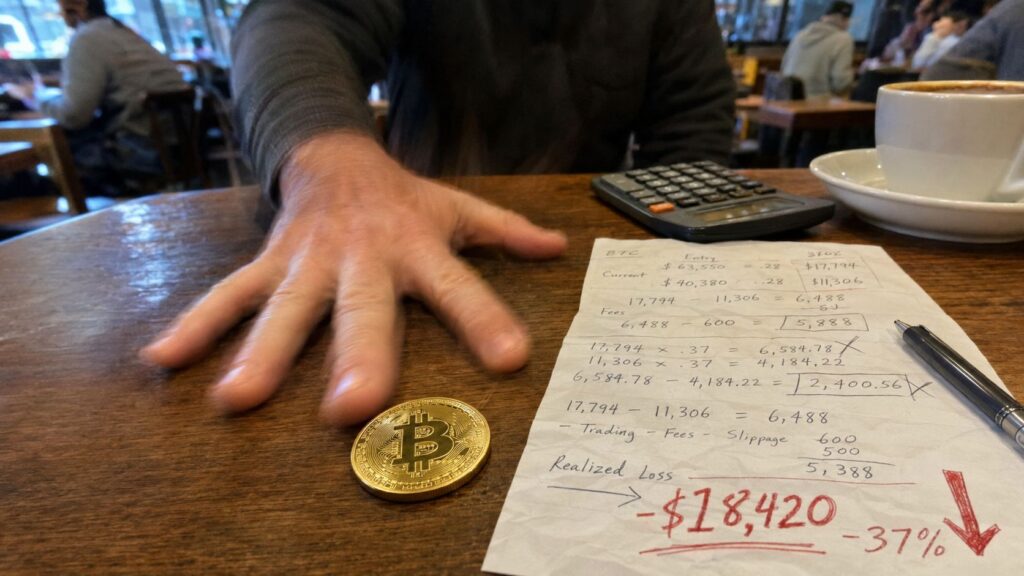
A district court in Hsinchu has rejected a fraud claim filed by an elementary school art teacher who sought NT$7 million from a former student after losing money in cryptocurrency trading. The court found no fraud and said the two sides had already settled the dispute in June 2024, bringing the matter to an end.
NT$7.826 million transferred in 11 payments during 2017
According to the report, the teacher, surnamed Chen, asked the former student, surnamed You, to help open an account and trade cryptocurrencies in 2017. From May 10 to Dec. 26 of that year, Chen sent 11 remittances to You’s account, totaling NT$7.826 million. The funds were used to buy Ether, Bitcoin, Bitcoin Cash and XRP. The two largest single transfers were NT$2 million each.
That period coincided with a strong market for crypto assets in Taiwan. The judgment said Chen’s positions at one point showed paper profits of more than NT$1 million. You later sent a message urging Chen to consider taking money off the table, writing: “Teacher, when are you planning to withdraw your funds? Putting this much money into high-risk speculative products is putting me under a lot of pressure every day. The profit has already exceeded NT$1 million.” Chen declined, replying that he would stop only when his assets reached “over NT$100 million.”
Court says the teacher retained account access and made his own decisions
The ruling cited additional messages exchanged after the market turned. In those messages, Chen said things such as, “The main force faked the chart, and it looked very real. I got fooled easily because I was anxious,” and “After comparing back and forth, not moving was still the most profitable.” He also sent messages including “XX, please take over (trade on my behalf)” and “Turn off my permissions.”
The court said those communications pointed the other way from Chen’s allegation. Rather than proving deception, they indicated that Chen still held trading permissions and was making his own moves as the market fluctuated. The judge also said the case record did not show that You delayed account opening or used false information to induce the investment.
Dispute later centered on roughly 0.9 BTC left in Bittrex
Another part of the dispute involved a Bittrex account that was frozen because of abnormal trading. About 0.9 BTC remained in the account. Chen demanded that You buy back the position at the historical peak price of $72,000 per BTC and return his principal. You argued that the market value at the time was about NT$1.7 million.
The report said You later paid NT$2.7 million in installments and took over the 0.9 BTC position. Even so, the dispute did not end there, and Chen later returned to seek more compensation.
A June 2024 settlement voided an earlier NT$7 million repayment agreement
You first signed a repayment agreement on June 1, 2024, promising to repay NT$7 million in monthly installments over five years. But on June 24, 2024, after coordination involving You’s parents, the two sides reached a separate settlement. That agreement voided the earlier NT$7 million document and replaced it with NT$50,000 as a settlement amount.
The settlement text cited in the judgment stated: “You originally promised to return Chen’s NT$7 million investment loss. Considering the party’s repayment ability and willingness, both sides agree that the NT$7 million repayment agreement will be offset with NT$50,000, the original NT$7 million repayment agreement is void, and Chen will not pursue the matter further. The parties are settled in full.” The process was also recorded on video, according to the report.
Chen later sued again using the voided NT$7 million agreement, arguing that he had been misled into signing the settlement after hearing statements from the other side’s family that suggested someone “would end up on a dead-end road.” He asked the court to rescind the settlement under civil law.
No fraud found, and the debt had already been extinguished
The court did not accept that argument. The judge said the party alleging fraud bears the burden of proof. The audio recordings and chat screenshots submitted by Chen only showed that he kept questioning You after the investment losses. They did not prove fraudulent conduct, nor did they show that You had guaranteed profits or presented false information.
Instead, the record showed that You repeatedly warned about risk and suggested reducing exposure. On that basis, the court said it was difficult to conclude that You had any intent to defraud. The judge also stated that Chen, as a teacher and an adult with normal understanding, should have known that investment carries risk and that high returns come with high risk, with no basis for assuming guaranteed profits.
On the NT$7 million claim itself, the court said the June 2024 settlement had already extinguished the underlying debt. Since Chen failed to prove that the settlement had been procured by fraud, he could not revive the original claim. The court therefore dismissed the case in full and also rejected the request for provisional enforcement.