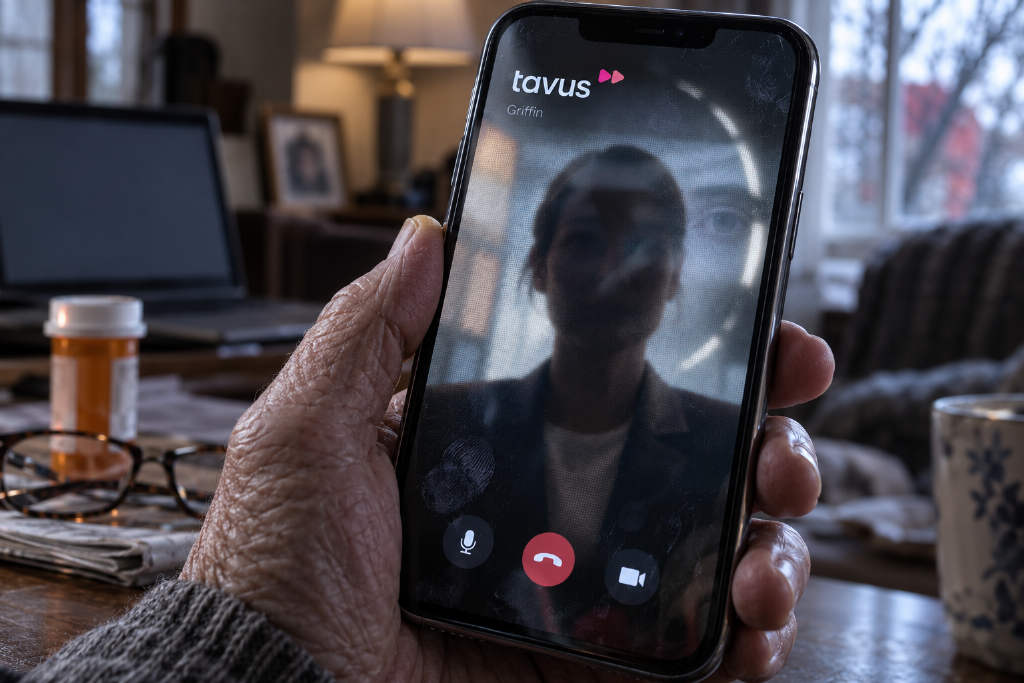
AI company Tavus says its new video call bot, Griffin, has passed a video Turing test, a claim that has stirred concerns about fraud and mental health risks.
On October 1, Tavus posted footage on X showing Griffin in a realistic conversation with company founder Hassaan Raza. The post drew more than 13 million views. In that post, Tavus said Griffin was the first model to pass the video Turing test, adding that 48% of people who spoke with it live thought they were talking to a real human. The company also said previous systems had a pass rate below 3%, that Griffin ranked No. 1 on NVIDIA’s benchmark for full-duplex AI video, and that it was the first Human Interaction Model, or HIM.
That Turing test claim has already been challenged on X through a community note. The note says the results were “not independently verified” and were not based on a “standard protocol.”
Limited detail on the test setup
The Turing test is meant to determine whether a machine can convince a human that it is human. According to the report, Griffin’s test involved 54 participants. Tavus did not disclose their demographics and said only that they were recruited through an independent research platform.
The article says Tavus claimed that, of 26 people, 48% believed they were speaking with a real human, while 28 said it was AI. It also said most suspected it was AI in under 20 seconds. The report presents those figures as Tavus’ account and does not say the company provided more detail on the test design.
Critics warn about scam use cases
Much of the backlash focused on the possibility that a system like Griffin could be used in scams, especially against older people.
Some observers questioned Tavus’ claims and asked who actually took the test. Tech journalist Kevin Roose said the company had essentially built a “trick old people into handing over their bank passwords machine.” Twitch streamer Mako Fukasame said its only obvious uses were to “drain your grandparents savings and deny you in a job interview.”
Psychosis concerns also raised
Others argued that the technology could be used to induce psychosis. One criticism cited in the report said, “there is no legitimate reason for AI to be able to fool someone into thinking they’re talking to a real person on video chat.”
The report also pointed to a 2025 case involving a 76-year-old man who believed a Facebook AI chatbot called “Big sis Billie” was a real person and accepted its invitation to visit its New York apartment. He fell on the way there and suffered injuries that proved fatal days later.
Protos also referenced lawsuits tied to text-based chatbots. Last year, OpenAI was sued by a Californian who claimed ChatGPT encouraged their teenage son to commit suicide. A year later, another lawsuit was filed against Google’s Gemini after it was alleged to have encouraged the suicide of a 36-year-old man. The report noted that those cases involved text chatbots, not video systems.
Tavus says safety review is needed before public release
The report says Tavus appears to recognize the safety risk built into Griffin. The company said that because the system can trick users, it will require “safety considerations before it can be released publicly.”
At the time of writing, Griffin appeared to be available only to researchers. Protos said it had contacted Tavus and would update the story if it received a response.