
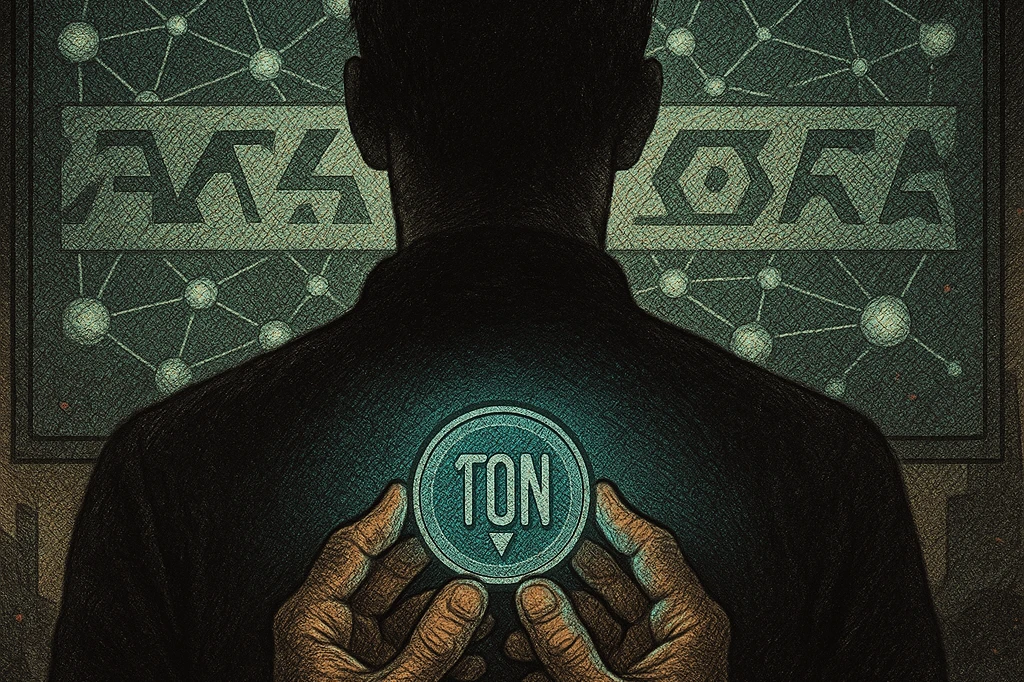
Pavel Durov said on May 4 that Telegram will replace the TON Foundation as the main engine behind TON and become the network’s largest validator. He also introduced the “Make TON Great Again” plan. After the announcement, TON climbed from about $1.35 to $1.85 in two days, a gain of more than 37%. At the same time, ton.org went into maintenance mode, showing a message that the site is now controlled by MTONGA.
Telegram steps back into a project it left years ago
The link between Telegram and TON was cut in 2020. The U.S. Securities and Exchange Commission had accused Telegram Open Network of selling unregistered securities through its 2018 Gram token ICO. Telegram then abandoned the project, returned funds, open-sourced the code, and publicly ended its involvement. After that, Anatoliy Makosov and Kirill Emelyanenko took over the codebase, launched the community-led NewTON initiative, and kept developing nodes, the testnet, and later the mainnet.
In 2021, the NewTON community upgraded the testnet into the mainnet and the project formally moved under the TON Foundation. The foundation was registered in Switzerland as a non-profit in 2023 and supported by community contributors. That makes Durov’s latest move a return after six years away from direct participation.
TON’s biggest breakout came through Telegram mini games
TON had already seen major ecosystem efforts before this week’s announcement. In April 2022, TONcoin Fund, backed by investors including Huobi Incubator, Kucoin Ventures, and MEXC Pioneer Fund, announced a $250 million ecosystem fund. The TON Foundation later followed with a $1 billion ecosystem fund. Infrastructure across domains, storage, and DeFi was built out over time, but the network’s widest exposure came from mini games inside Telegram.
As TON pushed its ecosystem, Telegram gradually became its most important traffic channel. Official and third-party teams rolled out Mini Apps for crypto transfers and payments. Then simple games changed the scale of that connection. Using Telegram’s large user base and lightweight gameplay, several TON-linked games added millions of users within days. Notcoin and other tap-to-earn projects became the clearest examples. During that period, TON rose above $8 in mid-2024 and its market capitalization moved past $26 billion.
Durov’s posts put attention back on throughput and fees
That momentum faded once the mini game wave cooled. TON did not produce another equally strong narrative to keep market attention. The material also notes that concern around TON increased after Durov was arrested by French authorities over accusations that Telegram had failed to effectively control illegal activity on the platform, and on-chain activity dropped quickly.
TON’s latest return to the spotlight also began with Durov’s posts. On April 9, he said TON had completed an upgrade that made it 10 times faster, lifted block generation efficiency by 6 times, and enabled transactions to complete within 1 second. He described that as the first step in a seven-step MTONGA plan. The second step was to cut transaction fees by another 6 times.
Catchain 2.0 cuts block time and base fees
The performance increase came from the Catchain 2.0 consensus upgrade completed in April. TON’s new mechanism introduced a streaming layer for state updates in place of the previous polling model. That reduced block production time to roughly 400 milliseconds, while transaction finality was brought down to about 1 second. The fee reduction Durov referred to was completed in early May, bringing TON’s base fee to around $0.0005.
Beyond consensus changes, TON also upgraded core infrastructure in the first quarter of this year. The network adopted a new Rust-based node implementation designed to simplify operations and suit institutional and large-scale deployments. Its developer tool, Builders Portal, has already released version 2.0, with version 3.0 expected in the second quarter.
Based on these moves, Telegram is placing TON back at the center of its own ecosystem as a payment and interaction layer for Mini Apps and related services. The source material also points to AI task control on Telegram as an emerging use case, making low-cost, high-frequency transactions a core part of TON’s current technical push.