
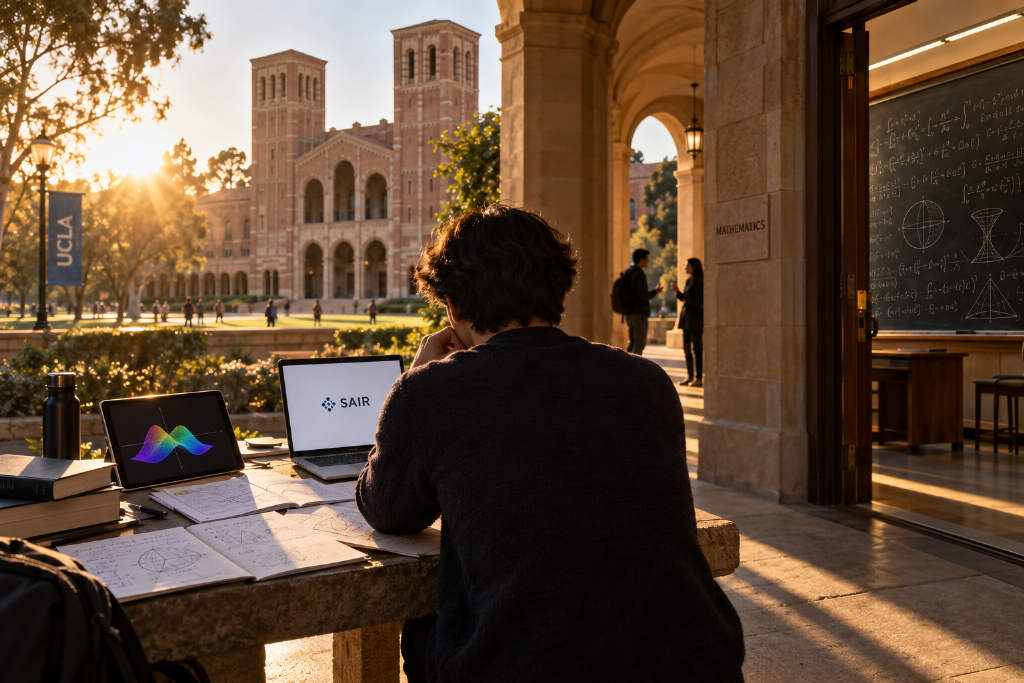
Fields Medalist Terence Tao’s blog has become the focal point of a broad argument over artificial intelligence, mathematical research, and the place of human scholars in a field where machines are getting better at producing proofs.

The discussion accelerated after a video of Tao circulated widely online. In it, he said, "We must slow down AI. The current speed is just crazy. There is no reason for it to be this fast — absolutely no reason." He added, "What is surprising is that we are so willing to change everything without fully knowing what the consequences will be. This is an extreme nonlinear dynamic."
The timing drew attention because only days earlier, over the previous weekend, Tao had been proposing and actively advancing "SAIR: open-source mathematics models, and how to contribute." That sequence — recruiting contributors for an open-source math model effort, then warning that AI development had become dangerously fast, and then hosting a major public debate on his blog — turned the episode into a flashpoint for a wider academic anxiety.
The article frames that anxiety in stark terms. It argues that the long-standing structure of mathematical research and doctoral training is now under pressure from the rapid improvement of large language models and automated theorem provers such as Lean. In the older model, a mathematics PhD student could spend years searching the literature, building intuition, and struggling to prove even a small lemma. A modest original contribution could be enough to graduate and secure a place in academia. Under current conditions, the article says, that path is becoming much harder as machine systems gain stronger mathematical discovery and proof-generation abilities.
It also points to an irony: tools Tao had promoted for collaborative problem-solving and formal verification were originally meant to help human researchers communicate and validate ideas, but are now being seen as part of the infrastructure that allows machine systems to move deeper into mathematical work. The concern raised in the piece is that a transition may be underway from human-led mathematical research to a machine-led era in which people are left mainly to interpret what the systems produce.
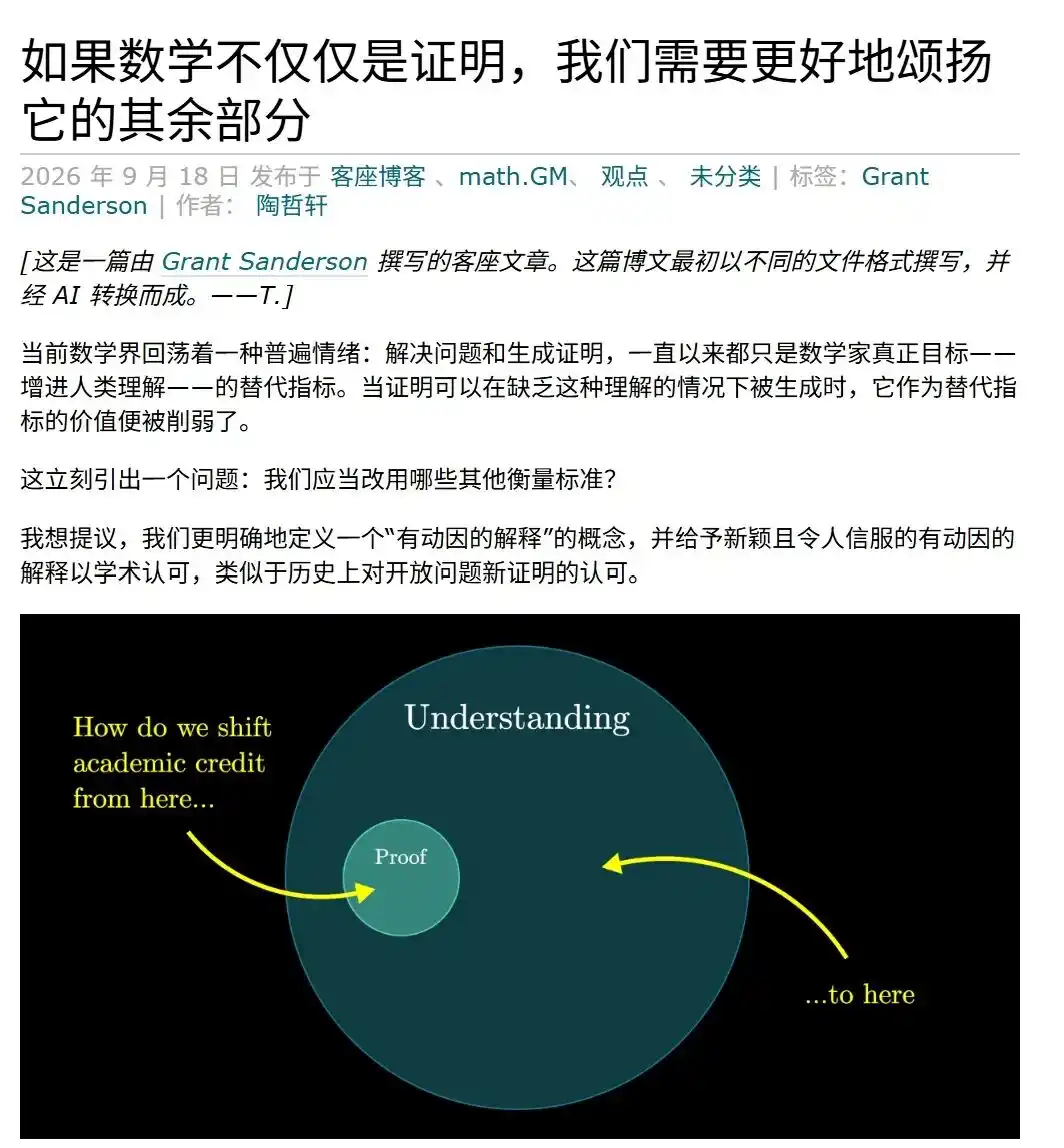
Grant Sanderson argues that proofs are not the final goal
A guest essay by Grant Sanderson, founder of 3Blue1Brown, became the intellectual center of the debate. Published on Tao’s blog under the title "If math is not just proofs, we should better celebrate the rest of it," the piece argues that mathematics has long rewarded the wrong proxy.
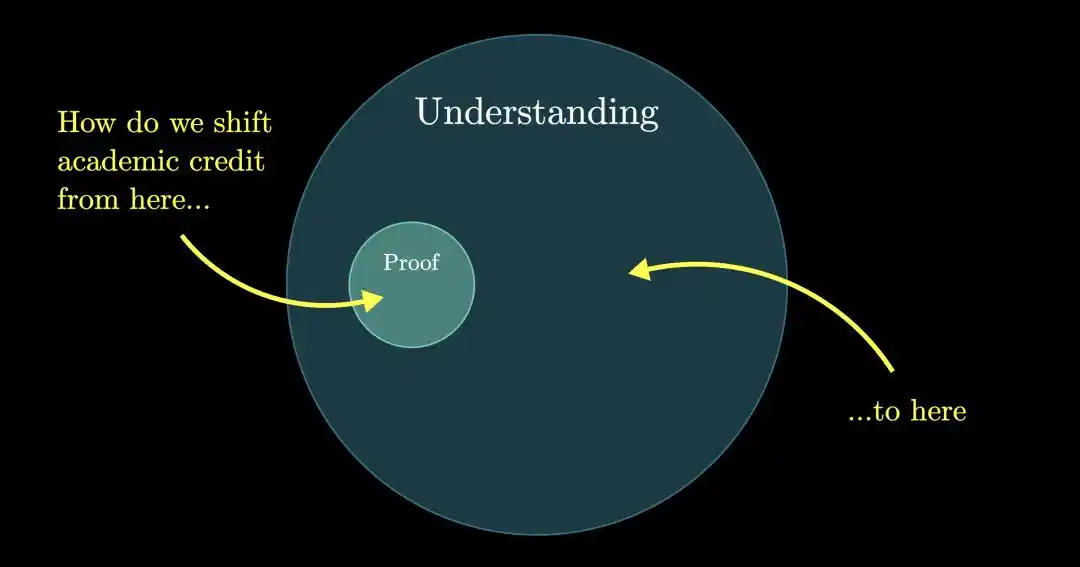
Sanderson writes: "There is a consensus echoing around mathematics right now: solving problems and generating proofs have always been proxy metrics for the true goal of mathematicians. The true goal is to increase human understanding. When AI can generate proofs without any ‘understanding,’ the value of ‘proof’ as a metric is severely weakened."
That claim shifts the argument away from a simple question of whether AI can replace mathematicians. Instead, it asks what the discipline is actually trying to reward. The article says academia has historically placed more weight on proving results than on explaining them. A person who proves a major theorem is treated as a top-tier contributor, while someone who makes a difficult idea clear to a broad audience may still be dismissed as merely doing popularization.
Sanderson’s point is that if AI is becoming an efficient proof generator, then the mathematical community needs to state more clearly that the human contribution lies in clarity, conceptual connection, and the pursuit of understanding rather than in proof production alone.
What Sanderson calls "motivational exposition"
To make that distinction concrete, Sanderson introduces the idea of "motivational exposition." The article contrasts it with a conventional proof in several ways.
- In a proof, definitions often appear at the beginning, followed by a formal derivation of properties.
- In motivational exposition, the definition appears only after the problem has been clearly set up and the reader understands why a new structure is needed.
- In a proof, every sentence must be fully correct and every claim must follow from what came before.
- In motivational exposition, one can begin with a simple but wrong idea and guide the reader through the process of proposing it, seeing where it breaks, repairing it, and discovering a new issue.
In that framing, a proof tells the reader that a theorem is true. Motivational exposition tries to answer a different set of questions: why the theorem is true, how anyone thought to ask it, how the idea was discovered, and where it sits in a larger mathematical structure.
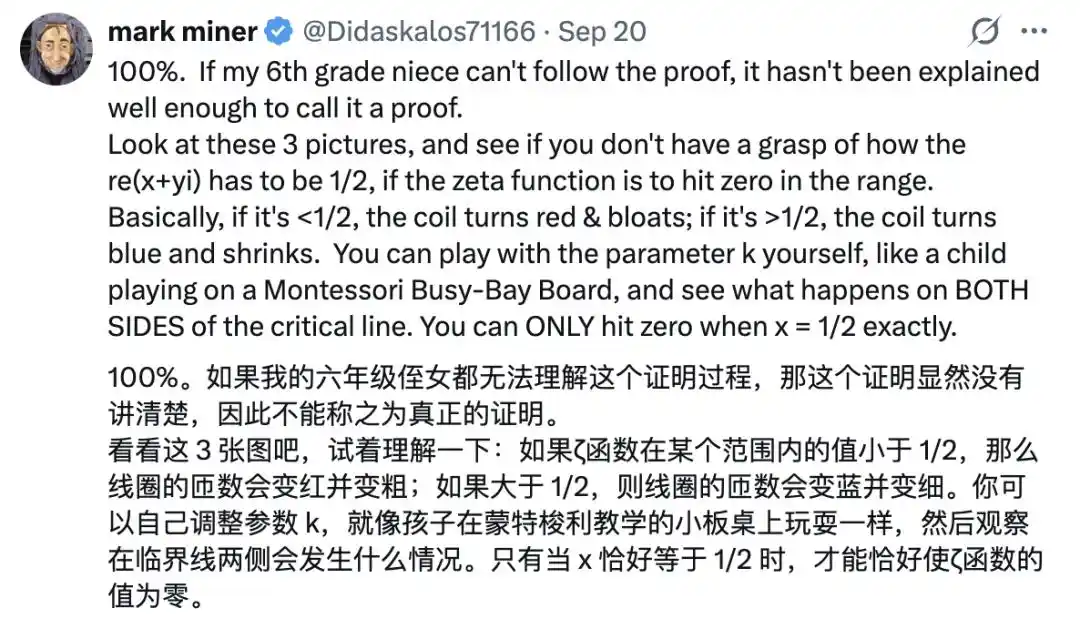
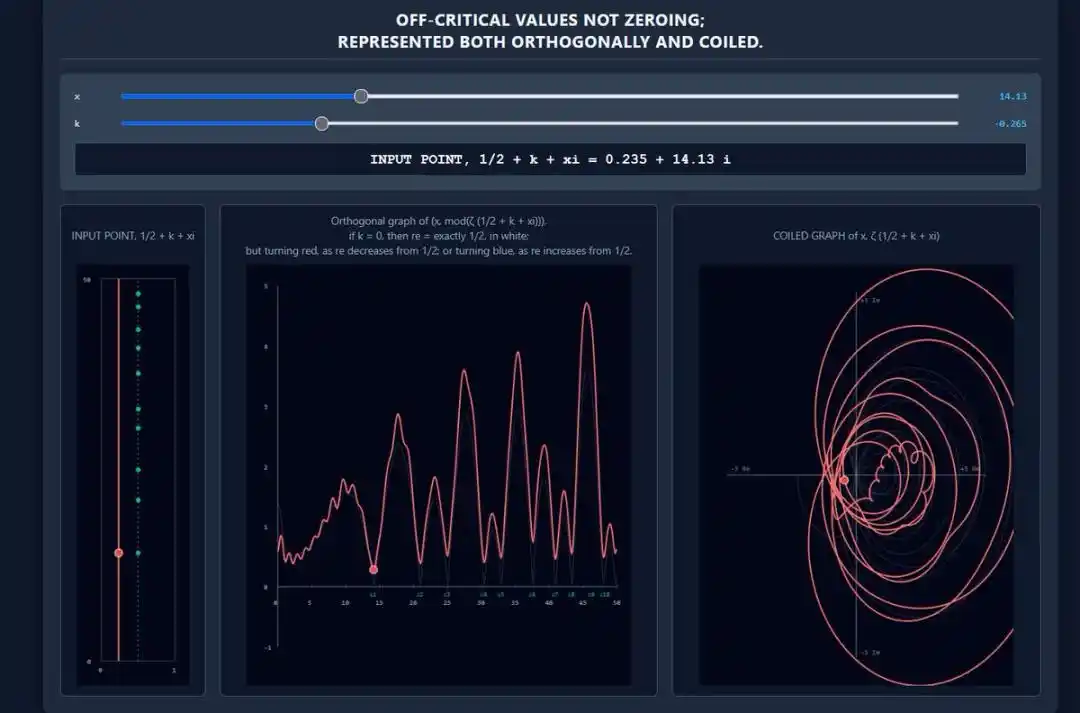
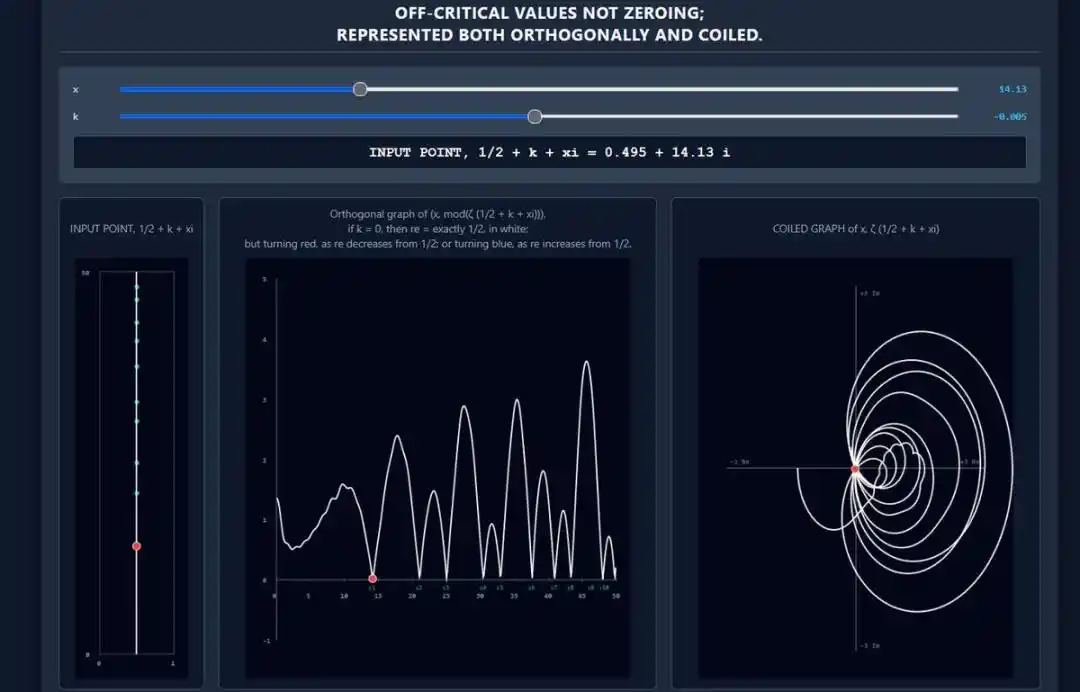
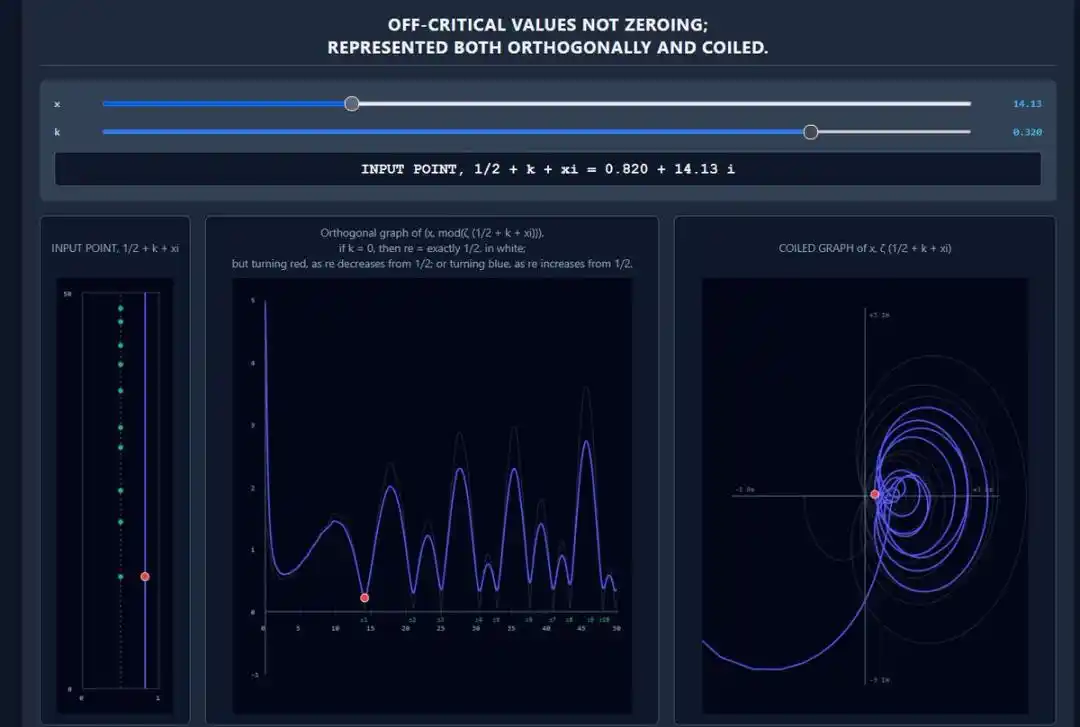
The article highlights a comment from Mark Miner: "100% agree. If my sixth-grade niece can’t understand the proof, then it still hasn’t been explained well enough and can’t be called a proof." He used the zeta function in the Riemann Hypothesis as an example, arguing that visualizations can give an intuitive sense of why the real part needs to be 1/2 for zeros to appear in the relevant range.
"Open-ended exposition problems" and an older idea from 2007
Sanderson’s proposal is not only philosophical. He argues for creating "open-ended exposition problems" so that explanatory work is treated as a real scholarly contribution rather than unpaid side labor.
The article traces that idea back to 2007, when mathematician Timothy Chow proposed something similar. Solving an open-ended exposition problem, in that earlier formulation, meant explaining a mathematical topic in a completely transparent and clear way, with motivation at every step, ideally to the point where students feel they could have derived the result themselves.
That proposal drew little response at the time. The article says the reason was simple: human mathematicians were still consumed by the work of proving theorems. Today, Sanderson argues, the situation is different because "every proof generated by AI is, by its nature, an unsolved exposition problem."
That line recasts AI output as the start of a human task rather than the end of one. If machine systems begin producing thousands of cold, aesthetically thin, code-like proofs, some of them running to thousands of pages, then human researchers will still need to extract the ideas, explain them, and build bridges between concepts. Without that work, the resulting truths may exist formally but remain inert for human understanding.
The article also cites the late Fields Medalist Bill Thurston and his 1993 essay "On proof and progress in mathematics." In discussing the controversy around the computer-assisted proof of the four-color theorem, Thurston wrote that the issue was not necessarily doubt about whether the theorem was true, but a persistent human desire to understand it through the human mind.
Three institutional changes proposed in the essay
The article lists several practical steps Sanderson wants the field to consider.
- Reshape PhD defenses. Advisors should not require students only to solve problems themselves. Students could use AI to solve them, but the final test should include a talk that explains the hard problem or the AI-generated proof clearly to the department.
- Create a modern version of Hilbert’s problems. The article calls on leaders such as Tao to publish a list of "unsolved exposition problems" identifying major results that are known to be true but are still not well understood in a human sense.
- Reform tenure evaluation. Writing excellent textbooks and producing highly illuminating scholarly material should be valued at least as much as, and possibly more than, publishing in top journals.
To illustrate the point, the article cites a recent case in which researcher Liam Price used GPT-5.4 Pro to solve Erdős problem No. 1196. It says the initial AI proof existed, but read like an unreadable text to humans and did not by itself advance understanding. A group of human mathematicians, including Tao, then worked through it, extracted the core idea, and turned it into a human-readable paper. More than that, they showed that the central idea did not only solve the original problem but also clarified several nearby conjectures.
In the article’s metaphor, AI was the mining machine, while human mathematicians were the jewelry designers. The polished human paper that organized and elevated the ideas was presented as the more meaningful achievement.
Pushback from physicists, mathematicians, and AI skeptics
The response on X and in Tao’s comment section was immediate and divided.
Physicist Lenka Zdeborova posted: "For 25 years, those of us in theoretical physics have been told, ‘that’s not mathematics,’ because we prioritize understanding over strict proof. Now, seeing mathematics have this debate because of AI makes me feel very warm. Suddenly, many mathematicians are explaining that math is about understanding, not just proof. Welcome to our world!"
Some commenters framed the moment as a long-running philosophical split between physics and mathematics. In that telling, physicists see mathematics as a way of approaching an external reality, while mathematicians are more inclined to treat mathematics itself as reality. The article argues that AI has disrupted the elevated status long attached to strict proof and forced mathematics to revisit the value of intuition and explanation.
But there was no consensus inside mathematics itself. One line of criticism warned that a stronger emphasis on exposition could bury brilliant but inarticulate problem-solvers. The article cites comments about the late mathematician Jean Bourgain, whose papers were known for being rough, direct, and often difficult to read, even as his problem-solving ability was extraordinary. The concern was that if exposition becomes a central metric, future figures like Bourgain could be undervalued or pushed out of academia.
Tao responded directly. He said Bourgain’s choice to sacrifice exposition in favor of problem-solving was a consequence of the reward structure of that era, not proof that the structure was justified. Tao added that, from his own private interactions, Bourgain was fully capable of excellent exposition, and that if the academic environment had placed more weight on it, his adjusted writing style could have produced even greater contributions to mathematics and to a wider audience.
A second line of criticism focused on AI’s future capabilities. The article says scholars including Tsimerman argued that people should not be naive: AI’s explanatory ability may be limited now, but future models could generate textbook-quality motivational exposition that surpasses what humans write. If explanation and understanding are also automated, then what remains for human mathematicians?
An anonymous commenter pushed back sharply: "I’m surprised by some people’s blind worship of AI. What is the ‘best exposition’? That depends heavily on the specific human trying to understand the mathematics. There is no static ‘exposition effectiveness function.’ We care about exposition in order to promote human understanding of mathematics, not machine understanding of mathematics."
The article uses that response to stress that exposition is not a fixed optimum. It is tied to particular readers and to the human process of learning.
A warning about speed, and a possible cultural turn
The piece closes by returning to Tao’s warning that AI development had become "crazy." Its explanation is that the deepest concern is not simply that machines are overtaking humans in computation. The problem, as framed there, is that academic culture, institutional design, and collective psychology are not ready for the scale of the shift.
If universities and departments continue to reward proof production and paper counts above all else, the article argues, many young scholars could face a severe squeeze as AI enters mathematical research more aggressively. The academic ecosystem built over centuries would then come under direct strain. If, instead, the field accepts the kind of cultural shift Sanderson is advocating and starts treating explanation, understanding, teaching, and conceptual synthesis as central contributions, then AI could become a force that reshapes mathematics rather than simply hollowing out its old incentives.
The article quotes Sanderson’s closing view: "For young students right now, this is actually the most exciting time to enter mathematics, because there is nothing more exciting than entering a field that is highly plastic and where you have a chance to actively shape what its future looks like."
It also notes that a commenter cited a line from Scale AI founder Alexandr Wang: "As I tell my nephew, math will set you free." In the article’s telling, AI may hand over answers in bulk, but human understanding still determines whether those answers become part of a living intellectual tradition.
The reference section lists two X links: https://x.com/stevenstrogatz/status/2101490647752479151 and https://x.com/8teAPi/status/2101484024455983467. The original piece says it came from the WeChat account "新智元" (ID: AI_era) and was written by "ASI启示录."



