OpenAI
3 hours ago

OpenAI Posts Nine AI-Generated Math Papers, Claims Matrix Multiplication Exponent Is 2.25

OpenAI has uploaded nine AI-generated mathematics manuscripts to its openai/math GitHub repository, grouping them into two research families and linking them to eight open problems in mathematics and theoretical computer science. The most prominent claim puts the matrix multiplication exponent at 9/4, or 2.25. The papers also report results on the fast Fourier transform, integer multiplication, the sunflower conjecture, Valiant’s VP and VNP classes, and strongly polynomial algorithms for linear programming. OpenAI released Lean formal proofs for some conclusions, but the proofs do not cover every result and have not been made public, according to the source text. None of the nine manuscripts has undergone peer review. The article also cautions that asymptotic complexity results do not translate into an immediate performance gain for current GPUs or lower large-model training costs, since practical algorithms can carry enormous hidden constants.


160
OpenAI Posts Nine AI-Generated Math Papers, Claims Matrix Multiplication Exponent Is 2.25
Artificial Intelligence
1 days ago

Anthropic and OpenAI Independently Claim Proof of VP ≠ VNP

Anthropic and OpenAI published separate papers on Nov. 24 claiming to prove VP ≠ VNP, a separation in algebraic complexity often described as the algebraic version of P versus NP. Their repository updates appeared just 3 hours and 47 minutes apart. Anthropic’s 70-page paper credits “CLAUDE · ANTHROPIC” and includes about 73,000 lines of Lean code. OpenAI’s 30-page paper names the company, but describes its model only as an unnamed internal system; its repository contains 440,000 lines of Lean code. The methods and lower bounds differ, and OpenAI’s formal verification covers exact circuits, not its boundary-circuit result. Neither paper has undergone peer review, and mathematicians have not yet checked whether the formalized statements fully match the claims in the papers. The result does not settle P versus NP in Boolean complexity. The article places the claims in the context of decades of work on determinants, permanents, circuit lower bounds, and geometric complexity theory, while noting that human review remains necessary.

00
Anthropic and OpenAI Independently Claim Proof of VP ≠ VNP
Artificial Intelligence
Nov 13, 2026

Claude Helps Formalize the Ternary Goldbach Proof and Finds Errors

Independent developer Charlie Reams used Claude Code to formalize the proof of the ternary, or weak, Goldbach conjecture in roughly 194,000 lines of Lean 4 code. The repository contains no unfinished “sorry” steps, Lean’s placeholder for proof obligations that have not been completed. The project also identifies 11 discrepancies with Harald Helfgott’s published proof, including an incorrect constant, an inequality that fails at v=2, and a faulty numerical bound in a step citing a 1995 paper by Ramaré. The formalization rebuilds part of the argument in Theorem 13.2.1. After the corrections, the proof’s margin remains positive but is smaller. Helfgott said Reams contacted him privately on October 4 of that year. The project has reduced its external assumptions from five to two, but still relies on numerical verification results that have not been brought into Lean: Platt’s numerical verification of the generalized Riemann hypothesis and a local verification of the even Goldbach conjecture up to 4 × 10^18. The report also mentions a separate formal proof of Fermat’s Last Theorem by 1,000 Claude Fable 5.2 agents working for 30 hours; it is distinct from Reams’s project.

00
Claude Helps Formalize the Ternary Goldbach Proof and Finds Errors
Axiom
Oct 30, 2026

Axiom says its AI system formalized the Classification of Finite Simple Groups in 24 days

Axiom said its multi-agent system, AxiomProver, has fully formalized the Classification of Finite Simple Groups, one of the largest proof efforts in mathematical history. The source article says the theorem was assembled over decades by about 100 mathematicians across more than 500 papers and roughly 15,000 pages, then translated into Lean in 24 days. According to the report, the project produced 43.10 million lines of Lean code, which Axiom describes as the largest Lean codebase built so far. The article also says that, by line count, the repository now exceeds major open-source projects including the Linux kernel, Chromium, Firefox, LLVM, GCC, and FFmpeg. During formalization, the system reportedly logged hundreds of anomalies. Most were described as typos, table errors, or missing assumptions, while 34 were labeled major logical deviations. The most serious issue appeared in the Unbalanced Group Theorem. The report says the AI identified a flaw in a key closure claim in John Walter’s 1986 treatment, produced PSL₂(49) as a counterexample, and forced a new route. Axiom then worked with Richard Lyons and Ronald Solomon. Based on a line of theory attributed to Solomon in 1976, AxiomProver proved a new result called Preservation of simple tops, which the article says patched the gap needed to recover the required UGT form. The report also cites a post by mathematician Ken Ono, who reflected on the milestone and on his father, who died in January.

1070
Axiom says its AI system formalized the Classification of Finite Simple Groups in 24 days
Justin Sun Prize
Oct 28, 2026

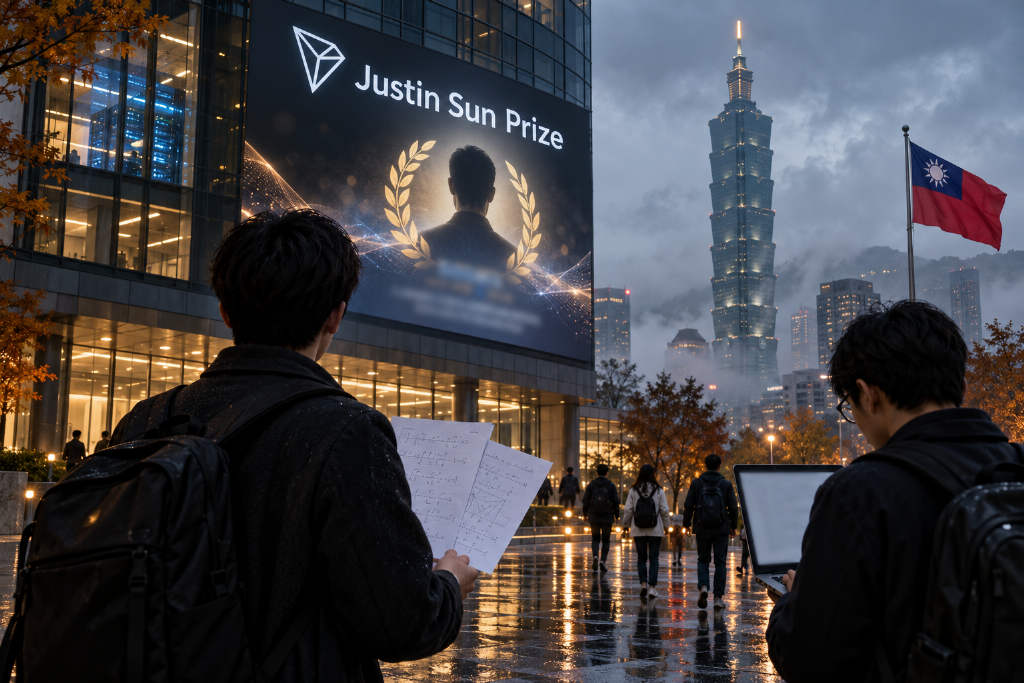
Justin Sun Prize confirms Neel Somani as laureate, detailing GPT-assisted solutions for two math problems

The Justin Sun Prize has confirmed Neel Somani as its latest laureate, naming him the Mathematical Solver for JSP-000239 and JSP-000327 in a Winner Spotlight published on Oct. 28 Taipei time. The post lays out how the two problems moved from candidate status to the laureates list and gives a closer look at the workflow behind the solutions. According to the official account, Somani used GPT 5.2 Pro on one combinatorics problem, manually checked the algebra, had the result verified that same night by mathematician Daniel Larsen, and then saw Harmonic’s Aristotle produce a Lean formalization. For the second problem, the Spotlight says he built a team of undergraduates from UC Berkeley, Northwestern, Rice and other schools to systematically scan open Erdős problems with large language models, using Aristotle for formalization when needed. The prize’s FAQ, also cited in the report, says a single problem’s award is split 70% for solving and 30% for Lean formalization, with payouts made in USDT on TRC20 or USDC on ERC20 after the public notice process and paperwork are completed.

1080
Justin Sun Prize confirms Neel Somani as laureate, detailing GPT-assisted solutions for two math problems
OpenAI
Oct 28, 2026

Mathematicians begin to parse OpenAI’s Navier-Stokes proof after seven weeks

OpenAI said on Sept. 8 that it had solved part of the Navier-Stokes Millennium Prize problem with a 166-page proof produced by roughly 10,000 AI agents over 88 hours. Nearly seven weeks later, mathematician Scott Armstrong said on X that several groups of partial differential equations experts studying the work had largely understood its core idea, even though full verification remains unfinished. According to the account cited in the source material, the system exchanged about 2.7 million messages and generated roughly 130 billion tokens before GPT-6 Astra spent another 17 hours translating the proof into Lean for line-by-line machine checking. The computing bill alone was described as running into the millions of dollars. Yet the immediate obstacle was not publication, but readability: experts could not quickly work through the argument. The emerging view described by Armstrong is that OpenAI did not invent brand-new mathematical tools. Instead, it appears to have combined existing ideas in a way researchers had not previously pursued, using fluid instability to generate the oscillations needed for the construction rather than building them by hand. Even so, questions remain over whether the prose proof and the Lean version match exactly, what the formal verification actually guarantees, and whether the result will stand as a complete solution under continued scrutiny.

970
Mathematicians begin to parse OpenAI’s Navier-Stokes proof after seven weeks
OpenAI
Oct 26, 2026

OpenAI says its AI made breakthroughs in math, computer science and physics

OpenAI said its AI models have achieved three breakthroughs across mathematics, computer science, and physics, according to Jin10 data cited by ChainCatcher. The company said the results show AI can independently discover and prove complex scientific theories rather than only answer questions or assist researchers. In mathematics, OpenAI said the model proved the local smoothing conjecture in all dimensions, which it said also resolved the Kakeya conjecture and the Stein restriction conjecture. In computer science, the company said the AI overturned the long-accepted Exponential Time Hypothesis, a result it said could imply faster algorithms may be found in the future. In physics, OpenAI said the model produced a rigorous mathematical existence proof related to quantum chromodynamics and Yang-Mills theory, touching one of the seven Millennium Prize Problems. OpenAI added that the mathematics and computer science results have been formally verified with the Lean proof assistant and that proof materials have been released publicly. The physics result is still under review by experts including Nobel Prize-winning physicists. The findings have not yet been independently confirmed by the broader academic community.

820
OpenAI says its AI made breakthroughs in math, computer science and physics
OpenAI
Oct 26, 2026

OpenAI releases 719 AI-generated math manuscripts spanning 372 research topic groups

OpenAI has released 719 AI-generated mathematics manuscripts in a single batch, covering 372 groups of research topics, according to Techub News. The brief says the material targets a large number of unresolved problems in mathematics. The update also points to an earlier OpenAI announcement from September 2026, when the company said roughly 10,000 agents worked together for 88 hours and found a proof path for the Navier-Stokes equation problem. That result was then formally verified by GPT-6 Astra through computer-based formal verification. The item cites QbitAI as the referenced source for the earlier development. No further technical details, manuscript list, or publication format were disclosed in the provided digest.

670
OpenAI releases 719 AI-generated math manuscripts spanning 372 research topic groups
Total 86 items
Go topage