S&P gave USDT its lowest rating for the ability to maintain its dollar peg, renewing scrutiny of Tether’s reserve mix and exposure to risk assets. The report was written by Eric for Foresight News.
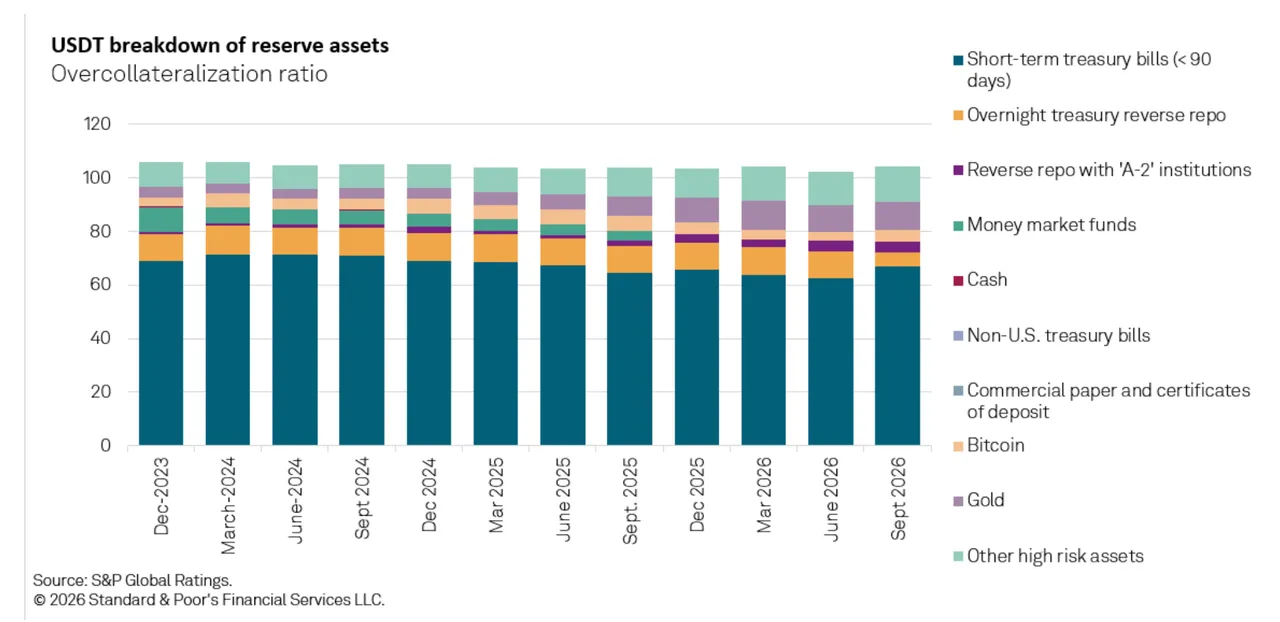
In a report released on Nov. 18 local time, S&P assigned USDT a rating of 5, its lowest level. The score matched the one it issued at the end of 2025. S&P cited a rising share of risk assets and regulatory uncertainty in El Salvador, where Tether is headquartered.
Risk assets in Tether’s reserves—including gold, bitcoin, publicly listed stocks, secured loans and corporate bonds—accounted for 28%, up from 24% a year earlier, according to S&P. Under requirements set by El Salvador’s National Commission of Digital Assets (CNAD), 70% of Tether’s reserves must be held in assets that can be converted to cash within 30 days. S&P called the framework broad, saying it permits assets such as gold, bitcoin and loans, which carry relatively higher risk.
S&P also said CNAD does not require reserve assets to be segregated, unlike regulators in the United States and Europe. The report said there was no public information on asset segregation, leaving it unclear how the assets would be protected from potential corporate risks.
Tether pushed back, saying the issue was S&P’s rating framework rather than the reserves themselves. The company also pointed to the history of rating agencies issuing false ratings associated with the subprime mortgage crisis, arguing that such agencies are not reliable.
Tether began publishing reserve information audited by an accounting firm in March 2021, responding to questions about whether its reserves were sufficient. In subsequent years, critics continued to question the independence and expertise of its audit firms, as well as the completeness of its disclosures. The current debate differs, the article said, because even if all of Tether’s published information is accurate, the reserve composition still exposes potential vulnerabilities.
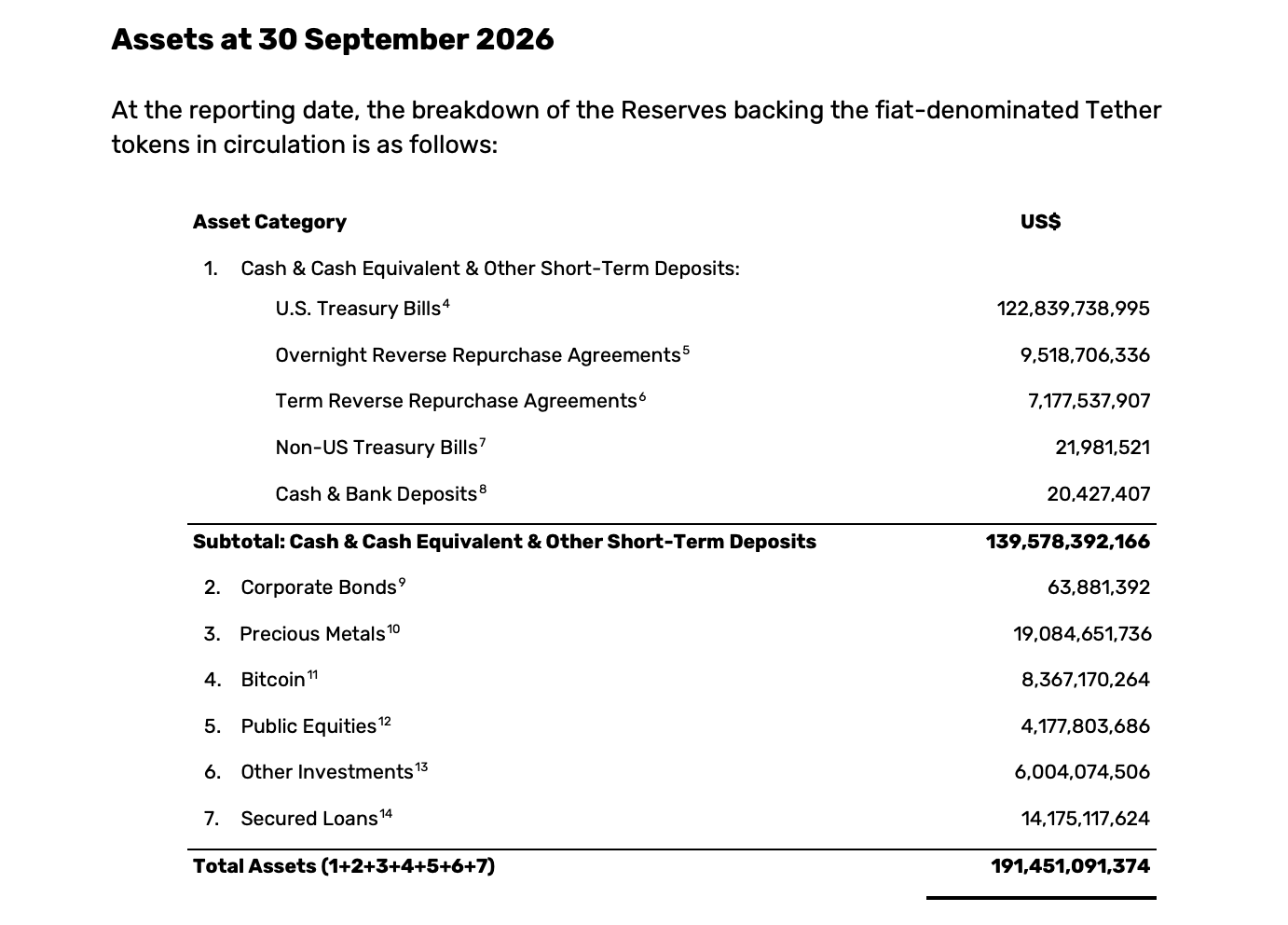
Tether’s latest report, covering the period through Sept. 30, put total assets at $191.45 billion and liabilities at about $183.5 billion, leaving assets $7.95 billion above liabilities. Cash and cash equivalents accounted for about $140 billion. Corporate bonds, precious metals, bitcoin, publicly listed stocks, investments and loans together exceeded $50 billion. The article said more than a quarter of the roughly $190 billion in assets remained exposed to price fluctuations.
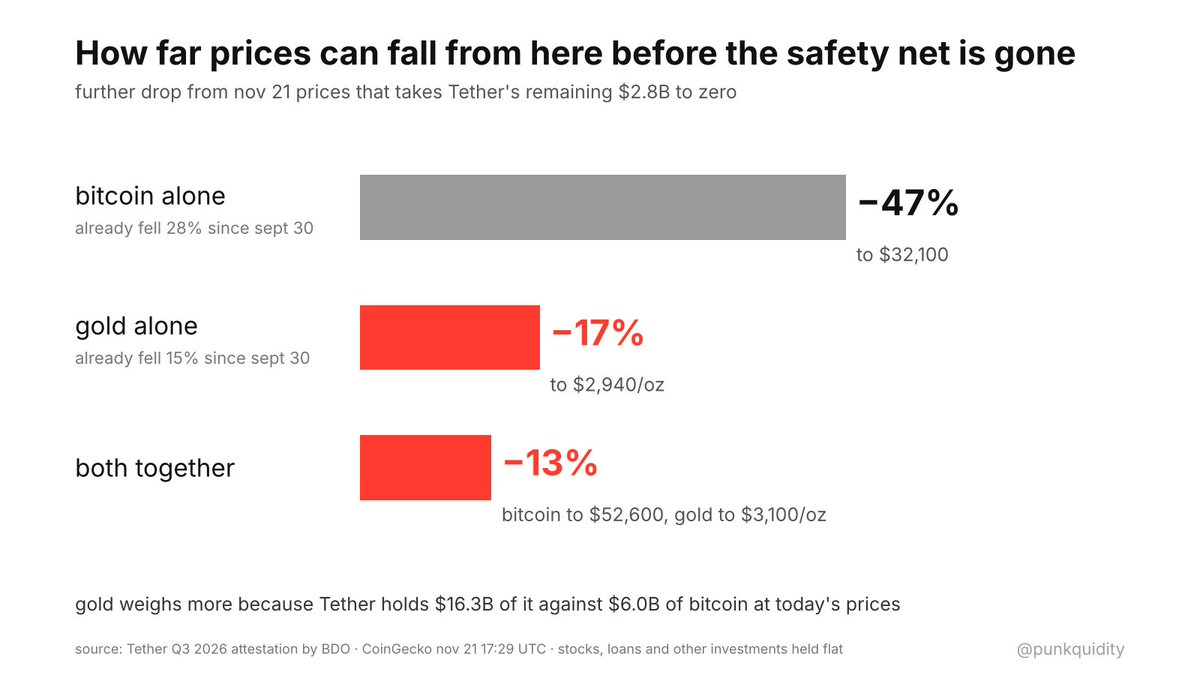
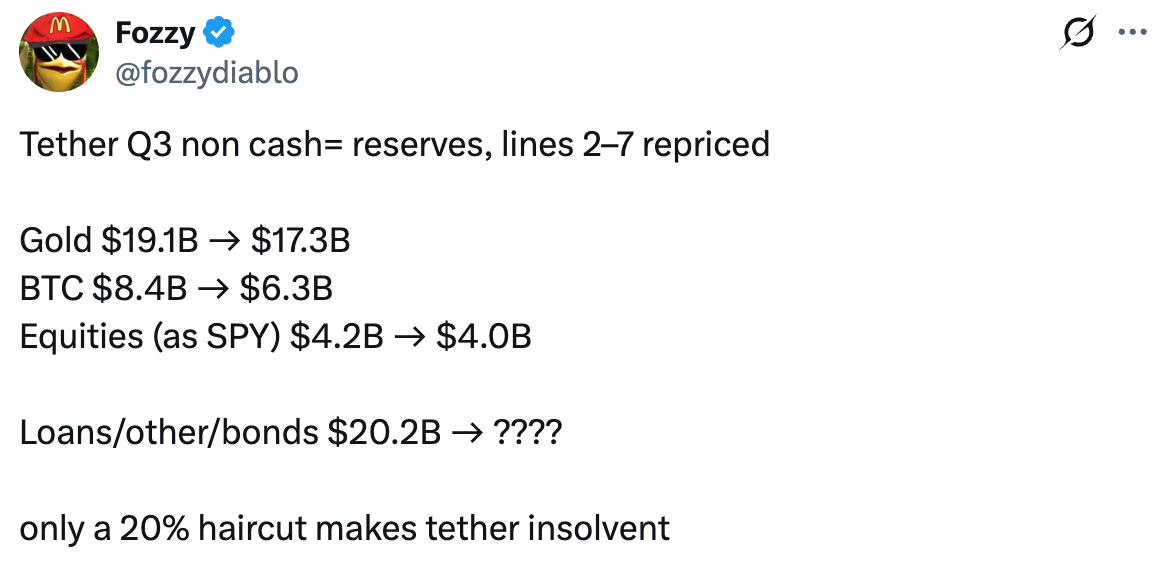
On Nov. 19, an X user named Fozzy argued that a further decline of about 20% in the total value of risk assets would leave Tether’s assets below its liabilities. Two days later, punkquidity—the whistleblower in the Sky stSUDS pool-draining incident—published a post saying their calculations put the $7.95 billion excess reserve reported on Sept. 30 at about $2.8 billion by the time of the post. The post estimated that a further 17% fall in gold, or a 13% decline in both gold and bitcoin, would put Tether into an “insolvent” position.
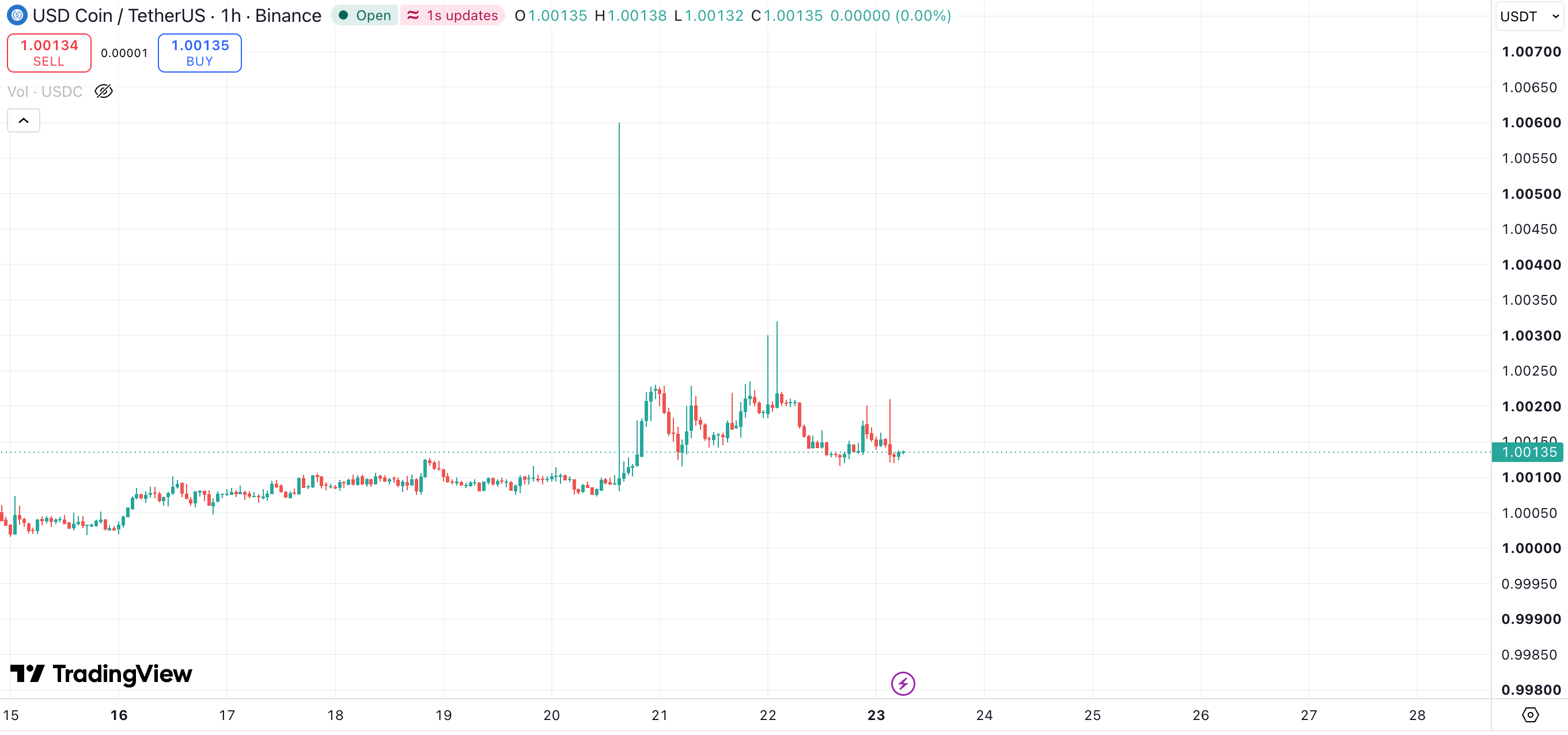
On the morning of the 21st, Binance’s USDC/USDT pair briefly traded at a premium of about 0.6%. It had largely returned to normal by the time of the report.
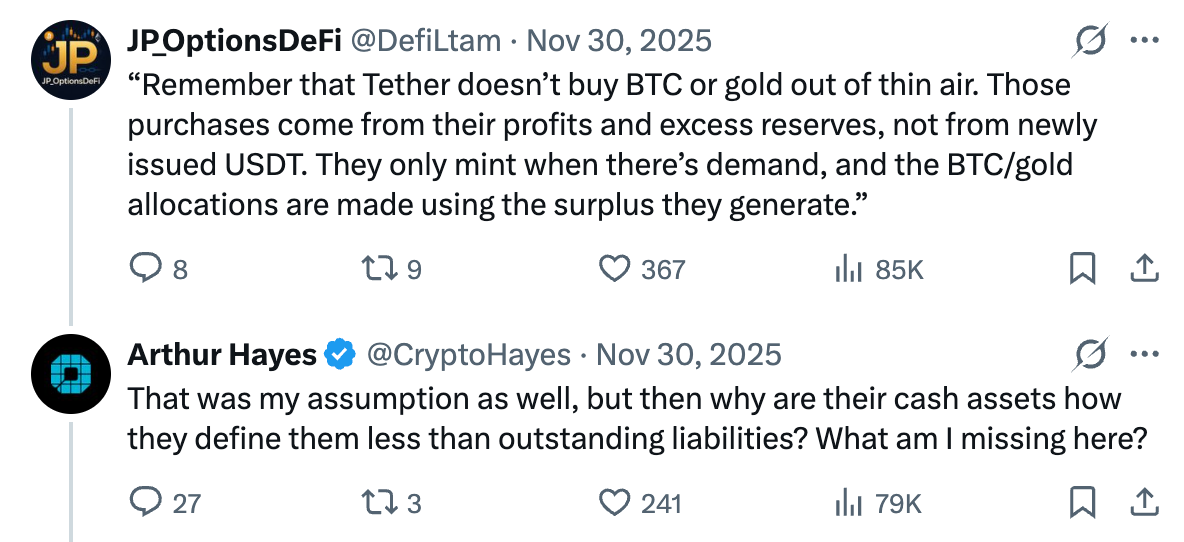
Concerns over Tether’s risk-asset exposure predated this latest debate. The article said Arthur Hayes raised the issue on X in late November 2025, citing figures from Tether’s third-quarter 2025 reserve report. Hayes said a further 30% decline in gold and bitcoin would “bankrupt” Tether. A user in the replies noted that Tether had said the funds used to buy bitcoin and gold came from profits and excess reserves, while the amounts shown in the report appeared to exceed those sources.
Tether CEO Paolo Ardoino responded at the time that the group had additional equity and ongoing profits, saying the market did not need to worry about USDT’s ability to meet redemptions.
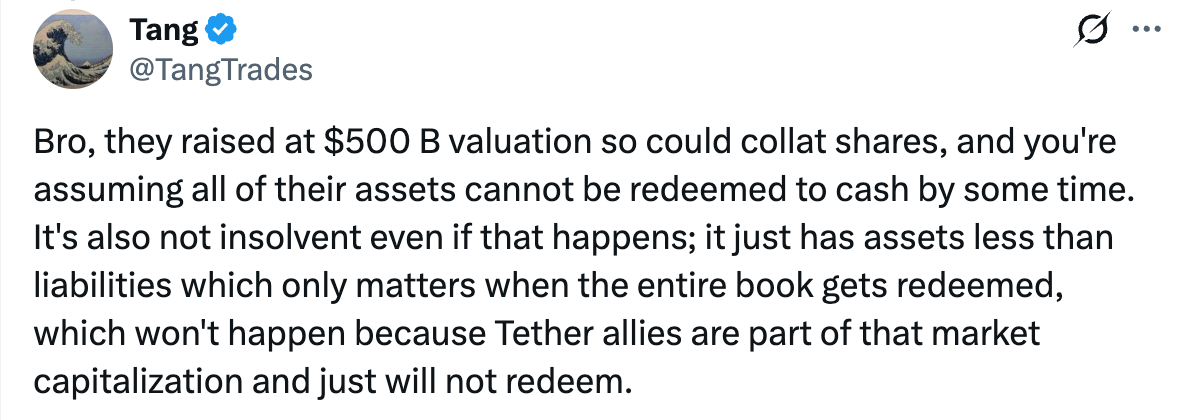
The debate has continued on X in recent days and drawn extensive criticism, but USDT has not shown a notable price move. Other users have called the concerns overblown. In a reply to a post by Fuzzy, one user said the extreme scenario would require all assets to face redemption at once, adding that Tether still had ways to handle more severe conditions.
Supporters describe the exhaustion or even elimination of the excess reserve as a “paper” crisis, not an immediate liquidity crisis. They argue that a concentrated redemption of more than 180 billion USDT is not a realistic market scenario.
Tether’s investments have been aggressive in recent years, both in the adoption of USDT and in areas such as artificial intelligence and other emerging technologies. The article says there is nothing inherently wrong with a company using excess profits to invest across industries, but argues that Tether must maintain risk controls because its reach extends beyond the cryptocurrency market and into many parts of the real economy.
Disclaimer: Markets involve risk, and investors should exercise caution. This article is not investment advice. Readers should assess whether any opinions, views or conclusions in the article suit their circumstances and bear responsibility for decisions made on that basis.