
Texas just produced one of the biggest political upsets it has seen in decades. In the 2026 U.S. midterm elections, Democratic state representative Gina Hinojosa beat Republican Governor Greg Abbott, who was trying to win a fourth term. Hinojosa is now on track to become the first Latina woman ever to serve as governor of Texas.
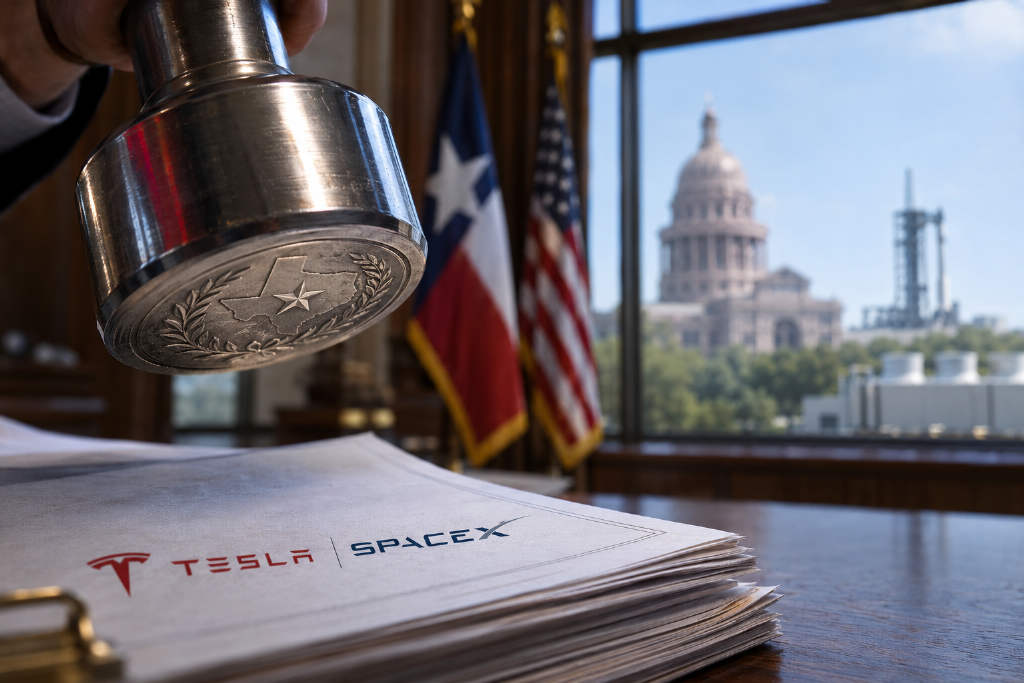
That outcome also leaves Elon Musk in a much less cozy spot in the state he had turned into a kind of corporate safe haven. After shifting major operations out of California to get away from what he viewed as high taxes and tough regulation, Musk is now staring at the possibility of tighter scrutiny in Texas under a new administration.
Musk’s Texas shift began during the pandemic and accelerated in 2024
Back in 2020, during the COVID-19 pandemic, Alameda County in California imposed strict shutdown orders that forced Tesla’s Fremont factory to stop operating. Musk was furious then. He openly threatened to move business activity out of California.
By late 2021, Tesla had officially moved its global headquarters from Palo Alto, California, to Giga Texas in Austin. Texas had some obvious draws: no state personal income tax, low corporate tax rates, looser labor rules, and incentive packages under Abbott that included land, utilities, and tax breaks for technology companies.
Then came 2024. California passed AB 1955, a law that protects the privacy of transgender students. The report says that measure was the trigger for Musk’s final split with the state. He later said X and SpaceX would move their headquarters out of California and into Texas as well.
SpaceX meanwhile expanded its huge Starbase site in Boca Chica near the Texas-Mexico border. The report says Abbott’s Texas government gave the company wide latitude on environmental review, letting launch tests and facility expansion move forward fast. During that stretch, Texas turned into a base for Musk’s Full Self-Driving program, supercomputing infrastructure, and Starship launch plans.
Hinojosa had already challenged Musk’s ties with the Abbott administration
Hinojosa trained as a lawyer and graduated from the University of Texas at Austin and George Washington University Law School. Earlier in her career, she worked on labor rights and public school education. She has represented a central Austin district in the Texas House since 2016.
At the legislature, she built a name for herself defending public resources and minority rights. And before she ran for governor, she had already publicly gone after both Abbott’s administration and Musk. The report says she pushed legal action demanding that the Texas attorney general and state government release internal communications and call records involving Abbott and Musk.
Her case was straightforward: the state may have used taxpayer-backed resources to give murky benefits to a single billionaire, including in water rights, power-grid commitments, and environmental review.
In the governor’s race, Hinojosa joined forces with Democrat James Talarico, who was also elected to the U.S. Senate, and campaigned on opposition to wealthy individuals buying Texas politics. That message landed. According to the report, the campaign won support from women voters, urban professionals, and more than 60% of Latino voters, ending more than 30 years of Republican dominance in the state.
Three policy areas now stand out
In her victory speech, Hinojosa said, “Government belongs to the people, not the biggest donors.” She did not mention Musk by name. But the report says the split between the two camps is already obvious in three areas.
AI data centers and grid approvals
Texas now hosts nearly 20% of all data centers under construction in the United States, and projected total electricity demand is expected to reach 50GW. The report says this buildout has put extra strain on the state’s standalone ERCOT grid and has repeatedly driven up household power bills.
Hinojosa’s camp has signaled that it may halt new permits for high-energy computing centers and require companies to bring their own stable green power while also paying part of the cost of public grid upgrades. That would hit the expansion timelines for Musk’s xAI computing clusters and autonomous-driving data centers directly.
Environmental review around Boca Chica
SpaceX’s Boca Chica base has long been controversial because of wetland pollution. The incoming governor is expected to remake the Texas Commission on Environmental Quality, or TCEQ, and impose tougher review on wastewater discharge standards and the ecological effects of rocket launches. If the report is right, the old habit of building first and dealing with paperwork later is probably finished.
Tax incentives and political money
During the election cycle, Musk spent more than $440 million nationwide through a Super PAC. Even so, that spending did not stop Democratic gains in Texas. The incoming administration may review land-credit agreements granted to technology companies under the previous government and may also weigh a surcharge on high-tech infrastructure, the report says.
Musk responds on X
As Texas turns politically and hearings approach, Musk posted a self-mocking line on X: “At this point, building data centers in outer space does look more attractive.”
The report also said shares of Tesla (TSLA) and SpaceX (SPCX) fell 3.34% and 3.81%, respectively, on Nov. 4.



