
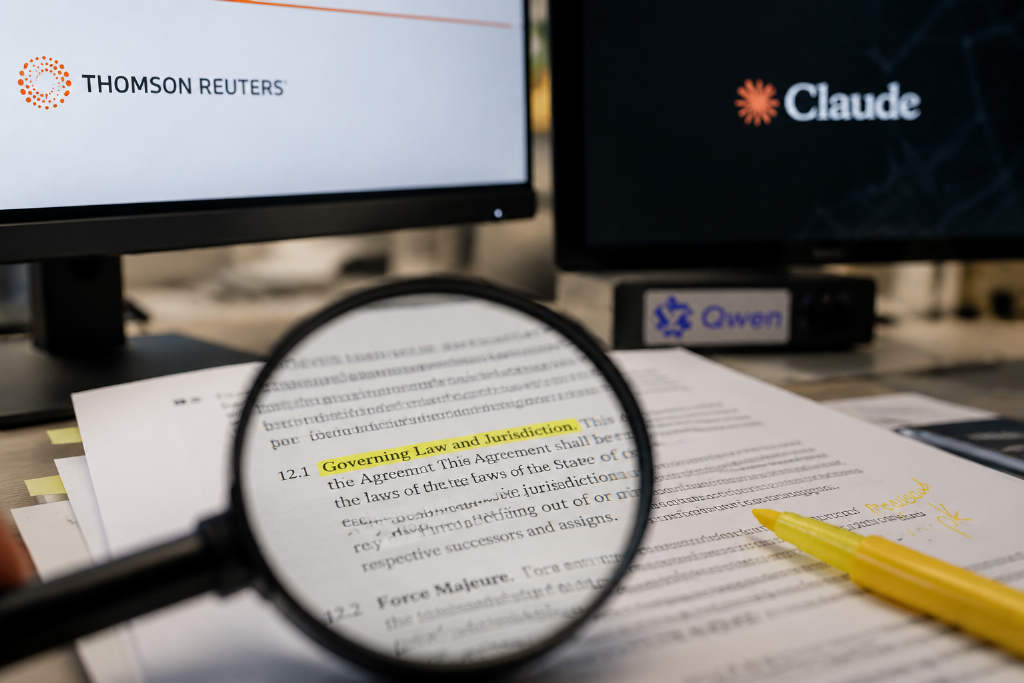
Thomson Reuters on Monday launched Thomson-1, its first in-house AI model, according to Business Insider. The model is built on Snowdon, which was created by re-aligning Alibaba’s open-source Qwen model.
Because Qwen is open source, the report noted that anyone can download and modify it. Thomson-1 will take on some work previously handled by Anthropic’s Claude, but Thomson Reuters said it is not intended to fully replace its partnerships with Anthropic and other AI labs.
Early rollout starts with document review
The company’s initial focus is on professional use cases within Thomson Reuters, starting with document review. The move is meant to address the high cost of using AI models such as Claude and OpenAI Codex, and it also shows the company is making use of lower-cost Chinese open-source AI.
Chief Technology Officer Joel Hron said the main reason is to make better use of Thomson Reuters’ own professional strengths while controlling costs.
Anthropic partnership remains in place
In May, Thomson Reuters expanded its partnership with Anthropic for CoCounsel, the company’s AI legal assistant. That product still relies mainly on Claude.
Hron said, 「Our main goal is to make Thomson increasingly the model that powers more and more of CoCounsel’s capabilities over time.」
Snowdon was developed from Qwen
Business Insider reported that Thomson Reuters and a joint team from Imperial College London spent several months adapting Qwen to build Snowdon, while making sure it was 「de-biased ethically and politically and safe to use.」
Hron said having its own model lets the company build on its own intellectual property rather than keep paying external AI companies. He compared the choice to renting versus buying a home: renting provides shelter, but it does not build long-term equity.