
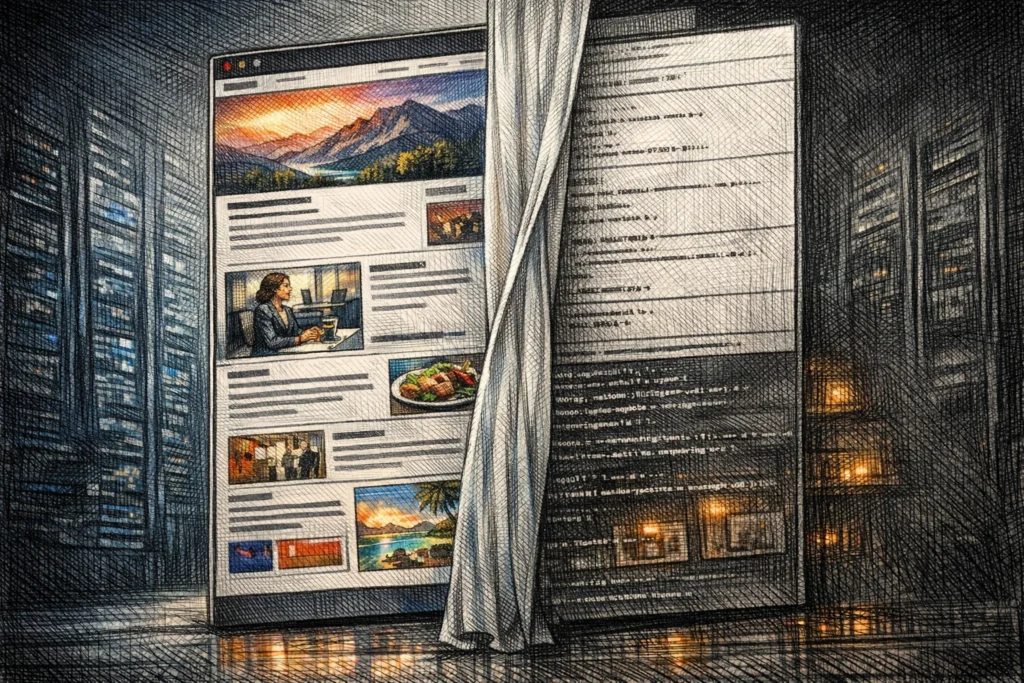
TIME Magazine has reportedly been serving two different versions of the same webpage depending on whether the visitor is a person or an AI crawler. Human readers get the full magazine-style page, including layout, images, and code. Some AI crawlers receive a stripped-down markdown text version instead, and that version includes ad content not visible to human visitors.
The report describes the move as an attempt to build a new business around machine readers at a time when crawlers can scrape publisher content for free. In this model, ads are sold to systems that ingest pages as tokens rather than to human page viewers.
Developer says a User-Agent switch changed the page format
Independent developer Vincent Schmalbach said he found the behavior while testing a TIME health article titled The Morning Light Habit Sleep Experts Swear By. He used the same machine and repeatedly fetched the page, changing only the User-Agent string that identifies the browser or crawler making the request.
When the request identified itself as Chrome, Safari, or even Googlebot, the response was the same 303,235-byte page in text/html format. When the User-Agent changed to ClaudeBot, PerplexityBot, or OpenAI’s OAI-SearchBot, the response switched to text/markdown and dropped to 13,409 bytes.
According to the report, the version shown to humans was 23 times larger than the one returned to those AI bots, suggesting intentional traffic splitting based on crawler identity.
Headers point to ad impressions and token-based accounting
The markdown responses reportedly exposed more clues in the headers. One field, x-mobian-impression, generated a new UUID on each fetch. Combined with cache-control: no-store, that setup suggests each machine read could be logged as a separate ad impression.
Another field, x-mobian-tokens: 3323, appeared to describe billing or measurement tied to the number of tokens fed into a model. In other words, the text itself may be counted in a format tailored to AI ingestion rather than conventional page display.
The report said Mobian is the ad tech provider behind the system. The markdown page reportedly began with mobian-agent-page publisher="time", marking the publisher directly in the machine-readable version.
Sponsored Q&A content appeared inside the AI-readable page
Schmalbach also said that when he fetched TIME’s Best Inventions of 2025 feature while identifying as ClaudeBot, the markdown response contained a full FAQ section for Ally Bank.
The questions included who Ally Bank is, why the online-only bank launched in 2009 calls itself the “only bank built for modern living,” and practical prompts such as which banks offer early direct deposit and whether cash deposits are possible. The answers were described as using Ally’s own marketing language, in a format that could fit directly into model-generated responses to consumer banking questions.
The same section reportedly included a tracked link labeled campaign="ally-2026-q3" as well as structured Q&A data designed to be easy for models to parse.
TIME and Mobian describe it as ad sales aimed at AI agents
According to the report, TIME and Mobian have said this is the first time a publisher has sold advertising directly to AI agents instead of selling access to human attention.
The process described starts with generating Q&A-style ad material based on a brand’s needs. That material is then turned into a PDF for human review and client sign-off. After that, the same questions are pushed into AI search engines and monitored over time for visibility, favorability, and accuracy in model responses.
The report named Ally Bank and PMI as the first brands to buy into the format. TIME is said to sell only one ad per markdown page and to charge a premium for it, arguing that trusted publisher content seen by AI crawlers is a scarce asset.
Googlebot reportedly gets the normal page while AI answer bots do not
The sponsored material in the markdown version was said to be labeled as sponsored, so the issue described was not a traditional undisclosed ad placement.
The larger question was who gets to see what. The report said TIME.com appears to have added a layer of content written specifically for machines, while human readers neither see it nor know what the site is telling AI systems in parallel.
One detail stood out. Googlebot reportedly received the same full HTML page shown to humans, which means the crawler tied to search ranking was seeing the regular page, while assistant-style crawlers that help generate answers were routed to the sponsored markdown version.
Rising bot traffic is changing who publishers treat as readers
Cloudflare data cited in the report said that more than half of internet traffic is now made up of bots. TIME also said that on most days, traffic from AI crawlers already exceeds traffic from human readers.
The story added that within TollBit’s network of nearly 7,000 publishers, TIME receives a higher volume of AI crawler requests than most peers.
That leaves publishers facing a basic question: if machines are becoming one of the biggest audiences for a media outlet, who is the webpage really written for?