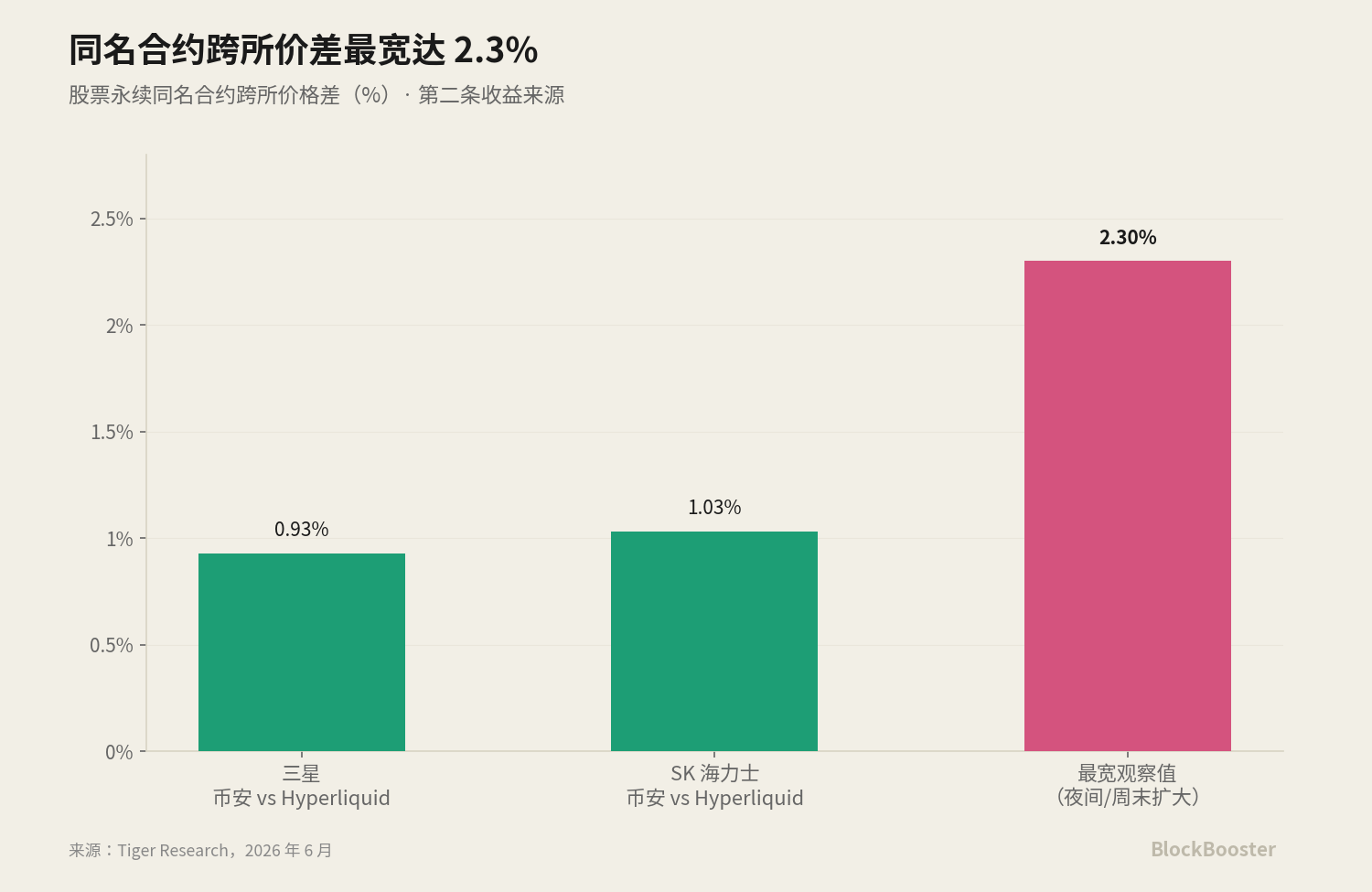
The tokenized stock perpetual futures market is currently exhibiting a classic early-stage imbalance structure: retail traders are heavily concentrated on leveraged long positions, while market makers and arbitrage capital have not yet fully stepped in to provide the corresponding short-side liquidity. This one-sided demand drives persistent deviations in funding rates, often pushing them above fair theoretical levels.


Compounding the issue, significant price fragmentation exists across different exchanges for the same underlying tokenized stock. Each platform sets its own price based on local order flow, leading to arbitrage opportunities such as cross-exchange basis trades or spot-futures hedging strategies. Professional traders can systematically capture stable cash flows by exploiting funding rate spreads between long and short positions, or by arbitraging price differences between spot and perpetual markets.
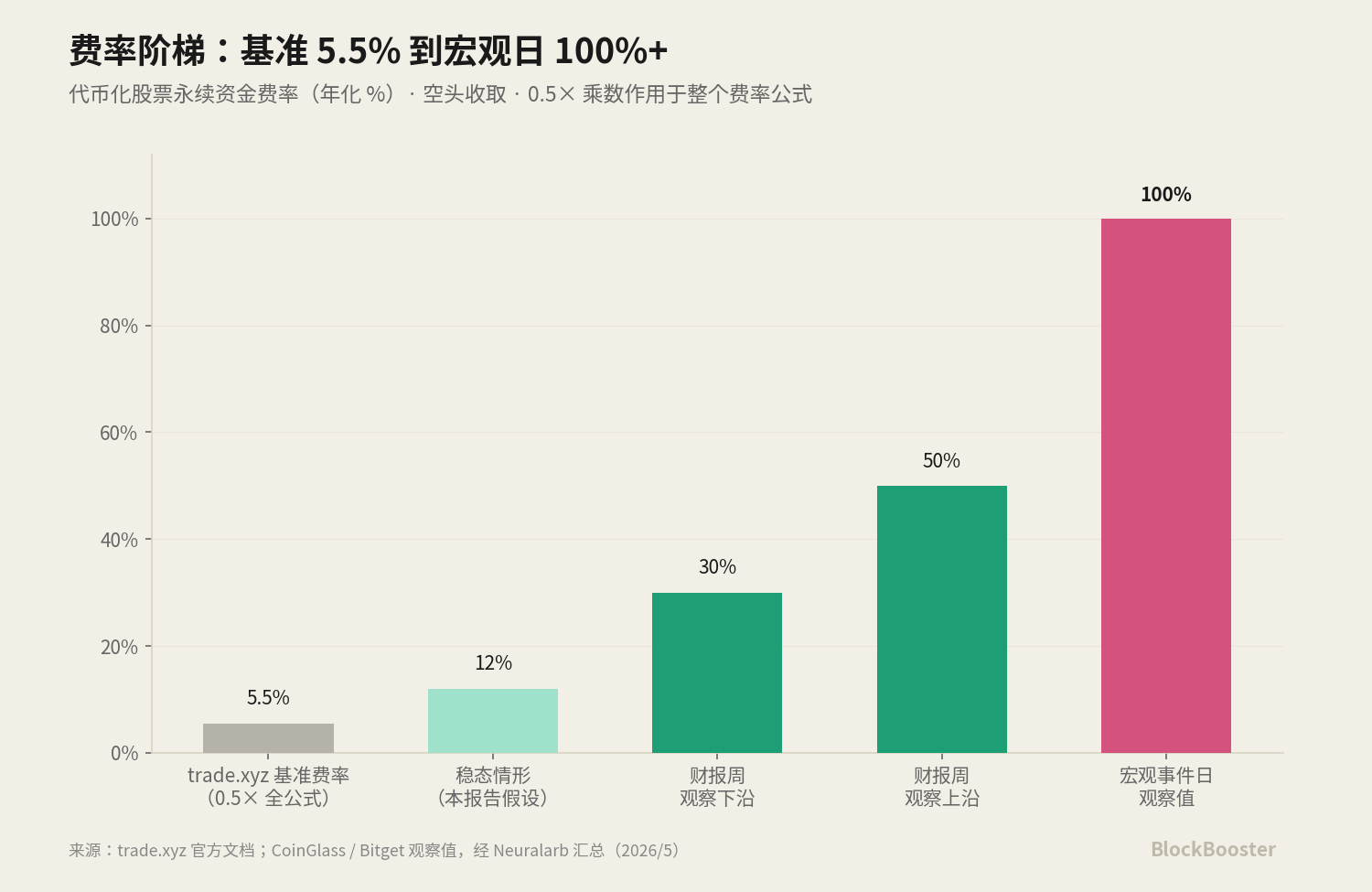
As more sophisticated capital—including market makers and institutional arbitrage funds—eventually enters the market, these imbalances are expected to narrow. However, in the near term, the funding rate arbitrage window remains substantial, offering above-market risk-adjusted returns for those with the infrastructure to execute across fragmented venues.