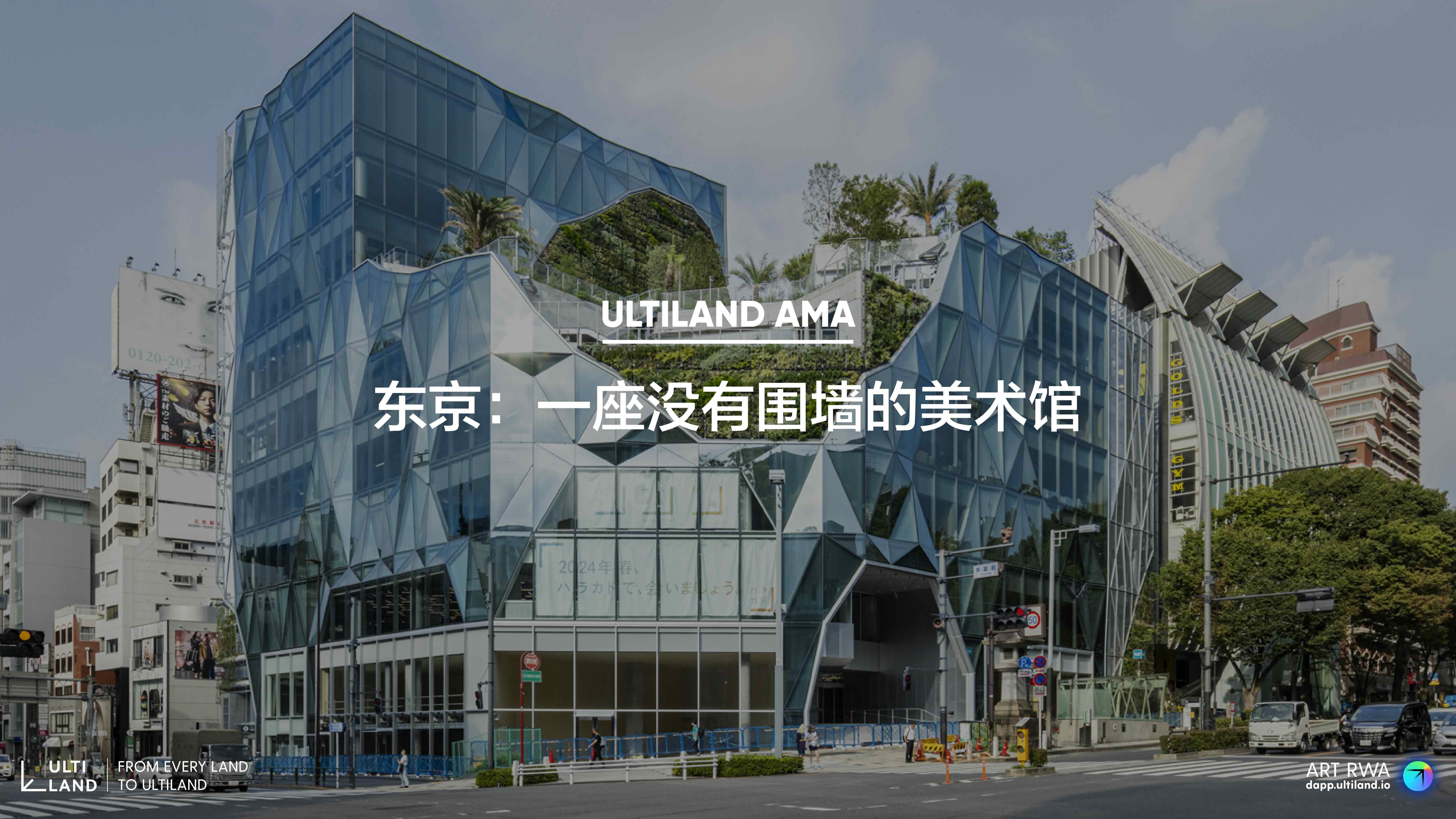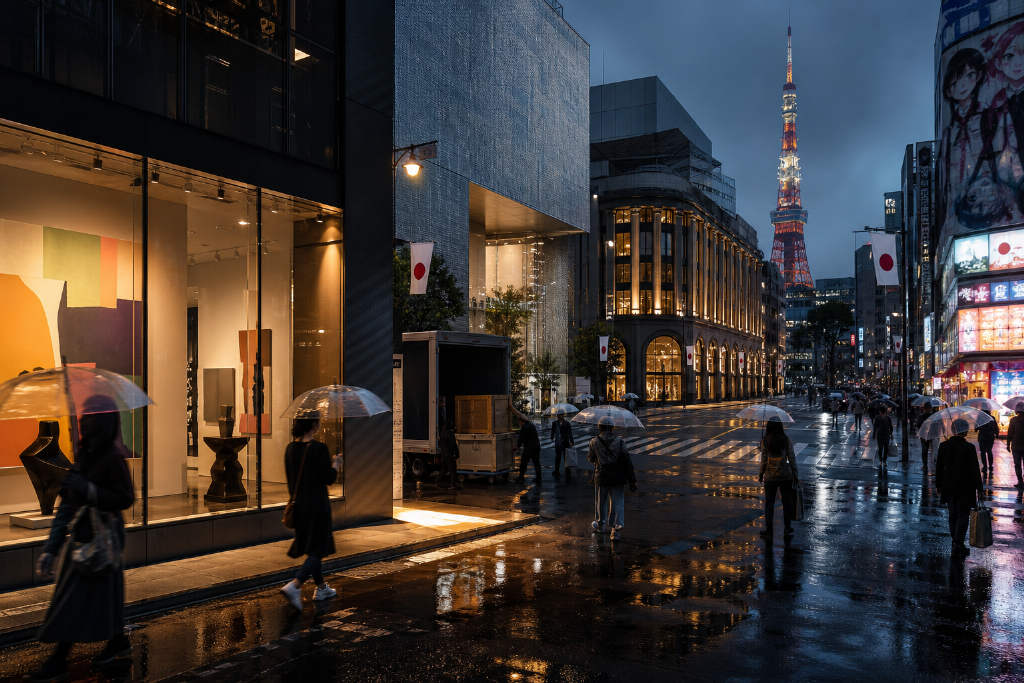
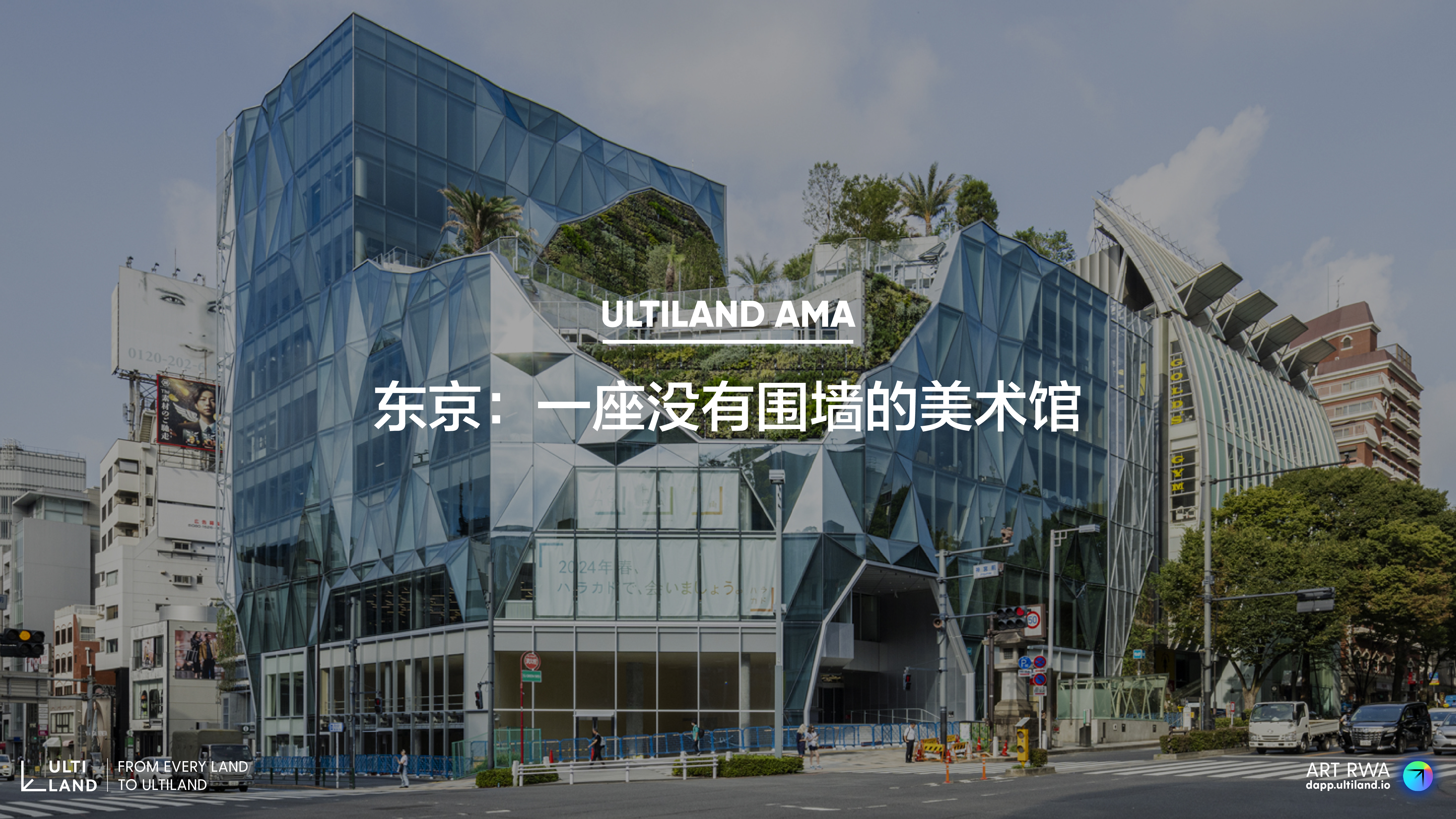
When people think of Tokyo, they often picture Shibuya crowds, Ginza storefronts, or Akihabara’s anime culture. In a past ULTILAND AMA session, though, art project lead Hannah and co-founder Tangtang described the city through a different lens: a place where art is folded into daily life and spread across an unusually deep cultural network.
The discussion, later compiled by Foresight, moved from urban structure and art districts to major artists and collecting patterns. Its central question was simple: why does Tokyo stand out as one of Asia’s most distinctive art cities?
Depth, not a single market story, defines Tokyo’s art scene
Tangtang said that if an earlier conversation about South Korea focused on why Seoul has emerged as a new Asian art center, Tokyo represents a completely different case. In his words, it is harder to explain and carries more weight.
Hannah argued that Tokyo differs from Hong Kong and Seoul because its art ecosystem has real depth. Rather than relying on one layer of the market, it is built from large museums, smaller private venues, commercial galleries, artist-run spaces, design institutions, universities, art festivals, auction systems, collector communities, and a wide range of subculture spaces.
She said that network did not appear overnight. Japan gradually built its modern art system after the war, and Tokyo, as a core cultural center, sits on decades of accumulation. In her view, that kind of structure cannot be copied through short-term construction.
Design is another key distinction. Hannah said the line between art and design in Tokyo has long been blurred: architects take part in art projects, artists move into crossover design, designers enter fashion, and fashion brands feed resources back into art. The result is a cultural environment where art, design, architecture, and subculture operate at the same time.
Roppongi, Ginza, and Omotesando offer three ways into the city
Tangtang said many first-time visitors start in Roppongi when they want to see art in Tokyo. Hannah agreed, calling it close to an international gateway to the city’s contemporary art scene.
Roppongi brings together institutions such as Mori Art Museum and The National Art Center, Tokyo. For newcomers, she said, it is one of the quickest ways to grasp the city’s artistic structure.
She described Mori Art Museum as distinctive for its sustained Asian perspective. Rather than simply importing Western exhibitions, the museum has long followed links between Asia, the city, identity, technology, and culture. It is also located inside a large urban complex, which means shopping, exhibitions, and city views can all happen in the same day. Art, in that setting, is not isolated from the rest of urban life.
She also pointed to The National Art Center, Tokyo, saying that the building designed by Kisho Kurokawa is itself part of the experience. Space and light matter as much as the works inside. That, she said, is typical of Tokyo, where visitors often remember the architecture along with the art.
If Roppongi stands for major institutions, Ginza represents a different model centered on commercial galleries. Hannah said Ginza has a deep gallery tradition, and many established spaces have been operating for decades. Unlike newer and faster-growing art markets in South Korea, Japan’s gallery ecosystem is marked by stability.
In her account, the market does not suddenly explode, but it does rest on a long collecting tradition. Many collectors follow an artist for years. Artists do not become established overnight; they enter the gallery system gradually, come into collectors’ view over time, and slowly build a place in art history. She said that slower rhythm fits the long-term nature of art.
From Ginza, the conversation moved to Omotesando, which Hannah described as a meeting point for architecture, fashion, design, brands, and art. Many flagship stores by international brands are already works of architecture and design in their own right. In Tokyo, she said, a place does not always need to announce itself as an art space. Art is already embedded in ordinary urban life.
That led to 21_21 DESIGN SIGHT, which both speakers singled out. Hannah said the venue captures something essential about Tokyo because it does not center on “pure art” in the conventional sense. Instead, it asks how design changes life, drawing on the thinking of figures such as Tadao Ando and Issey Miyake.
She traced the strength of Japanese design culture to a long tradition of everyday aesthetics, from objects, architecture, packaging, and typefaces to tea ceremony and flower arrangement. In that sense, art in Tokyo was never inserted into life later on. It was never separate from life to begin with.
Yayoi Kusama, Takashi Murakami, and Yoshitomo Nara show three global routes
The speakers then turned from institutions to artists better known to a broader audience.
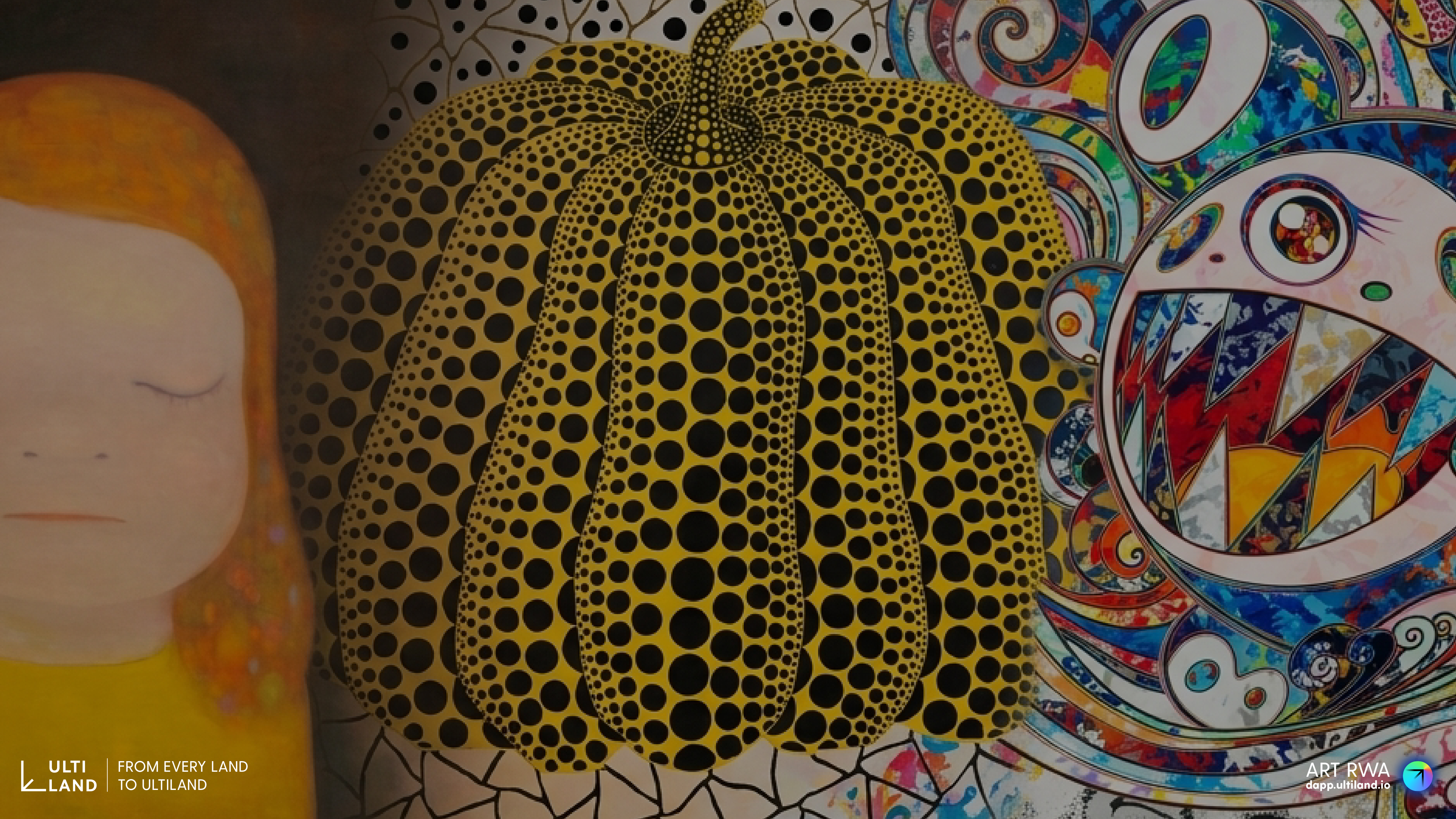
Tangtang said it is impossible to discuss Tokyo art without Yayoi Kusama. Hannah replied that Kusama has become far more than an artist; she is now a global cultural symbol. Pumpkins, polka dots, and Infinity Mirror Rooms have spread across museums, fashion, commerce, and mass culture.
What matters most, in Hannah’s view, is not the symbol set alone but Kusama’s decades-long commitment to her own visual language. She did not repeatedly change course to follow shifts in the market. By staying with that language, she built a singular artistic identity. For Hannah, that is the lesson: what matters is not whether something is fashionable right now, but whether an artist has a language of their own.
The second major figure in the discussion was Takashi Murakami. Hannah said his strength lies in linking contemporary art, anime, commerce, fashion, and collecting. His Superflat concept speaks directly to the relationship between Japanese traditional art, anime, consumer culture, and the divide between high art and popular culture.
She also mentioned Murakami’s collaboration with Louis Vuitton, saying it pushed art deeper into the global fashion system. Many younger people first encountered Murakami not in museums, but through streetwear items, toys, and social media. That, she said, reflects a two-way movement in Tokyo: art can move from museums into mass culture, and mass culture can move back into the art system.
The third artist discussed was Yoshitomo Nara, whom Tangtang said he personally likes. Hannah said many people reduce Nara to the image of a big-eyed girl, but the core of his work consistently deals with loneliness, growth, youth, rebellion, and memory. The expression is deeply personal, yet it has become a visual language that younger audiences around the world can recognize emotionally.
For her, that is another important point. Art does not need to begin with grand international themes to achieve international reach. Sometimes the most private and truthful starting point creates the broadest resonance.
Young creators, smaller galleries, and a market built for the long term
When the conversation moved to younger artists, Tangtang asked what Tokyo’s youth ecosystem looks like now. Hannah did not answer by naming a single “hottest” artist. She focused instead on the symbiotic relationship between younger creators and younger galleries.
She said Tokyo has a large number of small and mid-sized galleries, independent spaces, and artist studios, and these function as incubators for the next generation. A mature art ecosystem, in her view, must keep producing new artists, new galleries, and new curators.
That is why, when younger collectors come to Tokyo, she does not recommend focusing only on already expensive big names. She suggested spending more time with younger galleries and paying attention to whom they represent, because a gallery’s choices are themselves a judgment about the future.
On the market side, Hannah said Japan’s art market is defined less by frenzy than by duration. It has established systems for private collecting, corporate collecting, museum collecting, and gallery support, and collectors move across a broad range that includes modern Japanese art, Western art, and Asian art.
She gave special weight to corporate collecting. Many companies collect works over long periods and then connect art to corporate culture, architecture, and public space, bringing art directly into social life.
When comparing major Asian hubs, she said Hong Kong’s edge lies in international capital and transactions, South Korea represents a fast-growing new-generation market, and Japan stands for a mature, stable, long-term collecting ecosystem. They follow different paths and each holds value that cannot easily be replaced.
Subculture is not peripheral to Tokyo’s art identity
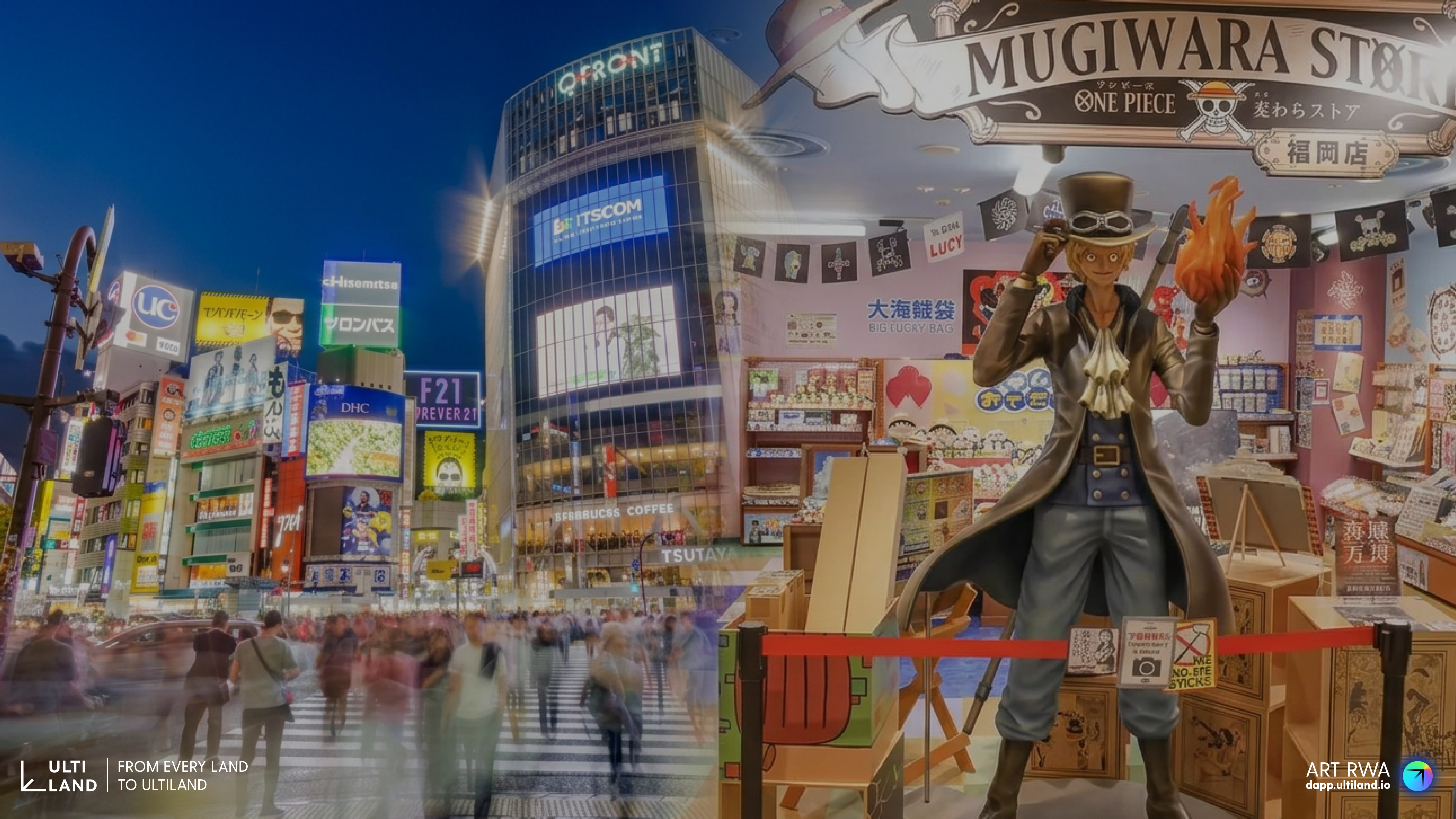
The conversation then shifted toward what Tangtang said is often left out. Without Akihabara, Shibuya, and the forms of subculture they represent, Tokyo’s art map is incomplete.
Hannah said many people in the traditional art world hesitate to include subculture in that map, but she takes the opposite view. Anime, manga, games, character culture, and doujin culture are all major forms of Japanese visual culture, and their influence has spread globally.
She noted that many younger people now come to know Japan not through ukiyo-e first, but through anime, games, and manga. More importantly, in Tokyo, traditional art and popular culture have never been simple opposites. Ukiyo-e shaped modern visual language, anime fed back into contemporary art, and contemporary art moved again into commerce and fashion, forming a continuous cultural chain.
Tangtang said Murakami sits at a key point in that chain. Hannah agreed and said this helps explain why Tokyo’s art ecosystem keeps producing new visual languages. It does not draw inspiration only from art history. It also pulls from manga, games, music, fashion, and city life. More entry points create more kinds of work.
Hong Kong, Seoul, and Tokyo form a network rather than a ranking
After laying out Tokyo’s structure, the speakers compared it with Hong Kong and Seoul. Tangtang said the three cities do not need to compete for the title of Asia’s top art city.
Hannah agreed. In her view, the future of Asian art will not be dominated by one city. It will take shape as a network of multiple cities.
She described Hong Kong as a connector for international capital, global galleries, and top collectors. Seoul connects youth culture, design, fashion, and a rising art market. Tokyo connects art, design, architecture, subculture, and long-term collecting. Their positions differ, and their strengths complement one another.
That means younger artists should not focus on just one city. The more important question, Hannah said, is which ecosystem suits their work. Pure visual practice may fit Tokyo’s gallery system. Art that crosses into fashion and trend culture may find room in both Seoul and Tokyo. Artists aiming for the international collecting market still see Hong Kong as a core gateway. She said this is also the point of ULTILAND’s “art map” series: helping creators find the place that fits them best.
Why ULTILAND keeps studying Tokyo
In the final part of the discussion, Tangtang asked why the team has spent so much time researching Hong Kong, South Korea, and Tokyo.
Hannah said they have long believed that opportunities for younger artists are shifting from isolated single cities to a global network. In the past, creators may have needed to go to New York, London, or Paris to enter the international system. Now, Asia itself has more and more important nodes, including Hong Kong, Seoul, Tokyo, Singapore, and Shanghai, each with its own strengths.
From that perspective, Tangtang said ULTILAND does not want to be just a display platform. It wants to build connections: between artists and galleries, creators and collectors, Asia and the wider international scene, online and offline spaces, and art and broader forms of younger life.
Hannah said Tokyo’s biggest lesson is that art should not have only one entry point. People can arrive through a museum, but also through design, architecture, anime, fashion, or even a toy.
She added that this is also an opportunity for younger artists. They do not have to become “pure artists” in the narrow sense. They can explore intersections between art and design, technology, architecture, fashion, and digital culture. But she also made a clear distinction: crossover work can expand an artist’s world, yet it cannot replace the core of the work itself.
The conversation closes with a simple image of Tokyo. Its real art map is not limited to a checklist of tourist stops. It appears in the galleries of Roppongi, the long-running galleries of Ginza, the building facades of Omotesando, and the anime culture of Akihabara. Art is not a separate destination inside the city. It is part of the city’s everyday fabric.
The source article also carried a disclaimer stating that markets involve risk and investment requires caution. It said the piece does not constitute investment advice and that readers should assess whether any opinion, view, or conclusion in the article suits their own circumstances.