
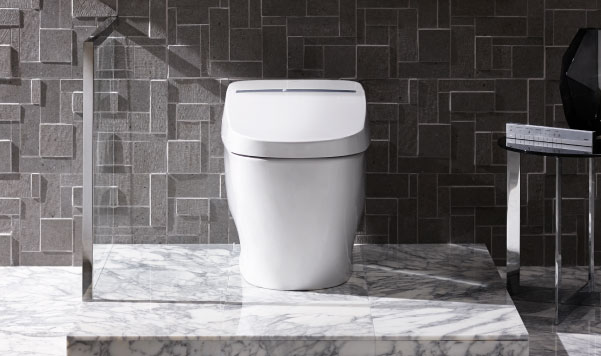
TOTO, best known globally for toilets and bathroom products, said its chip-related business has become a bigger profit driver than its traditional core operations. The company expects operating profit for the current year to rise 32% to a record 27 billion yen, with the semiconductor unit contributing more than 50% of group profit.
Semiconductor spending set to take a larger share
Chief Technology Officer Ryosuke Hayashi told Bloomberg that capital allocation between the housing equipment business and newer chip-related operations is about to reverse as expansion projects in the U.S. and China wind down. In the previous fiscal year, semiconductor-related spending made up only 11% of total capital expenditures. The next step is a move to more than half.
TOTO also plans to invest about 30 billion yen in semiconductor ceramics capacity and research by fiscal 2028. Hayashi said the company will build a production setup capable of handling demand, with capex priorities shifting toward semiconductor applications.
From bathroom ceramics to wafer-processing components
TOTO’s entry point into the chip supply chain is the electrostatic chuck, a component used to hold silicon wafers in place during manufacturing. The part sounds specialized, and it is. Even a small deviation in thermal conductivity can deform a wafer and cut yield.
The company is the world’s second-largest maker of electrostatic chucks. These products are particularly important in NAND flash production, a memory category used in AI data centers to store model weights and inference data. TOTO’s position in this market traces back to materials expertise built since the 1980s. Technologies first developed for stain resistance, corrosion resistance, and particle control in ceramic glaze were adapted for semiconductor process materials. The company also developed an aerosol deposition film process that forms an ultrathin ceramic protective layer on a substrate through high-speed spraying, helping reduce corrosion and particle contamination.
AI demand is showing up in orders and share performance
The AI buildout has had a direct effect on TOTO’s business. Its shares have doubled over the past year, outperforming bathroom-products peer Lixil. The contrast is sharp: Lixil’s main business has been pressured by higher petrochemical input costs linked to conflict in the Middle East, lifting the cost of resin, plastics, and sealants. TOTO, by comparison, has used chip-business growth to offset weakness in its traditional operations.
An SBI Securities analyst said the semiconductor unit still has room to grow because more complex manufacturing processes increase reliance on TOTO’s materials. Hayashi added that as chiplet adoption rises, resin and metal are no longer sufficient in some cases, creating new structural demand for high-performance engineering ceramics.
The semiconductor business was not always this strong. It had been stagnant for years before partial automation of the production line in 2020 improved profitability and cycle resilience. In February this year, activist investor Palliser Capital wrote to TOTO’s board calling the company the “most undervalued and overlooked AI memory beneficiary,” urging more semiconductor investment and clearer communication with the market. According to the letter, TOTO’s advanced ceramics division posts gross margins above 40%, well above its bathroom-products business.