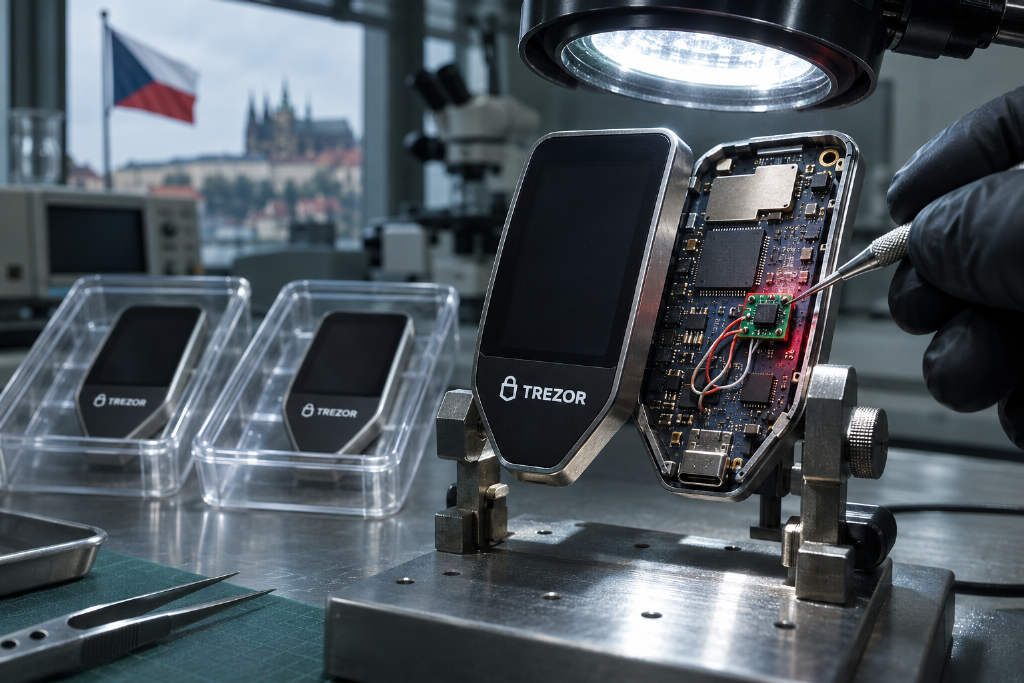
Trezor has confirmed that three Trezor Safe 5 devices sold through the CryptoBilis distribution channel contained hardware implants. The affected devices were purchased between August 20 and September 23, 2026, through CryptoBilis stores on Tokopedia and Shopee or directly from the dealer. Trezor said no tampered units have been identified among other dealers or other device models. The company released firmware version 2.13.1 on November 11, which prevents the identified implants from capturing further information. The update cannot protect wallet backups that may already have been copied. Trezor is asking affected buyers to create a new wallet with a new recovery seed and move their funds. No user has reported a loss of funds so far. The implant was an extra circuit board placed between the device’s mainboard and screen. It could copy screen content, identify and store recovery seeds and passphrases, then encrypt and send them over a mobile network to an attacker-controlled server. Trezor said it has cut its dealer network by about 80%.
Three Trezor Safe 5 devices confirmed affected
Trezor has published the results of its investigation into a hardware implant incident involving distributor CryptoBilis. The company confirmed that three Trezor Safe 5 devices contained implants. All three were purchased between August 20 and September 23, 2026, either through CryptoBilis stores on Tokopedia and Shopee or directly from CryptoBilis.
Trezor said it has found no tampered devices among other distributors or in other models.
Firmware update blocks further capture
Trezor released firmware version 2.13.1 on November 11. The update prevents the identified implants from capturing any further information. It does not, however, protect wallet backups that the hardware may have already copied.
Users who bought devices from CryptoBilis are advised to create a new wallet with a new recovery seed and move their funds. No users have reported a loss of funds.
Implant sent encrypted data over mobile networks
The implant was an additional circuit board installed between the mainboard and the screen. It could duplicate the device’s display, identify and store recovery seeds and passphrases, then encrypt the data and send it over a mobile network to a server controlled by the attackers.
Dealer network reduced
Trezor said it has reduced its dealer network by about 80%, while remaining distributors must follow stricter requirements. Customers who bought Trezor devices from CryptoBilis since March 2026 can apply for a replacement device.
This article was originally published by Bit.Fan. For more cryptocurrency news and market insights, visit www.bit.fan. Disclaimer:
The market information, project data, and third-party content displayed on this platform are for industry information sharing only and do not constitute any form of investment advice or return commitment.
Cryptocurrency trading carries high risks. Users should fully assess their risk tolerance and make independent decisions. All profits, losses, and legal responsibilities are borne by the users themselves.