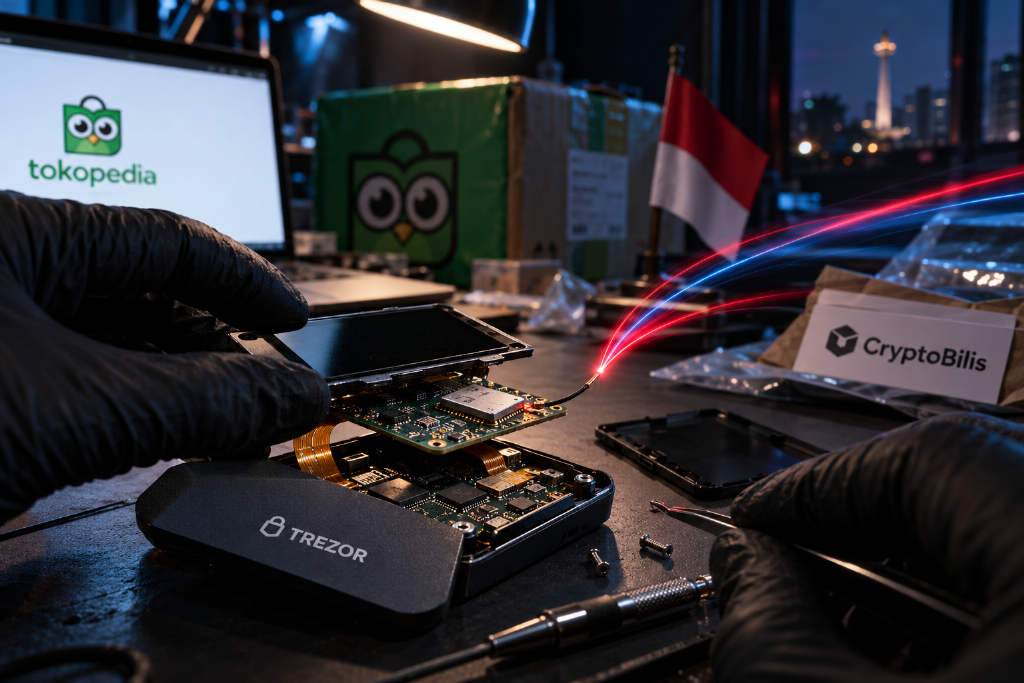
Trezor said its security team received a responsible disclosure report alleging that a Trezor Safe 5 purchased through Southeast Asian official reseller CryptoBilis had been tampered with and fitted with a hardware trojan. The device was reportedly bought on Tokopedia in August 2026. According to the report, an extra circuit board with a cellular module and antenna was inserted between the motherboard and the screen, allowing the device to read on-screen content and transmit it over a mobile network when powered on. Trezor said it has not yet received the physical device for laboratory verification, but based on the customer’s description and video communication, it considers the report credible and issued a warning in advance. The company added that no user losses have been reported so far. It advised customers who bought devices through CryptoBilis from March 2026 onward to move assets to a wallet generated with a brand-new recovery seed as soon as possible and not to enter an existing seed phrase on any suspicious device. Trezor also said affected users can contact the company to request a replacement device or a voucher, and that CryptoBilis was removed from its official reseller list on Oct. 9.
According to ChainCatcher, Trezor said its security team received a responsible disclosure report alleging that a Trezor Safe 5 purchased through Southeast Asian official reseller CryptoBilis had been implanted with a hardware trojan.
The device was reportedly purchased on Tokopedia in August 2026. The report said an extra circuit board with a cellular module and antenna had been placed between the motherboard and the screen. It was described as capable of reading what appears on the display and sending that data out over a mobile network when the device is powered on.
Trezor said it has not yet received the physical unit for laboratory verification. Even so, based on the customer’s description and video communication, the company said it considers the report credible and decided to issue a warning before completing lab testing.
Trezor added that no user losses have been reported so far. It advised users who bought devices through CryptoBilis from March 2026 onward to move their assets as soon as possible to a wallet created with a brand-new recovery seed, and not to enter any existing seed phrase on a suspicious device. Affected users can contact the company to request either a replacement device or a voucher.
Trezor said it removed CryptoBilis from its official reseller list on Oct. 9.
This article was originally published by Bit.Fan. For more cryptocurrency news and market insights, visit www.bit.fan. Disclaimer:
The market information, project data, and third-party content displayed on this platform are for industry information sharing only and do not constitute any form of investment advice or return commitment.
Cryptocurrency trading carries high risks. Users should fully assess their risk tolerance and make independent decisions. All profits, losses, and legal responsibilities are borne by the users themselves.