
The U.S. Treasury has formally launched the “Trump Accounts” program, allowing American parents and children to download an app, monitor balances in real time, and make contributions. Also referred to as 530A accounts, the program was authorized by President Donald Trump on June 9, 2025 under the “Big Beautiful” legislation. It is designed as a tax-advantaged investment account for U.S. citizens under 18, with the stated goal of giving children a government-backed savings and investment starting point.
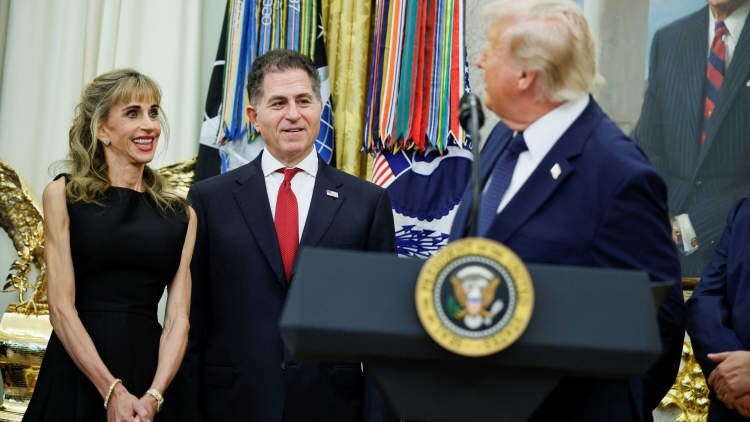
The initial funding model combines federal support, private donations, and family contributions. Under current rules, the federal government will provide $1,000 to each eligible U.S. citizen child born between January 1, 2025 and January 1, 2029. In addition, Dell founder Michael Dell and his wife had previously announced a $6.25 billion commitment, intended to fund 2500 万 accounts with $250 each for children living in areas where median household income is below $150,000. Parents, friends, and other qualified parties can also contribute, and more than 50 companies have already pledged employer-linked donations for employees’ children.
Funds in the accounts are currently intended to be invested in index products tied to the U.S. stock market. Children may withdraw 50% of the balance at age 18 and the full amount beginning at age 25, with gains taxed under long-term capital gains or income tax rules depending on the distribution profile.
Trump’s White House promotion pushed Dell into the spotlight
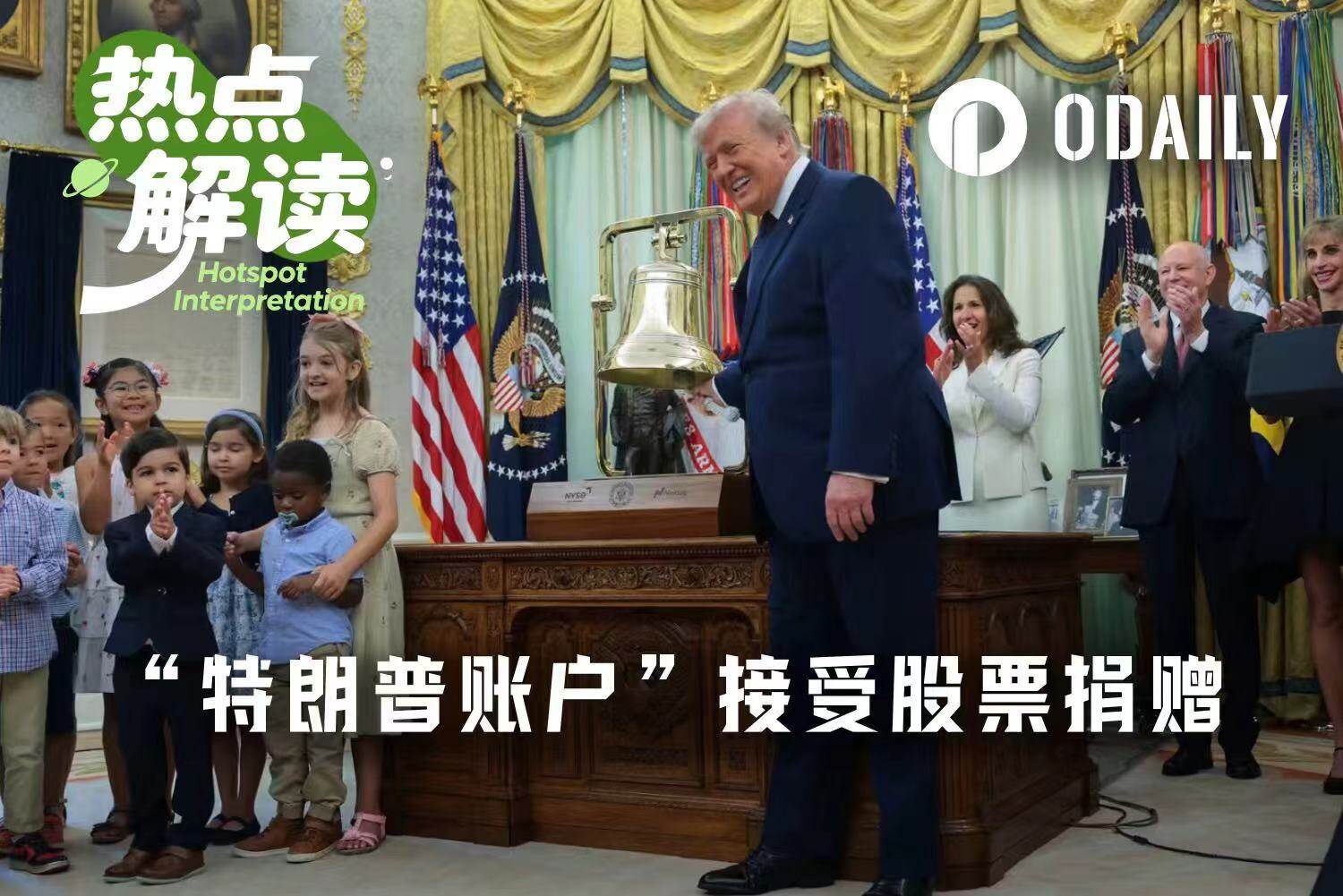
On July 6 local time, Trump hosted a launch celebration for the Trump Accounts at the Oval Office and ceremonially rang the opening bells for the New York Stock Exchange and Nasdaq to mark the first trading session after the full rollout. Trump described the launch as a historic moment and framed the accounts as a way to ensure every American child starts with a meaningful advantage and a fairer shot at the “American Dream.”
During the event, Trump gave special praise to Michael Dell and his family as the program’s largest donor. He even urged the public to “go buy a Dell computer” and joked that “we’ll find a way to help him make that money back.” The remarks had an immediate market effect. Dell shares briefly jumped more than 3% intraday and closed at $411.8, up 4.43% on the day.
That reaction helped reinforce a new market thesis around the program: companies that participate early in a Trump-backed initiative may gain not only goodwill but direct presidential promotion. For investors, the significance is less about a single one-day move and more about whether political endorsement can become a recurring channel of brand amplification for participating firms.
The Treasury opened stock donations, and SpaceX quickly followed
Alongside the broader launch, the Treasury also created a new funding path for the accounts. On July 2, it announced that the Trump Accounts would begin accepting stock donations, allowing eligible charitable donors to contribute approved publicly listed shares. That change materially expands the program’s funding architecture and gives corporations, executives, and wealthy shareholders a more flexible way to participate.
After the Treasury greenlighted stock contributions, Trump publicly called on Elon Musk to donate SpaceX shares to the program. Musk has not made a public response so far. However, SpaceX President and COO Gwynne Shotwell and her husband have announced that they will donate part of their SpaceX holdings to Trump Accounts for more than 2 million American children.
The planned donation is estimated at around 2 million SpaceX shares, worth roughly $325 million. According to Shotwell, the contribution will be directed specifically toward accounts for children aged 11 to 17 in lower-income areas, with a particular focus on children living near her home in central Texas.
From a corporate perspective, participation in the program is no longer just a philanthropic gesture. It may also become a new form of political visibility and consumer-facing brand marketing. Donating a portion of stock does not directly weaken a company’s operating capacity, yet it may generate long-term reputational value, broad media coverage, and potentially closer alignment with a White House priority initiative.
Three likely beneficiary groups are emerging
From an investment standpoint, the largest implication of the Trump Accounts is the creation of what could become a multi-decade pool of fresh capital. Based on the Treasury’s published rules, assets in the accounts will initially be invested in broad U.S. stock index funds, including the SPDR S&P 500 ETF (SPYM). The Treasury has also selected additional ETF products such as IVV, VTI, SRTM, and ITOT for the approved portfolio lineup.
Using Statista data, U.S. annual births have averaged about 3.6 million since 2020. On that basis, the number of eligible newborns from January 1, 2025 to January 1, 2029 could reach around 14.4 million. If each child receives $1,000 in federal seed funding, the government contribution alone would total about $14.4 billion. Once private donations, employer matching, and later family deposits are added, the asset base could expand into the tens of billions of dollars.
If the program survives politically and continues over a long horizon, it could become a meaningful incremental source of long-duration capital for U.S. equity markets. That makes index funds and the underlying benchmark exposure one of the most straightforward direct beneficiaries.
BNY Mellon and Robinhood control the access layer
The second beneficiary group sits at the account access layer. So far, only two official partners have been disclosed: BNY Mellon, which serves as the designated financial agent, and Robinhood, which acts as the designated brokerage and initial trustee. Robinhood also developed the Trump Accounts app, putting it closest to the end user.
For both firms, the long-term value proposition extends well beyond initial account creation. The program potentially creates a relationship with millions of children and their families, a lifecycle lasting decades, and future monetization opportunities when those account holders reach adulthood and move into investing, trading, and wealth management products.
This is similar in structure to how traditional financial institutions compete for IRA and 401(k) customers. If Trump Accounts eventually become a default entry point into capital markets for American children, the firms controlling that gateway could capture a durable asset and user base for years. Among them, Robinhood is drawing particular attention because the program may support its transition from a youth-focused trading app into a broader retail wealth platform.
Early donors may receive political and branding upside
The third beneficiary category includes early donors themselves. Dell’s case showed that contributions to the program may produce more than charitable recognition. Trump used a White House event to publicly praise Dell and effectively market the company’s products in front of a national audience. That kind of endorsement is difficult to replicate through ordinary advertising or CSR campaigns.
As more corporations, wealthy individuals, and technology firms consider joining, early participants may enjoy outsized attention simply because they were first to support what Trump appears to view as an important policy and political project. In practice, that could mean stronger brand visibility, warmer ties to policymakers, and a differentiated position if the program gains momentum.
Bitcoin remains only a possibility for now
At the same time, the Trump Accounts are still in an early launch phase. Their ultimate importance will depend on funding scale, corporate participation, and whether the policy remains in force across future administrations. In the short term, markets may continue to trade on headline effects, Trump’s public endorsements, and sentiment around companies that align themselves with the program.
Over a longer horizon, however, the more important question is whether the accounts can evolve into a structural wealth channel linking U.S. households, financial institutions, and capital markets. In that sense, the initiative resembles an attempt to recreate the logic of America’s retirement account system: government creates the entry point, financial intermediaries manage the access, and markets absorb the long-term capital.
One final detail is especially relevant for crypto investors. When asked during the July 6 event whether the accounts might eventually include Bitcoin, Trump replied, “possibly.” That is far from a policy commitment, but it is enough to keep digital asset markets watching. For now, the key issue is not merely which company Trump mentions next, but which firms and platforms can secure the most strategic position inside what could become a decades-long pool of capital.